fedramp
(24)
Schellman makes trust show its work.
A customer wants proof. Another wants different proof. Schellman built a business around making those demands fit together - without letting the evidence off the hook.
SAP NS2 puts a border around the cloud
The cloud promises to go everywhere. SAP NS2 makes a business of controlling where it goes, who can touch it, and how government gets its work done.
Second Front sells the government a shorter wait
Useful software can spend longer waiting for permission than being built. Second Front turns that queue into a business, with an accredited platform that helped one Air Force supplier get through in 58 days.
ControlCase and the art of doing the audit once
Every new security standard can bring another request for the same evidence. ControlCase has built a business around a sensible objection: why collect it twice?
Sentar secures the systems you forget to worry about
A missile-defense radar needs cooling. A ventilator needs a safe network connection. Sentar has built a business around the overlooked dependencies that keep consequential machines working.

The Spreadsheet That Called Back
Secureframe turned the least glamorous obstacle in enterprise sales - proving that your company is secure - into software. Its real product is not a certificate. It is fewer reasons for a deal to stall.
Avatara Wants to Put Your Entire IT Department on One Monthly Bill
Most cloud vendors rent you parts. Avatara wants to run the whole machine - desktops, security, support and compliance - for one per-user fee. A defense contractor's perfect CMMC score shows why that unusual bet is getting timely.
Onspring Turned Compliance's Spreadsheet Problem Into a No-Code Control Room
Risk teams do not need another place to store a checklist. Onspring's wager is that they need a system they can reshape themselves - and one customer's three-year software search shows why that matters.
Tovuti Wants to Make the LMS the Last Thing Your Training Team Has to Manage
The Idaho software company built one place to create, deliver and measure workplace learning. Now it is selling something more valuable than another dashboard: less administrative work.
Kahua Tore Up the SaaS Blueprint - and Built Construction Software That Bends
After selling an early cloud construction platform, Scott Unger and Brian Moore decided the category's real problem was rigidity. Their second act is a configurable system of record for the people managing billions in concrete, contracts and change orders.
Merlin Group Built a Three-Engine Shortcut Into Government Cybersecurity
Most cyber investors write checks. Merlin Group pairs capital with a FedRAMP platform and a federal sales engine - an unusually literal attempt to turn promising security software into government-ready products.
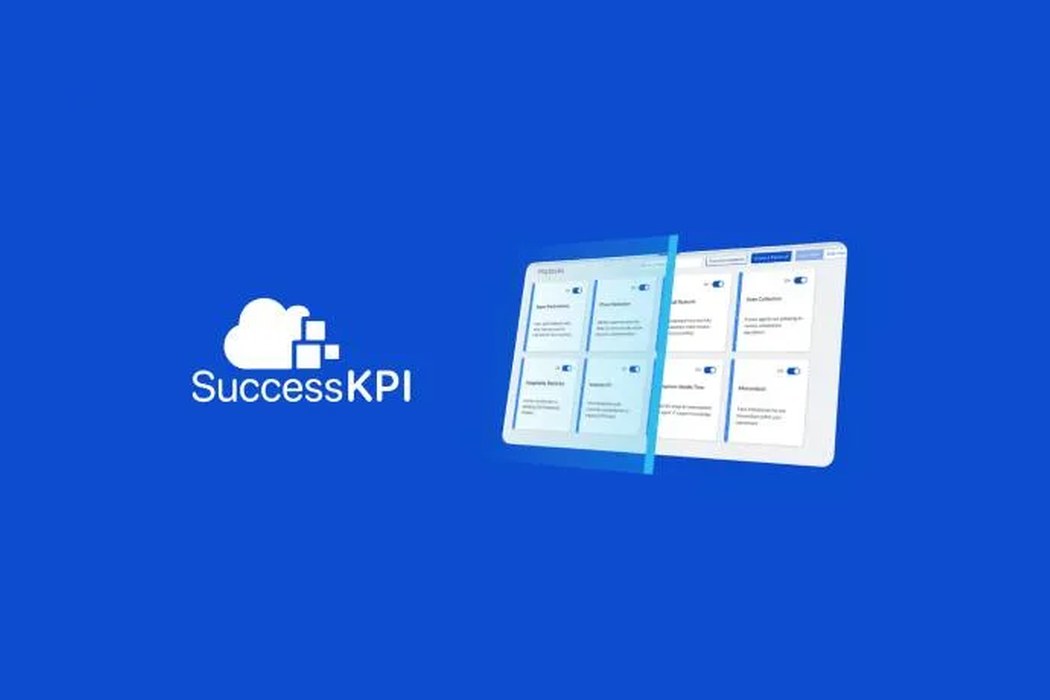
The Contact Center Has Plenty of Data. SuccessKPI Wants It to Make a Decision.
SuccessKPI built its business around a stubborn enterprise problem: customer conversations generate mountains of evidence, but too little action. Its platform connects the listening, scoring, coaching and staffing work that contact centers usually handle in separate systems.

Archon Technologies
Archon Technologies is a San Francisco startup (Y Combinator W25) that helps software companies sell to the U.S. government by automating FedRAMP, the federal compliance regime cloud vendors must clear before agencies can buy them. Its free-to-integrate SDK ships security controls compliant out of the box and, with AI-assisted documentation, aims to cut the certification timeline from roughly 16 months to 6 and save vendors about $1M. Founded by former U.S. State Department technologists George Parks and Sam Jung.
Knox Systems, Inc.
Knox Systems is an Austin, Texas company that operates a pre-authorized, AI-managed federal cloud so that commercial SaaS vendors can reach FedRAMP authorization in roughly 90 days for about 90% less than the traditional cost. By running a shared, continuously monitored compliance boundary across AWS, Azure, and GCP, Knox lets customer applications inherit 60-80% of required security controls on day one, then automates evidence collection, documentation, and remediation. Founded in 2023 by Irina Denisenko, the company raised a $25M Series A in March 2026 and serves vendors such as Adobe, Celonis, OutSystems, Armis, and BigID across 15+ federal agency authorizations.
AutoRABIT
AutoRABIT is an enterprise DevSecOps and release-management platform built for the Salesforce ecosystem. It combines CI/CD automation (ARM), static code and security analysis (CodeScan), data and metadata backup and recovery (Vault), and security posture management (Guard) so teams in regulated industries - banking, financial services, healthcare, and government - can ship Salesforce changes quickly while keeping security and compliance intact. Founded in 2015 and bootstrapped for its first five years, the company is headquartered in San Francisco and serves customers including ABN AMRO, Cigna, and CyberArk.
ID.me
ID.me is a McLean, Virginia-based digital identity network that lets people prove who they are online once and reuse that verified credential across government agencies, healthcare portals, and retail discount programs. Founded in 2010 as a military discount site, it evolved into a NIST-certified identity wallet used by well over 150 million Americans, and it is one of the primary identity-verification vendors for U.S. federal agencies including the IRS, the VA, and the Social Security Administration.
Trustero
Trustero is a Palo Alto AI company building software for security and compliance teams. Founded in 2020 by SignalFx co-founder Phillip Liu, it applies generative AI and a patent-pending 'Trust Graph' to automate the grind of governance, risk and compliance (GRC): gap analysis, evidence collection, control testing, security questionnaires, third-party risk reviews and audit prep across frameworks like SOC 2, ISO 27001, FedRAMP, PCI, SOX and DORA. In November 2024 it raised a $10.35M Series A led by Bright Pixel Capital.

Hirsch Group (fka Vitaprotech)
Hirsch Group (formerly Vitaprotech Group) is a France-based provider of premium, integrated physical-security systems for sensitive and high-security sites. Built by rolling up specialist companies - perimeter-intrusion pioneer Sorhea, access-control firm TIL Technologies, video-analytics maker Foxstream, UK detection specialist Harper Chalice, and others - it made its biggest leap in 2024 by acquiring the security business of U.S. firm Identiv for about $145 million, which brought the iconic Hirsch access-control brand into the fold. In 2026 the whole group unified under a single name, Hirsch, spanning command-and-control (PSIM), access control, video intelligence, credentials, door readers, and perimeter protection, with roughly $185M in revenue and 700+ employees.
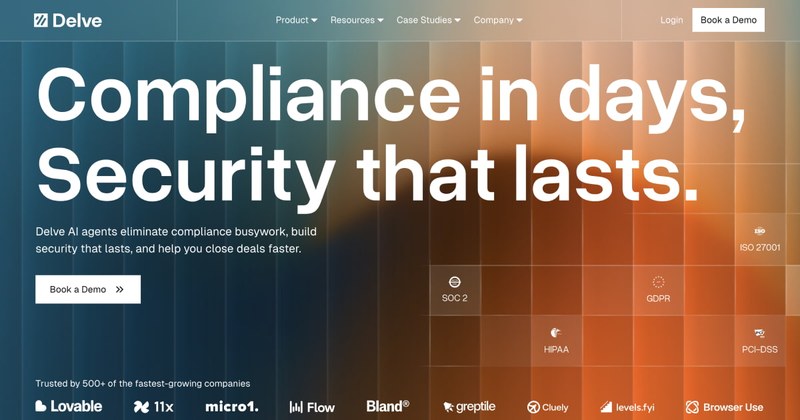
Delve
Delve is a San Francisco AI startup that automates regulatory compliance. Its AI agents collect evidence, scan code and infrastructure, autofill security questionnaires, and prepare audits for frameworks like SOC 2, HIPAA, GDPR, ISO 27001, PCI-DSS, and FedRAMP - turning a process that traditionally takes months into days. Founded in 2023 by MIT students Karun Kaushik and Selin Kocalar, the company raised a $32M Series A led by Insight Partners in 2025 at a reported $300M valuation, and says it serves more than 1,500 fast-growing companies.
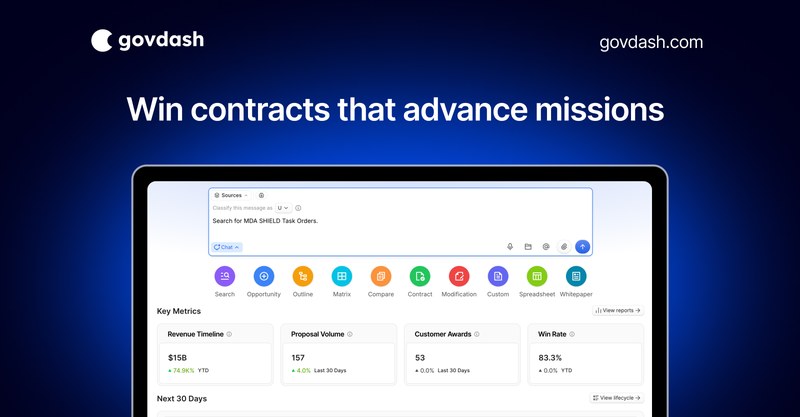
GovDash
GovDash is an AI-native platform that helps companies win and run U.S. government contracts. It pulls capture, proposal writing, contract management, and post-award delivery into one system of record, powered by an AI agent named Dash. Founded in 2022 and backed by Y Combinator, GovDash says its customers won more than $5 billion in government work in 2025, sometimes turning proposals around in as little as 24 hours.

H2O.ai
H2O.ai is a Mountain View-based AI cloud company founded in 2012, on a mission to democratize artificial intelligence for everyone. The company offers a converged platform spanning predictive and generative AI - from its open-source H2O-3 machine learning framework to enterprise products like Driverless AI, h2oGPTe, and the H2O AI Cloud. Trusted by over 20,000 organizations including more than half the Fortune 500, H2O.ai is known for employing the world's largest team of Kaggle Grandmasters and for pioneering automated machine learning. With $246 million in total funding at a $1.7 billion valuation, the company serves industries from financial services and healthcare to government and telecommunications, delivering AI that organizations can deploy on their own terms - on-premises, in the cloud, or in air-gapped environments.

RapidFort
RapidFort is a Sunnyvale-based software supply chain security company that automatically hardens container images, strips unused components, and ships a library of curated near-zero-CVE images so engineering teams can ship secure software without rewriting it.
Spectro Cloud
Spectro Cloud is a San Jose-based enterprise software company that builds Palette, a Kubernetes management platform used to run, secure and scale containerized workloads, AI infrastructure and GPU clusters across cloud, data center, bare metal and edge environments. Founded in 2019 by Cisco/Cliqr veterans, it counts GE HealthCare, T-Mobile, Nokia and the U.S. Air Force and Navy among its customers and closed a $75M Series C in November 2024 led by Growth Equity at Goldman Sachs.
Peregrine
Peregrine is a San Francisco-based data intelligence platform that unifies fragmented public safety data - from body-worn cameras and CAD records to RMS and ALPR feeds - into a single, searchable system for law enforcement, fire-rescue, EMS, and emergency management agencies. Founded in 2018 by ex-Palantir operators, it now serves jurisdictions covering more than 80 million Americans and reached a $2.5B valuation after a $190M Series C led by Sequoia in March 2025.