drive-thru
(14)
The Taco Chain That Put Potatoes on the Main Stage
Taco John's built a 324-restaurant business around one improbable supporting actor: a cup of hot, seasoned potato rounds. Now the regional chain is pairing that cult favorite with tighter franchise economics, a unified digital stack and a careful push beyond its traditional Midwest and Mountain West map.
How a 25-Cent Burger From Corpus Christi Turned Into a Texas Religion
Founded on the promise of a burger big enough to need two hands, Whataburger spent 75 years turning a single Corpus Christi stand into one of America's most fiercely defended regional brands. Now, with new ownership and a national expansion plan, the orange-and-white stripes are showing up in places that never had them.
The Burger Chain That Buys From Farmers Before It Sells to You
Five brothers from a Cyprus farm turned a Perris truck stop into a 100-plus-restaurant chain by doing the unglamorous thing: buying real produce from real farmers and grinding the beef themselves.
Arby's Built a Fast-Food Empire by Refusing to Act Like a Burger Chain
For 62 years, Arby's has made a business of being the odd hat in fast food. Its real product is not roast beef alone - it is a permission slip to order something stranger than another burger.
The Two-Name Burger Chain Betting Its Future on 570 Square Feet
Checkers & Rally’s built a national burger business by selling the same seasoned fries under two regional names. Now the drive-thru specialist is shrinking the restaurant, widening the freezer aisle and testing how much growth can fit inside a very small box.
The Fast-Food Chain Betting the Mainland Wants a Hawaiian Plate Lunch
Hawaiian Bros turned chicken, rice and macaroni salad into a high-throughput operating system. Now the Kansas City chain is testing how far a deliberately tiny menu - and a carefully borrowed spirit of hospitality - can travel.
Jack's Family Restaurants
Alabama's answer to McDonald's turned 65 this year. Here is how a 15-cent hamburger stand in Homewood became a 280-store Southern institution - and why it still hand-breads the chicken.

Habit Burger & Grill
It started as a burger stand under the Santa Barbara sun in 1969. Fifty-five years and one ampersand later, Habit Burger & Grill is Yum! Brands' bet that a chargrilled patty can scale without losing the char.
Portillo's
How a $1,100 hot dog trailer in Villa Park became a $730-million restaurant company that still refuses to franchise, put chocolate cake in a milkshake, and ships Italian beef to your door.
Dutch Bros Coffee
The Oregon drive-thru that turned a pushcart, a windmill logo and a blue energy drink into a $1.6 billion coffee company - one Rebel at a time.
Jack in the Box
Jack in the Box built a 75-year business by refusing to choose between burgers, tacos and breakfast. Now the San Diego chain has to prove that its appetite for variety can survive a leaner, more disciplined era.
Del Taco
The Mojave taco stand that grew into America's number-two Mexican drive-thru now serves fries next to burritos, runs a loyalty app with four heat-rated tiers, and just changed hands for the second time in three years.
McDonald's
The Golden Arches sell burgers, but the durable product is a system - franchise economics, high-traffic real estate, supply-chain discipline and a loyalty app now used by nearly 210 million active customers.
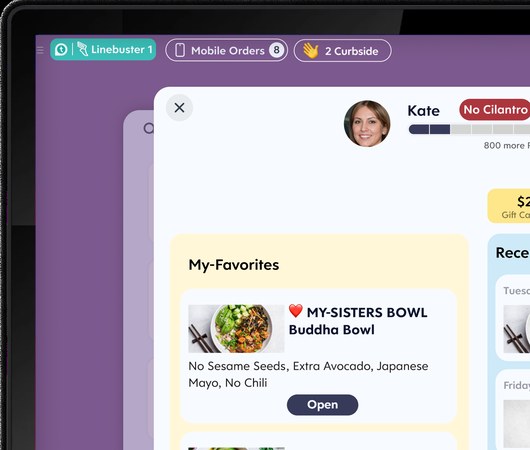
Touchpoint Restaurant Solutions
Touchpoint Restaurant Solutions (touchpoint.io) is a Palo Alto-based restaurant technology company that bundles point of sale, kitchen display, drive-thru line-busting, online ordering, loyalty, and AI-driven marketing into one unified platform branded OmniFusion and OmniLoyalty. Founded by Stanford-trained entrepreneurs led by CEO Israel L'Heureux, the company targets enterprise quick-service and pizza chains that want to consolidate a sprawling tech stack, own their guest data, and run loyalty programs that actually get used - it claims chain-wide participation rates of 80-90% versus a single-digit industry norm.