biomarker-discovery
(16)
Causaly Wants Scientists to Spend Less Time Hunting for Evidence
The London company is turning biomedical literature into research workflows. Its real test is whether scientists can inspect the evidence, challenge the answer and make a better decision.

The Biotech Betting That Cancer Drugs Fail Because Nobody Looked at the Proteins
80% of cancer compounds that reach clinical trials fail. Yatiri Bio thinks the problem is that drug developers have been reading the wrong molecules - and it built a proteomics platform to prove it.

Virtue Diagnostics
Virtue Diagnostics is a platform-based in vitro diagnostics (IVD) company headquartered in Singapore, with manufacturing in Suzhou, China and clinical operations in Beijing. Founded in 2019, it develops affordable diagnostic instruments and reagents across chemiluminescence, clinical chemistry, hematology, clinical mass spectrometry, multiplex immunohistochemistry (mIHC) and molecular diagnostics, aiming to serve patients through every stage of disease - from early screening and diagnosis to treatment monitoring and minimal residual disease management. Its strategy centers on localized innovation and expansion in emerging markets including China, Singapore, Brazil, Indonesia and the Philippines. The company closed a US$100 million Series B round in January 2022 led by Sequoia China and Morningside Ventures.
Ataraxis AI
Ataraxis AI is a New York-based precision-oncology company building AI-native cancer diagnostics. Founded in 2022 by physician-scientist Jan Witowski and AI researcher Krzysztof Geras, it developed Kestrel, a digital-pathology foundation model trained on hundreds of millions of tissue images. Its flagship platform, Ataraxis Breast, reads standard pathology slides to predict recurrence risk and estimate whether an individual patient will benefit from chemotherapy - reported to be roughly 30% more accurate than the current standard of care - returning results within about an hour and without additional tissue procedures.

Dandelion Health
Dandelion Health is a New York-based clinical AI and real-world data company that turns de-identified patient records from a network of U.S. hospitals into research-ready datasets and software for drug developers and AI teams. Its multimodal platform combines structured records, clinical notes, medical images, and raw biological signals such as ECG waveforms across roughly 15 million patients, helping pharmaceutical companies design smarter trials, discover biomarkers, generate real-world evidence, and validate healthcare algorithms against diverse populations.
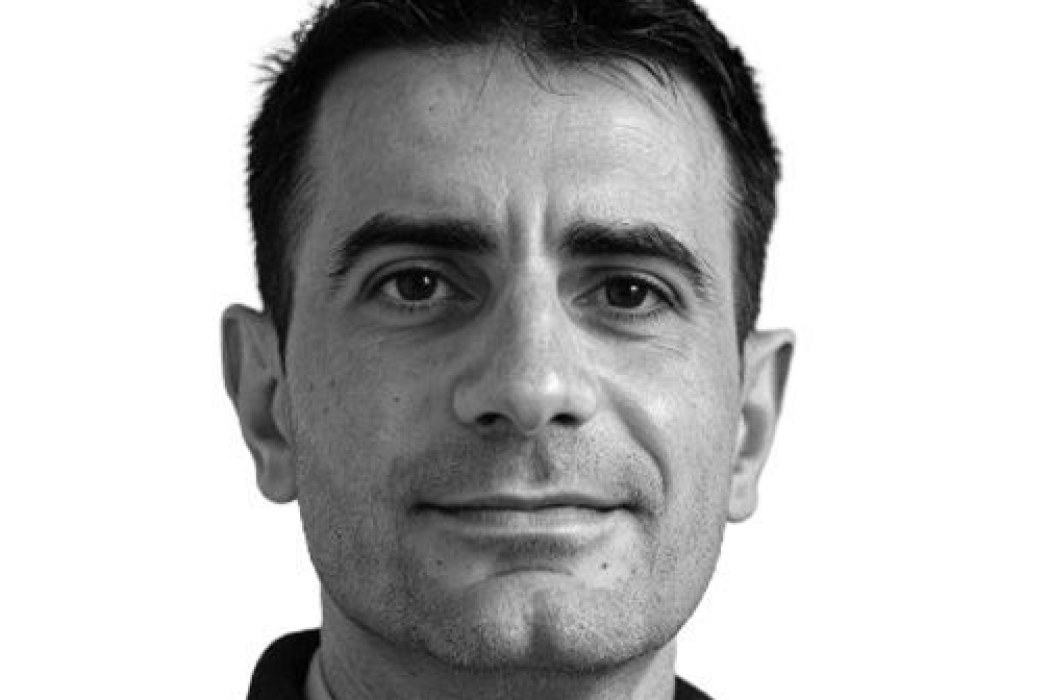
Iker Huerga
Iker Huerga is the CEO of Pathos AI, a New York- and Chicago-based biotech building what it calls the first true AI-enabled drug development platform for oncology. A data scientist by training with more than two decades at the intersection of machine learning and cancer research, he previously served as Chief Data Scientist for Oncology R&D at AstraZeneca and as an EVP at Tempus Labs, and founded three oncology companies with two successful exits. He took the helm at Pathos in May 2025, days before the company closed a $365 million Series D that valued it at roughly $1.6 billion, with a stated mission to get the right therapies to the right patients, sooner.

Predicine
Predicine is a molecular insights company advancing precision oncology through non-invasive, multi-omic liquid biopsy. Founded in 2015 by former Genentech scientist Shidong Jia, the company builds NGS-based assays that read cell-free DNA and RNA from blood and urine to detect cancer mutations, track minimal residual disease, and match patients to targeted therapies. Its flagship PredicineCARE urine cfDNA assay holds FDA Breakthrough Device Designation and is in premarket approval as a companion diagnostic in bladder cancer, developed in collaboration with Johnson & Johnson's Janssen.
InterVenn Biosciences
InterVenn Biosciences is a South San Francisco biotech building an AI-driven glycoproteomics platform that reads the sugar coatings on proteins to detect disease earlier. Its flagship blood test, GlycoKnow Ovarian, distinguishes ovarian cancer from benign pelvic masses with ~86% accuracy and went commercial in 2025. Founded in 2017 by Aldo Carrascoso with chemists Carolyn Bertozzi (Nobel Laureate) and Carlito Lebrilla, the company has raised roughly $244M, including a $201M Series C led by SoftBank in 2021.
ClearNote Health
ClearNote Health is a San Diego molecular diagnostics company building non-invasive, blood-based tests that detect high-mortality cancers early, when treatment works best. Spun out of Stephen Quake's Stanford lab in 2016 (originally as Bluestar Genomics), it pairs a proprietary 5-hydroxymethylcytosine (5hmC) epigenomic platform with cell-free DNA analysis and machine learning. Its flagship Avantect Pancreatic Cancer Test targets high-risk patients - including adults 50+ newly diagnosed with type 2 diabetes - and the company is extending the approach to ovarian and multi-cancer detection.

GeneCentric Therapeutics
GeneCentric Therapeutics is a Durham, North Carolina precision-oncology company that reads cancer's gene activity, not just its mutations, from a tube of blood. Its proprietary EXpressCT technology infers RNA-based gene expression signatures from cell-free DNA fragmentomics, and its GenomicsNext platform combines that expression read-out with DNA variant detection in a single liquid biopsy. The company also markets PurIST, an RNA expression subtyping test for pancreatic cancer. Founded in 2011 out of gene-expression research at UNC, GeneCentric partners with biopharma and commercial labs to bring richer, blood-based biomarkers into routine cancer care.

LASE Innovation Inc.
LASE Innovation Inc. is a Boston-area techbio company commercializing LP™ Optical Cell Barcoding, a laser-particle technology that tags individual cells with narrowband light signatures tuned across more than 1,000 wavelengths. Spun out of the Wellman Center at Massachusetts General Hospital and MIT, the platform lets researchers run multiple passes of flow cytometry on the same sample, track the same cells over time, and connect single-cell data across flow, imaging and sequencing. The company is turning a long-standing limitation of flow cytometry - that you generally read a cell once and lose it - into a repeatable, trackable measurement.

Daojing Wang
Daojing Wang is the founder, president, and CEO of Newomics, a Berkeley biotech building chip-based mass spectrometry tools for precision medicine. A Princeton-trained chemist who spent 11 years as a principal investigator at Lawrence Berkeley National Laboratory, he co-invented the M3 emitter and multinozzle emitter array (MEA) - a silicon shower-head that makes mass spectrometers far more sensitive. He spun the technology out of the national lab in 2013 and has since shipped well over 100 systems to labs worldwide.

Matterworks
Matterworks is a Somerville, Massachusetts biotech-AI company building foundation models for molecular biology. Its Large Spectral Models (LSMs) are trained on billions of mass spectrometry spectra and read raw molecular signals directly, turning slow, manual mass-spec workflows into automated, untargeted absolute quantitation. Its flagship cloud platform, Pyxis, acts as a predictive omics assistant that converts raw LC-MS data into identified, quantified molecules and biological insight - making mass spectrometry usable by any biologist rather than only specialist analysts.

Newomics, Inc.
Newomics is a Berkeley, California biotechnology company building mass spectrometry front-end hardware for precision medicine. Spun out of Lawrence Berkeley National Laboratory, its silicon multinozzle emitter (M3) and MnESI ion source upgrade existing mass spectrometers to deliver microflow robustness with nanospray sensitivity, enabling higher-throughput, higher-sensitivity multiomics across proteomics, metabolomics, lipidomics, native MS and single-cell analysis. The company sells to pharmaceutical, academic and government labs and co-markets with major instrument vendors like Thermo Fisher Scientific.
One Health Company (FidoCure)
One Health Company, known to vets and pet parents as FidoCure, brings human-grade precision oncology to dogs. It sequences canine tumors, pinpoints cancer-driving mutations, and uses an AI engine (Fetch) trained on the world's largest structured canine cancer dataset to recommend targeted, FDA-approved therapies. Because dog and human cancers share genetics, the company is also building a comparative-oncology data asset that could accelerate cancer drug development for both species.
Superfluid Dx, Inc.
Superfluid Dx is a South San Francisco diagnostics company building a blood-based test for Alzheimer's disease and other neurodegenerative conditions. Its platform isolates cell-free messenger RNA (cf-mRNA) from a single tube of blood and pairs next-generation sequencing with RNA deconvolution and machine-learning analysis to read out organ-level biology - aiming to detect disease years earlier than conventional methods and to guide therapy. The company was formed in late 2023 when WRQ Sciences acquired and renamed Molecular Stethoscope, and is led by Fluidigm co-founder Gajus Worthington alongside Stanford bioengineer and serial founder Steve Quake.