ai-for-biology
(7)
Foray Bioscience
Foray Bioscience is a Cambridge, Massachusetts biotech company growing plants and plant products from single cells. Founded in 2022 by MIT PhD Ashley Beckwith, Foray pairs plant cell culture with AI to make lab-grown plant material predictable across species - unlocking harvest-free wood and materials, rapidly scalable seed supplies, faster crop improvement, and even conservation and de-extinction work. Its Pando software acts like a 'Google Maps for plant growth,' helping researchers navigate the dozens of variables that govern how a plant cell grows.
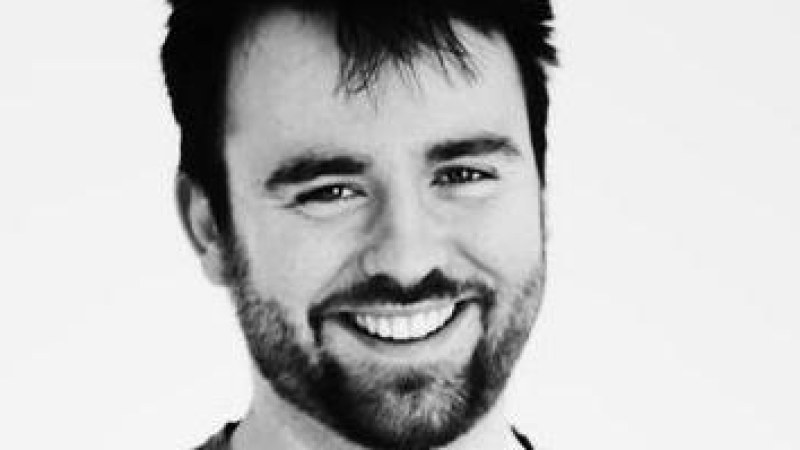
Clayton Rabideau
Clayton Rabideau is the founder and CEO of Syntensor, a San Francisco startup building foundation models and mechanistic simulations of human cell biology to predict drug efficacy, toxicity, and the hidden causes of clinical-trial failure. A Cambridge PhD in chemical engineering and biotechnology, he works at the seam between dynamical-systems mathematics and genomics - a co-author on HyenaDNA, the NeurIPS 2023 spotlight that stretched genomic language models to a million bases of context. He is trying to make biology as fast, iterative, and programmable as software.

Eduardo Abeliuk
Eduardo Abeliuk is the founder and CEO of TeselaGen Biotechnology, a Silicon Valley company building AI agents and enterprise software for biological R&D. A Chilean-born physicist and electrical engineer with a Stanford PhD, he sits at the intersection of biology, artificial intelligence, and software - treating DNA as data and lab work as something that ought to be automated. Before biotech he built a Facebook app that hit a million users in weeks and an edtech platform across Latin America. He holds multiple US patents in computational biology and synthetic biology and his academic work has been cited more than a thousand times.

Jack Geremia
Jack Geremia is the CEO and co-founder of Matterworks, a Somerville, Massachusetts biotech building Large Spectral Models - foundation models that read raw mass spectrometry signals the way a large language model reads text. A Princeton-trained chemist and former Caltech quantum-control postdoc turned serial biotech founder, he has spent 25-plus years moving technologies from lab bench to market, authoring more than 100 patents and publications. After co-founding Matterworks in 2019 as advising CTO, he stepped into the CEO seat to commercialize Pyxis, the company's generative-AI engine for untargeted molecular annotation, and led the company through a 2025 Series A from Lewis & Clark Partners and OMX Ventures.

Tamarind Bio
Tamarind Bio is a San Francisco software company building cloud infrastructure that lets bench scientists run 250+ AI and physics-based models for drug discovery - tools like AlphaFold, RFdiffusion, ProteinMPNN and GROMACS - through a no-code web interface and API, without managing GPUs, data pipelines or DevOps. Founded in 2023 by Stanford computer scientist Deniz Kavi and Sherry Liu, the company serves over 10,000 scientists, including 8 of the top 20 pharmaceutical companies, and raised a $13.6M Series A in February 2026.
Chan Zuckerberg Initiative
The Chan Zuckerberg Initiative (CZI) is a philanthropy and technology organization founded in 2015 by Priscilla Chan and Mark Zuckerberg, structured as an LLC. Once spanning education, science, justice reform and housing, CZI has refocused on a single audacious goal: helping scientists cure, prevent or manage all disease by the end of the century. Its flagship CZ Biohub network now builds AI 'virtual cell' models, generates massive biological datasets, and ships free open-source tools so researchers everywhere can move faster.
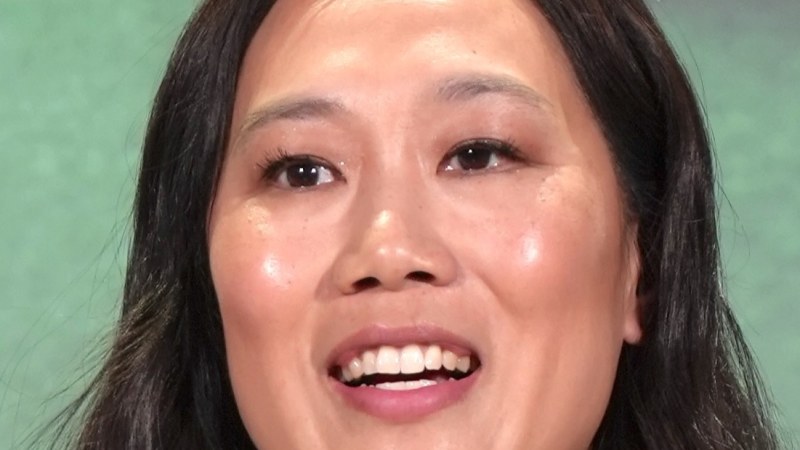
Priscilla Chan
Priscilla Chan is the co-founder and co-CEO of the Chan Zuckerberg Initiative, a pediatrician-turned-philanthropist directing one of the largest private bets on biomedical science. With husband Mark Zuckerberg she has pledged the bulk of their fortune to a mission to help scientists cure, prevent, or manage all disease by the end of the century, increasingly through AI-powered biology and the Biohub network.