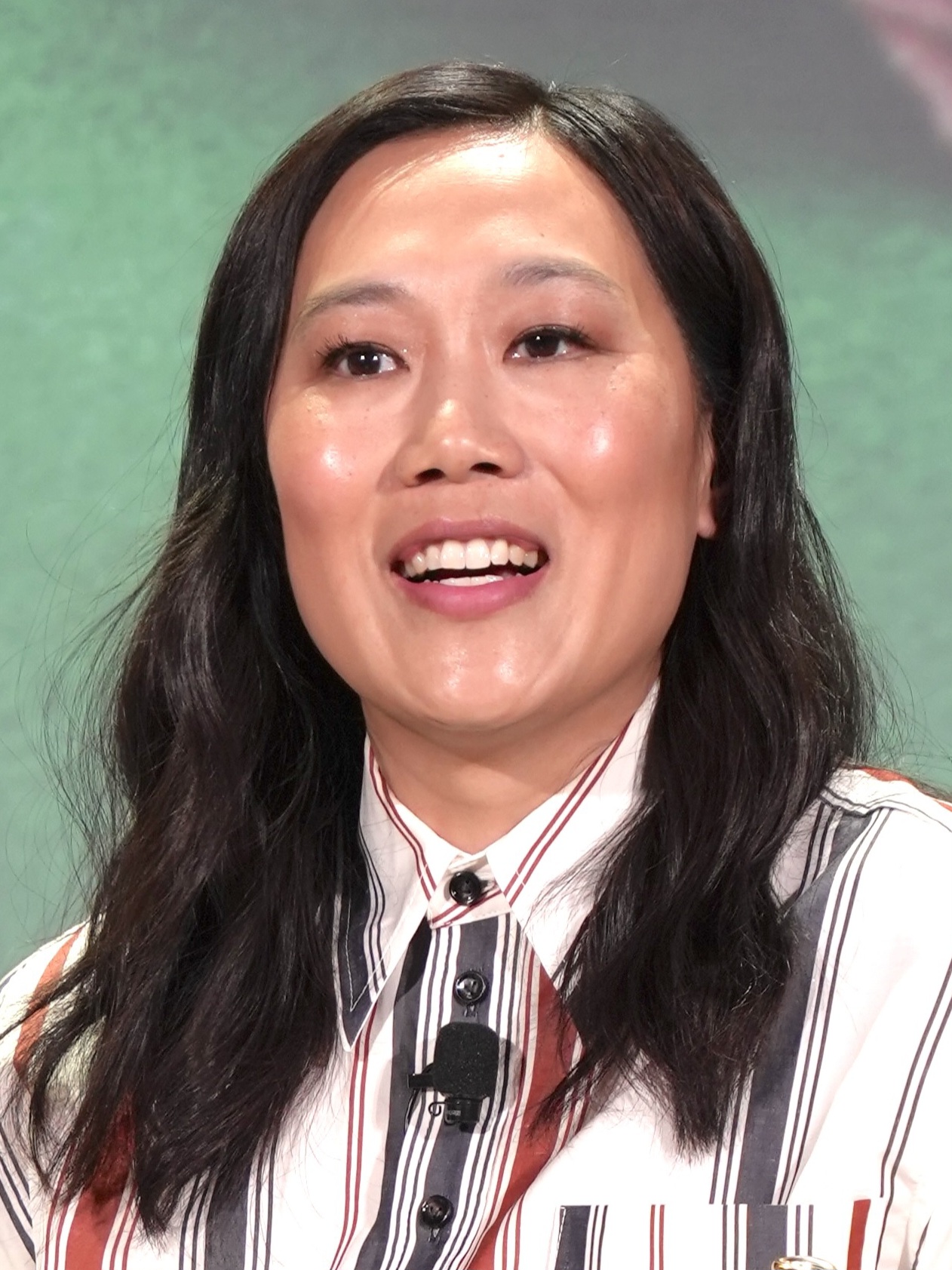
Priscilla Chan's parents arrived in the United States as refugees, ethnic Chinese fleeing Vietnam. They settled in Quincy, Massachusetts, opened a Chinese restaurant, and worked the kind of hours that make a child fluent in two registers at once: the one at home, the one for the customers. She translated insurance letters before she was old enough to drive. She was the first in her family to finish college, and the first to leave the East Coast for the kind of California that is not a vacation.
At Harvard she studied biology and Spanish — an odd pairing until you realize she planned to teach. She did, briefly, after graduating in 2007. She taught fourth- and fifth-grade science at an Edison-affiliated school in East San Jose. It was the kind of job that produced the line she still uses about the kid with broken front teeth who would not come to class: I need more skills to fight these problems.
She did, so she went to UCSF for medical school. The pediatrics residency that followed was at the same institution, and she finished it in 2015 already half-running a private foundation in her off-hours. Her patient population at San Francisco General Hospital was Medicaid-heavy. By 2017 she had stopped seeing patients. The capital her household commanded had outgrown the bedside.
CZI was structured, on purpose, as a limited liability company instead of a 501(c)(3). The choice gave it more rope: political donations, equity investments, lobbying. It also cost the family the tax write-off most billion-dollar donors keep. Chan and her husband paid that cost cheerfully, which tells you something about how they think about constraints.
The first big idea was education. The Primary School in East Palo Alto opened in 2016 with an unfashionable thesis: free K-12, free pediatrics, parental coaching, all under one roof, mostly for families who would otherwise be served by neither. It worked, as a school. It did not scale into the model Chan hoped to franchise. In April 2025 CZI announced the East Palo Alto and San Leandro campuses would close at the end of the 2025-2026 year. Funding, the press release said. A pediatrician's honesty, the close reader said.
The second big idea was the Biohub. Started in 2016 as a San Francisco partnership with Stanford, UCSF and Berkeley, the Biohub Network has since added campuses in Chicago and New York. Its assignment was always more abstract than a hospital: build the tools that let scientists do the work no one had funded. A cell atlas. Open infectious disease data during the pandemic. Imaging instruments for the next ten years. Most recently, AI models large enough to simulate biology itself.
The third big idea is the one absorbing everything else. In late 2025 CZI told its team that science, and specifically the Biohub Network, would be its center going forward. Justice reform, housing, and most of the standalone education work would wind down or fold in. The number that defined the shift: a planned multibillion-dollar investment in AI compute, dedicated to biology, run as if a research lab and a venture-backed startup were sharing a kitchen.
This is the part where the founder profile usually pivots to vision. Chan does not perform that gear. In her infrequent public appearances she sounds, instead, like someone presenting a case at grand rounds: here is what the patient looks like, here is what we tried, here is the data, here is what we will try next.
She has, for example, a particular way of talking about openRxiv, the nonprofit CZI helped establish to keep bioRxiv and medRxiv (the biology and medical preprint servers) free and stable. She does not call it disruption. She calls it infrastructure. Plumbing. A waterline scientists should be able to trust without thinking about who runs the utility.
The same plumber's voice shows up around the Virtual Cell project, the open AI initiative announced at the 2024 CZI Science Forum and expanded through 2025. The pitch is that biology is too expensive and too slow to wait for every experiment to be wet. If a sufficiently good model of a human cell can be built, drug discovery, basic research, and personalized medicine all change shape. Chan frames it the boring way: this is a tool. The boring framing is what gets the tool built.
Some of the more interesting things about Chan are downstream of the framing. She runs meetings like clinical handoffs, asking what changed since last week and what the team needs to decide before next week. She is unmoved by the celebrity she married into and steadily under-photographed for someone of her wealth and altitude. Her LinkedIn lists her as a co-founder of the Biohub before it lists her as a co-CEO of CZI. The hierarchy is on purpose.
It is fair to ask what part of the original mission survives the 2025 reorganization. The pledge to help cure, prevent, or manage all disease by 2100 is still on the website. The schools are not. The justice reform team is leaner. The headcount is smaller. The compute budget is larger. Patient capital, the language Chan likes, is being concentrated.
What survives is the clinician in her insisting that the work should be useful, soon, to someone who is sick now. That is the part you cannot quite engineer around. It is also the part that makes a pivot from schools to virtual cells legible rather than mercenary. The kid with the broken front teeth wanted a dentist, eventually. He also wanted a school that would let him show up while he waited. Chan keeps trying to fund both rooms in the same building. Sometimes the building changes.