Sylvie Chantecaille noticed the absence before she had a plan for it. In the garden at her family’s Long Island home, monarch butterflies were turning up in smaller numbers. For someone who had grown up among her mother’s roses, a garden was a place to pay attention. The missing visitors bothered her. She began asking why.
Her investigation took her beyond the flower beds, toward the shrinking habitats and pesticides affecting the monarchs’ migration. She already had a cosmetics company. She also had something conservation organizations needed: a way to put a story into people’s hands. Les Papillons, a collection of butterfly eyeshadows, connected the two. A compact could hold color, a beautiful insect, and a reason to care about where that insect spent the winter.
It was an unusually practical response to a gardener’s worry. She did not have to persuade every customer to become a naturalist before entering a department store. The product could begin the conversation. Her formulation was simple: “First people have to fall in love with the product, then they learn about the cause after.” Beauty supplied the invitation. Conservation gave the purchase somewhere else to go.
That sequence has become a thread through her working life. An eye trained to notice a color, a texture, or a flower also notices when something has gone missing. The resulting business decisions can look unexpected from a distance. Up close, they begin with things she has been looking at for years.
in the garden
eyeshadows
a conservation cause
The route from a personal observation to Les Papillons.
An art dealer takes a detour
Paris was her first education in looking. Her parents collected art, and their travels through Spain, Italy, and the Netherlands included museums and conversations with artists. As a girl, she already had opinions about the Old Masters: Rubens appealed to her; El Greco did not. Childhood taste can be wonderfully inconvenient. A painting’s reputation is little protection against a child who simply dislikes it.
She studied art history and theater in Paris and expected to become an art dealer. Makeup intervened. In New York, she joined her friend Diane von Furstenberg in creating a cosmetics and fragrance business. Tatiana, the perfume named for von Furstenberg’s daughter, was part of that venture. An interest in faces had found a commercial outlet.
In 1979, the Lauder family asked her to create what became Prescriptives. There she worked on custom foundation shade matching and helped launch Calyx. Matching a customer’s complexion made the person standing at the counter the starting point for the product. It was a useful discipline for someone who had spent her early years considering how color behaves.
The move from paintings to cosmetics was less of a departure than it first appears. A foundation has to negotiate with the face wearing it. A fragrance has to survive being carried out of the bottle and into somebody’s life. Her new profession required the same eye, with the added complication that the canvas could answer back.
“I like starting things from scratch.”
Sylvie Chantecaille
A rose field, a Japanese lab, a Dallas counter
Chantecaille began as a small fragrance house in 1997, before its broader beauty launch with daughter Olivia in 1998. The initial collection had four scents. After years at Prescriptives, Sylvie was building something under her own name, with flowers occupying the center of the idea.
One sourcing trip took Sylvie and Olivia to Grasse in southern France. They were looking at jasmine for a fragrance when they encountered a field of Rose de Mai. Sylvie followed her interest in the flower into rosewater production. The company later maintained its own rose field there, and the May harvest became a recurring part of its calendar. A childhood attachment had acquired suppliers, bottles, and a production schedule.
The route to makeup was equally concrete. On a trip that included Hong Kong, Sylvie stopped in Japan and investigated a foundation idea at a laboratory. She brought samples to Neiman Marcus in Dallas. The retailer backed the line and offered space in 40 locations. It is a pleasingly busy origin story: a fragrance founder comes home with foundation samples and a retail proposition.
The products were intended to let the wearer’s face remain recognizable. That preference also governed the details. In an early interview, Sylvie dismissed tiny compact mirrors as impractical. Her palettes used removable, refillable colors and a larger mirror. Whatever poetry flowers brought to the enterprise, the customer still needed to see what she was doing.
Success reached her in moments she could picture. Angelina Jolie applying Brilliant Gloss on camera at the Golden Globes was one. Jars appearing in a Bergdorf Goodman window, usually a domain of fashion, was another. These were signs that the company had entered places she understood and valued, rather than an abstract announcement that it had arrived.
- 1979Prescriptives
- 1997Fragrance house
- 2006Conservation collections
- 2022Conservation foundation
- 2025The Elephant Way
Family resemblance, different jobs
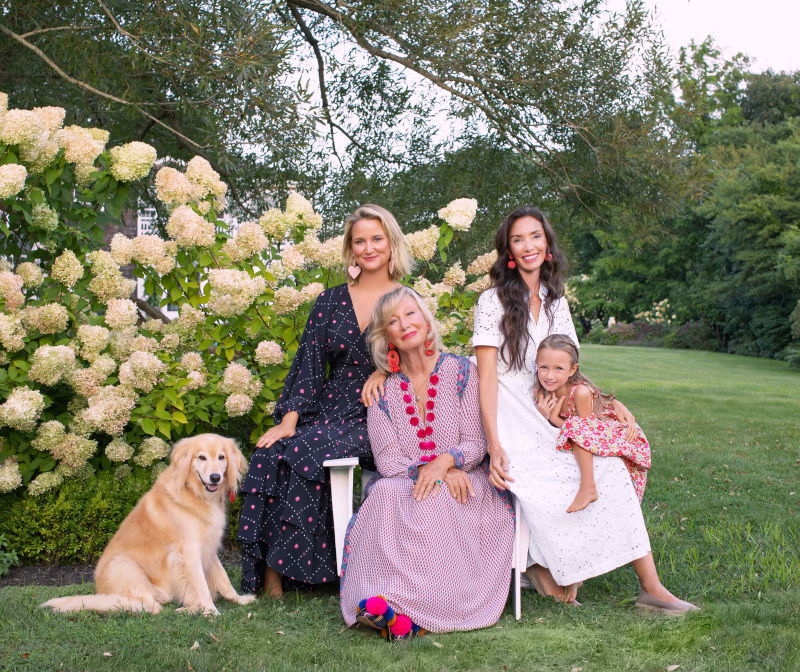
The business grew around a family, but each person had a different assignment. Olivia worked on creative direction and product development. Alex took on sales and promotions. Philippe brought photography and video into the company’s imagery. Olivier, Sylvie’s husband, handled finance. Their shared visual vocabulary did not make their jobs interchangeable.
For Olivia, some of that vocabulary had been learned during school holidays in Italian cosmetics laboratories and visits to her mother’s office. Travel, museums, gardening, and cosmetics ran together in her account of growing up. Joining the business meant putting a familiar education to work, while bringing experience from her own studies and modeling in Europe.
Sylvie has described the pleasure of seeing her children develop as adults through their work. She has also said that a mother running a company has to treat her children as colleagues on equal terms with other employees. Affection is an unreliable substitute for a job description. In a family firm, knowing somebody since birth does not excuse confusing their responsibilities.
There were quieter inheritances too. Sylvie remembered her mother and aunt wearing silk scarves over their hair while cooking, then using a fragrance-spritzed hairbrush before guests arrived. Dinner could contain garlic; the hostess need not advertise it. Such details suggest how closely beauty was woven into daily life in the household, long before anyone turned it into a brand.
A compact with somewhere to go
The butterfly project developed into recurring conservation collections. By 2006, Chantecaille was beginning a program that would connect products with organizations protecting species and habitats. The brand’s foundation-era biography credits the effort with more than $3 million for conservation charities. The figure belongs to that record, rather than a running total of everything Sylvie has since done.
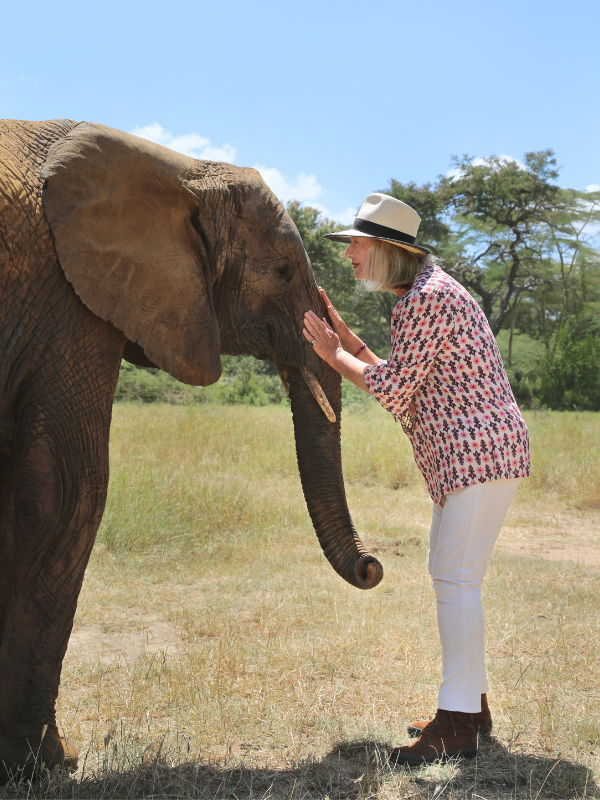
The causes became specific. Lip Veil supported Space for Giants and its work on elephant migration routes. Products backed the Sheldrick Wildlife Trust, whose elephant orphanage Sylvie visited in Kenya. Other partnerships concerned coral reefs, wolves, gorillas, and lions. Animals appeared in the makeup itself, giving an eyeshadow or blush a story beyond the shade name.
Women working in conservation became important connections. Angela Sheldrick, Lion Guardians co-founder Stephanie Dolrenry, and Tikki Hywood Foundation founder Lisa Hywood were among the leaders whose work the company supported. Their experience gave the charitable relationships a human center. There were people doing the daily work behind each animal on a compact.
Sylvie’s attachment to elephants became particularly visible. Seeing them in the wild made the concern personal; protecting the routes they travel made it practical. A lipstick and a migration corridor occupy very different scales. Her business made a meeting place between them, allowing someone at a cosmetics counter to encounter an issue far beyond the store.
After the corner office
In 2022, Chantecaille became part of Beiersdorf. That September, Emily Coleman succeeded Sylvie as chief executive. Sylvie’s identity as the founder endured, while the operating role changed. The company she had built was entering a different ownership structure, and she was opening another route for the conservation work.
Sylvie and Olivier founded the Chantecaille Conservation Foundation in the same year. Its approach involves working with local organizations and managing programs through people on the ground. Land purchases and leases, community relationships, and protection of wildlife corridors became part of the work. These commitments involve longer horizons than a seasonal makeup launch.
At South Africa’s Loskop Dam Nature Reserve, the foundation committed £1 million to the first phase of an expansion project. WeWild Africa’s March 2025 account described fencing, roads, vehicles, water infrastructure, and ranger accommodation among the work. Conservation here has an equipment list. The less picturesque details help determine whether a landscape can actually be protected.
That is a revealing continuation of her career. The public story still contains roses and elephants, but the work underneath it has become more operational: agreements, machinery, and local partners. The ability to turn an attractive idea into something that functions remains relevant, even when the object is a reserve rather than a retail counter.
The foundation’s 2024 commitment to infrastructure, including roads, fencing, vehicles, and ranger facilities.
Project update: March 2025The elephant gets another job
In 2025, she started The Elephant Way, a platform linking traditional craft with conservation and community support. Artisan collectives in Kenya and Colombia are part of its stated approach. Its promise is to return 100 percent of profits to communities and regional conservation projects. The distinction matters: profits are the stated commitment, and the work combines making, selling, and giving.
The project also led into film. Sylvie produced Guardians of the Earth with Cyril Guyot, bringing attention to Kenyan rangers, Maasai lion guardians, and Samburu women whose beadwork carries cultural knowledge. The film appeared in 2026 festival programs, including the Colorado Environmental Film Festival’s online selections and a summer screening in Camden, Maine.
Her work now gives these people room within the story that once fit on a compact. A film can stay with a speaker. Craft can carry the maker’s knowledge as well as a customer’s purchase. There is a familiar instinct here: use something people want to look at, hold, or watch to invite their attention toward the lives around it.
The garden remains a useful place to begin understanding Sylvie Chantecaille. It supplied flowers she loved, colors she could use, and eventually a troubling absence. Her career has moved through fragrance, foundation, family enterprise, and conservation. The butterflies were small visitors. Paying attention to their disappearance gave the business a much larger address.
Keep looking
Follow the work, hear Sylvie in conversation, and spend a little longer with the people in her conservation story.