A custom domain sounds like a small thing to build a company around. A few words in a browser bar. Yet for Syed Fazle Rahman, that address helped answer a question that had followed him from technical writing into entrepreneurship: how do you help developers find an audience without asking them to surrender the home they are building?
Hashnode’s answer combined a personal blog with a shared developer community. Writers could publish under their own domains and still be discovered through a network. The arrangement offered a little independence with the company of other people. Anyone who has ever published a careful explanation into an empty internet will understand the attraction.
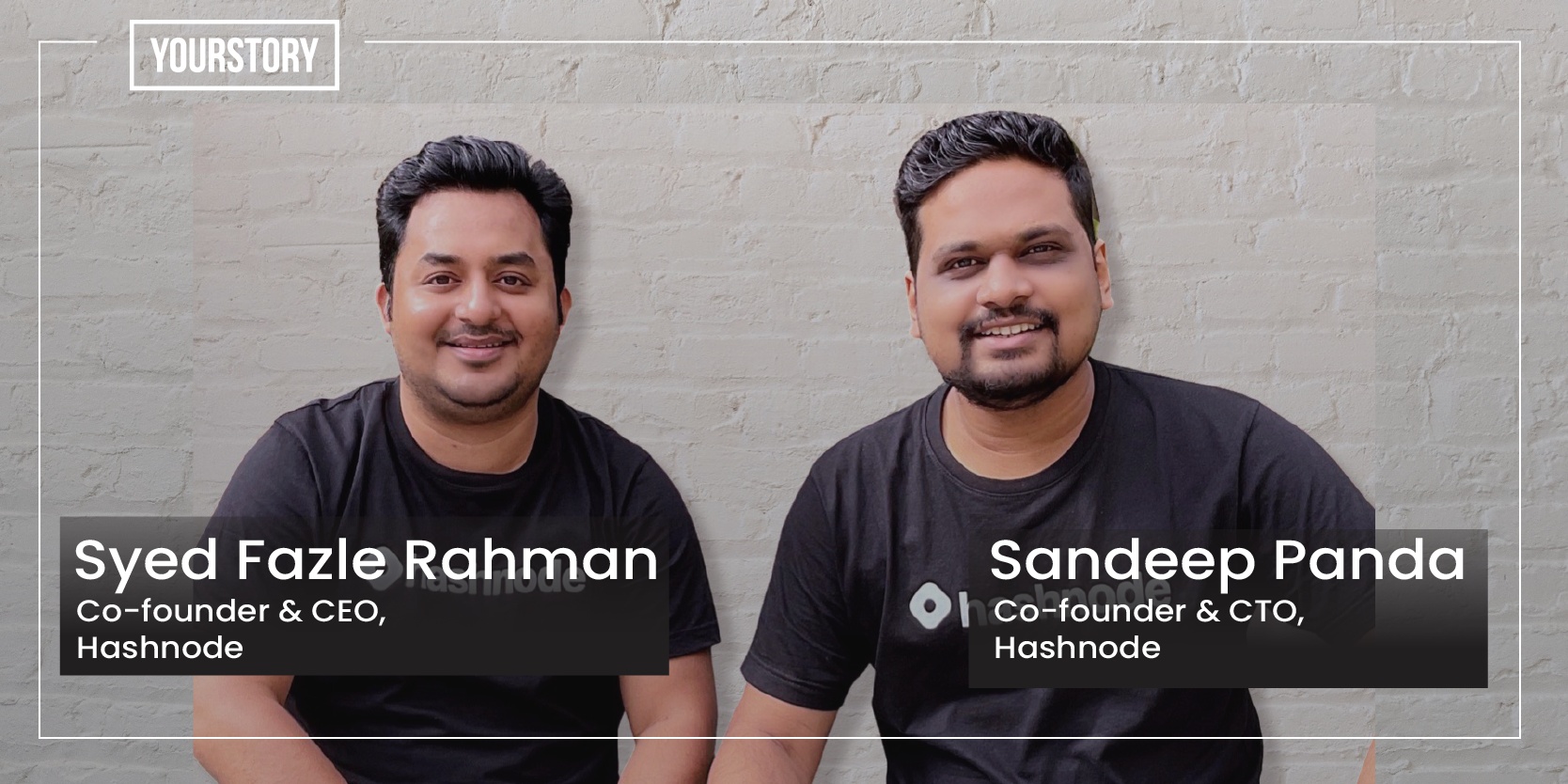
Rahman came to the problem with experience on both sides of the screen. He had written tutorials and books about building websites. With his college friend Sandeep Panda, he had also built a place where developers could talk. The eventual blogging product emerged from that longer apprenticeship. Its June 2020 launch was a change of direction, rather than the beginning of their acquaintance with developers.
Before the platform, the explanation
Rahman attended IIIT Bhubaneswar from 2009 to 2013. It was there that he met Panda, the future Hashnode co-founder and CTO. They graduated in 2013, worked in software development, and later pursued technical writing and teaching. Their partnership had a useful foundation: both knew the work they were asking their eventual users to do.
His published work was practical and specific. A January 2013 tutorial walked readers through CSS transformations, including a card flip and a three-dimensional cube. Other pieces covered favicons, responsive layouts, and mobile prototyping. These were explanations for someone trying to make a browser do something by the end of the afternoon.
The books followed. Jump Start Bootstrap appeared in 2014. Jump Start Foundation, published by SitePoint in August 2015, addressed another framework for responsive websites. His bibliography also includes Bootstrap for Rails, released by Packt in February 2015. Frameworks supplied the subject matter; helping readers get started supplied the purpose.
That background gives the later company a particular texture. A technical author has to anticipate where a reader will get stuck. A missing step can make an otherwise elegant explanation useless. Designing a publishing product involves a similar discipline: the person with something to say should not have to become an expert in the machinery that delivers it.
A conversation needed more room
The early Hashnode was built around discussion. In an April 2016 interview, Panda described a community for questions that invited opinion, detailed explanation, and experience. Stack Overflow already addressed specific programming errors. The two founders wanted room for the conversations surrounding the code: what to use, how to learn, and what other developers had discovered.
Stories, shared links, and live question-and-answer sessions with technology teams were part of that approach. Panda connected the idea to his experience writing books and tutorials, where he had seen a need for a more welcoming place for beginners. The founders were working on the social conditions of learning as much as its technical content.
A community, however, is an awkward thing to improve by sheer effort. Rahman later described the original question-and-answer product as slow to grow. The team could get traction, but moving the numbers required considerable work. There was an audience and a purpose. The product still needed a clearer reason for people to return.
The address was the argument
By 2019, Rahman and Panda were looking again at writing. Their dissatisfaction was familiar to anyone choosing a blogging tool. A publishing network could supply readers, while a self-hosted blog offered control and a maintenance obligation. Each route came with a bill, even when the bill arrived in hours rather than money.
The blogging version of Hashnode, relaunched in June 2020, tried to bring those advantages together. The domain belonged to the writer’s public identity. The community provided a route to discovery. Hosting, formatting, and the work of keeping the publishing system running could sit behind the scenes.
The seed announcement described concrete conveniences: importing existing posts, sharing drafts for feedback, viewing analytics, and embedding work from developer tools. It also described technical writing bootcamps. The product and the teaching remained close together. Giving someone a blank editor was only part of helping them publish something useful.
A diagram of the proposition behind Hashnode’s 2020 blogging launch.
This is the revealing detail in Rahman’s story. The founders kept their interest in developer knowledge while changing how people contributed it. An article gives its author space to assemble an argument, demonstrate a technique, and keep a record. The social relationship could begin with a piece of work someone was proud to put their name on.
A one-page introduction
When Rahman and Panda approached Naval Ravikant, their introduction was compact: a one-page pitch and a link to the product’s Product Hunt launch. There was working software to inspect. Ravikant tried it and agreed to invest. The episode suited a company selling a publishing experience: the experience itself could carry part of the explanation.
Another conversation, with investor Salil Deshpande, lasted 45 minutes before turning to how to proceed. Rahman recalled investors who understood the developer ecosystem and were approachable. The detail matters because the investor list can obscure the actual transaction: two founders showing people a product and explaining why it should exist.
“Our goal was to build a large and friendly community of developers.”Syed Fazle Rahman, describing Hashnode’s original ambition in 2020
Hashnode raised a $2.1 million seed round in December 2020. In August 2021, a $6.7 million Series A followed, led by Salesforce Ventures. Participants included Accel, Sierra Ventures, Surge, and individual investors such as Ravikant, Guillermo Rauch, and Des Traynor. The financing gave the founders resources to expand the team and the product.
The audience was growing too. At the Series A announcement, Hashnode reported more than one million monthly active users and 60,000 active blogs. Those are historical company figures, useful for understanding that moment. They record a shift from a difficult early community experiment to a publishing service with a much larger readership.
More places to write.
More reasons to read.
Everybody gets a little CEO
Growth brought a different design problem: deciding how people inside the company should work. In early 2022, Hashnode described a culture Rahman and Panda had helped define around ownership. People were expected to take responsibility for features and decisions, communicate early, and understand users as fellow community members.
The company’s phrase was “Everyone is a CEO; everyone is a hustler.” It could sound crowded in the boardroom. In practice, the explanation concerned accountability rather than titles. It even acknowledged that team members might eventually outgrow their roles and start businesses of their own.
Rahman’s 2022 Peerlist conversation put further emphasis on choosing people carefully, using analytics, and remaining patient. He identified building the team too slowly as something he would change. That admission gives the hiring philosophy some weight. Small teams can keep decisions clear; they can also leave too much work waiting for too few people.
There is a more informal glimpse in an employee’s account of working at Hashnode. Lakshya described discovering design changes Rahman had implemented, alongside Panda’s quick side projects. The founders still participated in making things. For a designer turned CEO, an interface remained a place to work, rather than merely a subject for the next meeting.
The next reader was a customer
In August 2024, Rahman introduced Docs by Hashnode, extending the company’s publishing tools into API and product documentation. The intended reader now had a different task. Instead of browsing an essay, they might be trying to make an API request succeed or understand a product well enough to use it.
The launch included collaborative editing, API references, and a headless option that let teams build their own frontend. That last detail connected with an earlier concern: allowing people to use the publishing infrastructure while keeping control of how their work appeared. The blog’s custom domain and the documentation site’s custom interface belonged to the same family of decisions.
Rahman also published a hands-on guide to importing an OpenAPI specification into an interactive reference. The author of framework primers was still writing instructions. Even with a company to run, he was explaining which button to press and what would happen next.
A useful kind of boring
His newer work moves from explaining software to checking it. Rahman’s current public biography identifies him as Bug0’s CEO and co-founder. Bug0 combines AI-assisted end-to-end testing with dedicated engineers who review results. In an April 2026 essay, he presented testing as a deliberately unglamorous choice, arguing that faster code production increases the need for verification.
His writing returns to a distinction between automation and responsibility. Software can execute checks at volume; someone still has to judge the result. It is a recognisable concern for a founder whose earlier company depended on people finding value after the initial act of publishing.
There are further experiments. Buildful lists Rahman and Panda as its makers and promises browser-tested changes delivered through pull requests. Rahman’s public GitHub also hosts Jevmail, a local, read-only email sorting project. The scale varies from a developer network to an inbox, but the appetite for making practical tools is visible in both.
The career holds together through those ordinary tasks: understand a technique, publish an explanation, find a reader, check a release. Rahman has built businesses around the work that sits between having an idea and making it useful to somebody else. A domain name was one small piece of that work. A functioning checkout button is another. Neither needs a grand introduction when it fails.