The code was written. The problem was what happened next. At Hostaway, a vacation-rental software company, reviews depended on a small group of developers. Work piled up behind them. When engineering director Adam Kupcewicz examined the workflow with Swarmia, the queue became visible. The team changed its agreements around reviews and collaboration. In Swarmia’s published case study, Kupcewicz reported that deployment time fell from four days to less than twenty-four hours.
- Find where software work waits, then give the team a way to act.
- Combine delivery metrics with what developers say about their work.
- Check AI adoption, spending, and workflow effects together.
That little traffic jam explains Swarmia better than a catalogue of features. Software organizations can be full of busy people and unfinished work. Someone writes a change; someone else must inspect it; a build must pass; a release must happen. A delay between these steps can quietly consume the benefit of faster coding. The interesting question becomes: where does the organization lose its time?
01 The waiting room inside the machine
Swarmia sells engineering intelligence: software that gathers evidence from development systems and makes it usable across an organization. GitHub and GitLab supply code activity. Issue trackers such as Jira and Linear describe work and priorities. Slack and Microsoft Teams carry notifications back to the people doing the work. The product lives between those systems, connecting their records rather than asking everyone to reconstruct the week from memory.
Its expertise lies in translating those records into delivery metrics, investment views, and feedback loops. A manager can investigate review delays. A team can agree on a target and receive reminders. Leaders can examine how effort divides between new features, maintenance, and strategic initiatives. CI insights expose time spent in build pipelines. A developer survey adds context.
Hostaway’s example supplies a practical starting point. The team agreed to review pull requests within three days, link them to issues, and avoid pushing directly to the default branch. The lesson is modest enough to copy: expose one delay, discuss it with the team, change a shared habit, and check again. Its results describe one customer’s experience; they are not a forecast for every buyer.
the queue
the team
on a change
again
02 A dashboard has a maintenance bill
Miro reached Swarmia through a different door. Its engineering productivity group already supplied metrics to more than a hundred teams. The difficulty was keeping delivery data reliable, current, and detailed enough to investigate. Collecting and cleaning GitHub and Jira data demanded continuing attention. APIs changed. Data sources misbehaved. A dashboard that looked finished still had a running tab.
The company’s case study describes a deliberate sequence. Miro improved Jira hygiene and naming conventions first. Then a pilot group met three shortlisted vendors and assessed them. Swarmia received the highest outcome scores. This matters because the purchase followed work on the underlying data. A cleaner interface cannot repair inconsistent records by sheer elegance.
There is also an organizational condition here. Teams need permission to investigate and change their processes. If leadership treats every chart as an individual performance ranking, engineers have a reason to defend the numbers rather than learn from them. Swarmia’s original pitch, recorded by seed investor Alven, focused on systemic bottlenecks. Trust is part of the installation, even though it does not arrive in the download.
03 Ask the people behind the dots
A cycle-time chart can identify a delay without explaining its cause. Was a review slow because the change was unusually complex? Were priorities shifting? Did the reviewer have time? Swarmia’s developer experience surveys let companies choose questions, repeat them, manage anonymity, and inspect team-level results. The qualitative evidence gives the quantitative evidence somewhere to go.
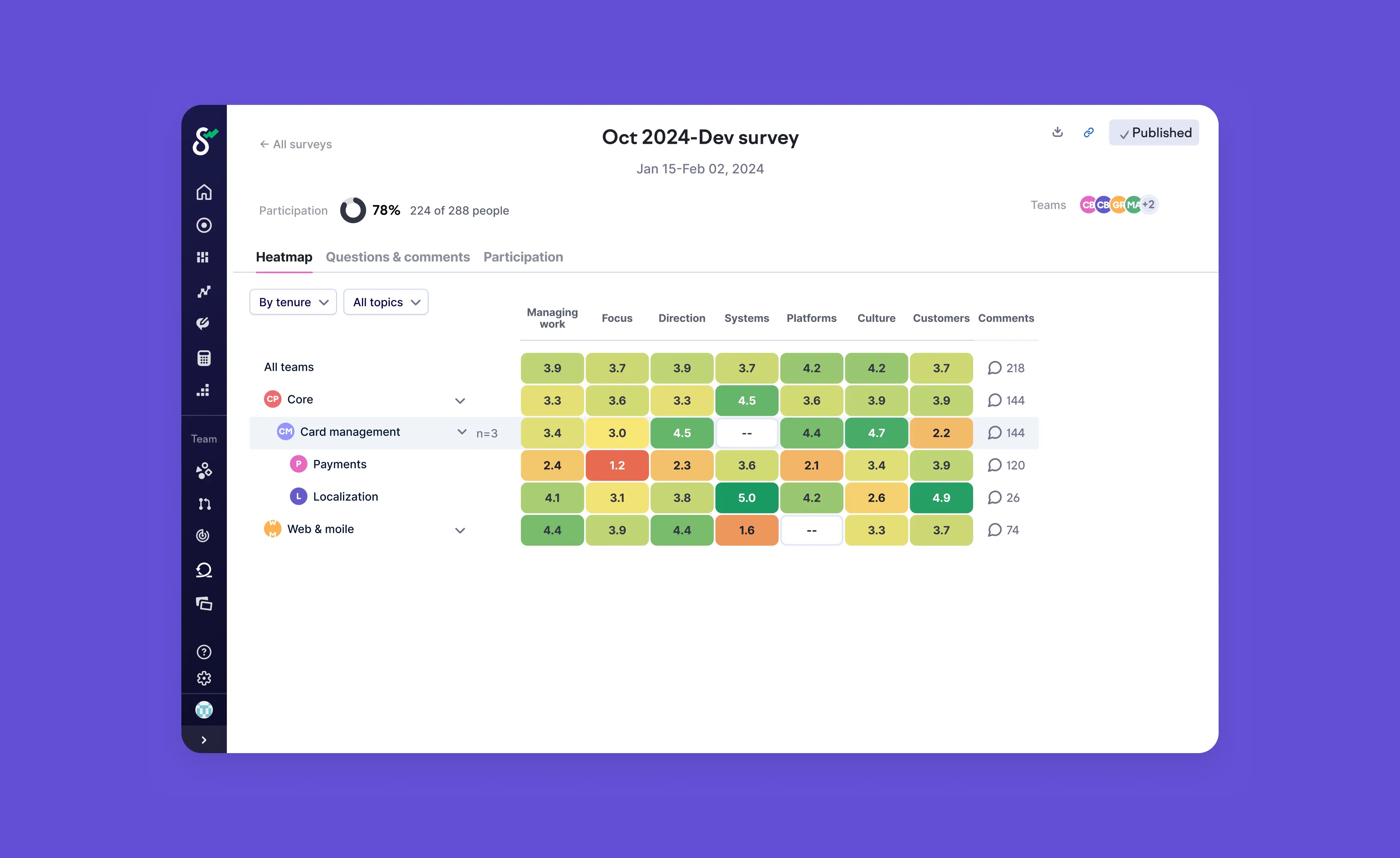
The same platform reaches finance through software capitalization reporting. It estimates engineering effort from code and issue activity, applies the customer’s rules for capitalizable work, and produces reports. This is a different use for the same underlying trail. Engineers want fewer interruptions; finance wants an intelligible account of investment. Both benefit when the record of work is sufficiently coherent.
There is a useful discipline in keeping these perspectives together. A team might shorten reviews while developers report more interruptions. Another might spend heavily on maintenance because an aging system needs attention. Neither pattern explains itself. Swarmia organizes the evidence; managers and engineers still have to supply the judgment. The most productive meeting is therefore likely to involve both the chart and the people whose work it describes. A measurement earns its keep when it changes a decision, rather than simply decorating the next presentation.
“Swarmia allows us to focus on what’s important.”Adam Kupcewicz / Hostaway
04 What visibility costs
Swarmia charges per developer. Its published annual-billing prices put Standard at $45 per developer per month and Enterprise at $55. Modules can also be bought separately: AI adoption and cost for $5, surveys for $9, capitalization for $18, and productivity and AI impact for $23. Companies with nine or fewer developers qualify for a free plan excluding Swarmia AI.
Calculated from published list pricing. Before discounts or additional commercial terms.
Its neighbors include LinearB, Jellyfish, and DX. In-house analytics compete too. Swarmia’s particular emphasis is the connection between measurement and everyday behavior: working agreements, chat notifications, surveys, and leadership reporting in one product. Buyers should assess that combination against the problem they actually have. A team seeking only a review reminder has a different shopping list from a finance department rebuilding capitalization reports.
05 More code, same corridor

Founder Otto Hilska had already founded Flowdock and led product development at Smartly.io before starting Swarmia in 2019. Alven announced a roughly $7 million seed round in 2021. In June 2025, Karma Ventures and DIG Ventures led an $11 million Series A, with existing investors and angels including Cal Henderson and Romain Huët participating.
AI has since expanded the question Swarmia tries to answer. Its product combines usage and spending with workflow measurements, including cycle time, review time, and batch size. The September 2026 changelog added built-in Codex tracking and more agent detection. On October 1, it introduced repository AI readiness, examining instructions and the route to production.
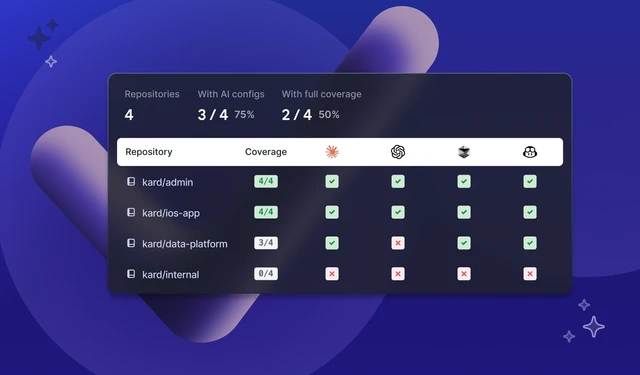
These comparisons still need interpretation. Different teams tackle different work; a shorter cycle time alone cannot establish that AI caused an improvement. Yet the original queue remains a useful place to look. Faster generation can send more changes into the same review corridor. Swarmia’s enduring proposition is to make that corridor visible, so the people inside it can decide what to change.