Swami Iyer wanted to become an astronaut. It was a reasonable ambition for someone whose family already had a considerable investment in the sky. His grandfather worked in engineering in India’s air force. His father was an aerospace engineer. Iyer followed the family interest into aircraft, then into the companies that built and supported them. His latest destination requires a different sort of navigation: leading a business whose owners have a stake in both its earnings and its obligations to future generations.
Since January 1, 2024, he has been chief executive of Cook Inlet Region, Inc., known as CIRI. The Alaska Native regional corporation combines commercial investments with a founding purpose of benefiting its shareholders. An aerospace résumé might seem an unusual ticket to that office. Look more closely at the job, however, and the connections begin to appear. There are technical businesses to run, investments to assess, teams to coordinate and people who need the results to mean something.
A family example, an unfamiliar destination
Iyer was born in New York and raised in Florida. In his introduction to CIRI shareholders in late 2023, he credited his parents’ example and work ethic with having a greater influence on his life than his education or training. He described a father who earned another engineering degree after moving to the United States because his Indian qualification was not recognized there. It is an instructive detail: expertise and the recognition of expertise do not always arrive together.
The family story helps explain the importance he gives to effort. In a 2023 conversation with Sanjay Puri, Iyer discussed the expectations he felt as an Indian American entering a competitive profession. He spoke of having to work harder to be regarded as an equal. He also described military service as a way for his community to participate fully in the country that had given it opportunities. Flying offered adventure, but service supplied another reason to put on the uniform.
His parents were not immediately enthusiastic about the combat-pilot route. Many of his friends were heading toward other professions. Choosing aviation put him on a less familiar path within his immediate circle. The personal distinction is useful to keep in view: a family interest in engineering does not make every engineering-adjacent decision an easy one. Someone still has to choose the aircraft.
The pilot goes to the Pentagon
At the University of Michigan, Iyer earned degrees in aerospace engineering and was commissioned through Air Force ROTC. Pilot training took him to Vance Air Force Base in Oklahoma. He went on to fly the B-52 and attend the U.S. Air Force Test Pilot School at Edwards. His original ambition kept spaceflight in view.
“I dreamt of becoming an astronaut”
Swami Iyer, reflecting on his early ambition, 2023
His later military responsibilities moved him into international affairs. CIRI’s biography describes a Foreign Military Sales portfolio of $25 billion across 21 countries and a $7 billion U.S.-India defense trade portfolio. These were responsibilities involving policy, relationships and large programs, far beyond an individual cockpit. His career had acquired a second scale: the aircraft remained part of the work, while decisions now reached across organizations and national boundaries.
He retired as a lieutenant colonel. Civilian leadership followed, carrying the technical background into commercial settings. The sequence offers a more interesting picture than the familiar shorthand of a pilot becoming a businessman. He had already spent time moving between engineering, operations and international relationships. Each required an understanding of how one decision could affect the rest of a system.
Spaceflight needs a factory, too
At Honeywell Aerospace, Iyer held a vice-presidential role in defense and space. In May 2017, Ultra Electronics 3eTI appointed him president. The company worked in security technologies and cyber resilience, extending his remit beyond airframes. The following June, Israel Aerospace Industries named him CEO of its North American operation, with responsibility for subsidiaries including Stark and ELTA North America. He subsequently led GKN Advanced Defense Systems.
Virgin Galactic announced his appointment as president of Aerospace Systems in 2021. The remit brought together engineers, designers, technicians and support teams working on its vehicle fleet. Alongside his appointment, the company announced Stephen Justice as vice president of engineering. Iyer’s job concerned the organization required to build vehicles and support future production. Spaceflight has an excellent view; manufacturing has a schedule.
The production question became especially concrete in July 2022, when Virgin Galactic announced a leased final-assembly facility in Mesa, Arizona, for its Delta-class spaceships. Its stated planned capacity was up to six spaceships a year. Major subassemblies would come from suppliers for final assembly in Mesa. At the time, Iyer pointed to Arizona’s position between the company’s operations in Southern California and New Mexico as an advantage.
Those were announced plans, with the usual distance between a manufacturing proposal and its eventual delivery. They nevertheless show what occupied his attention: geography, suppliers, facilities and the passage from a design to a repeatable production process. An astronaut may be the face of a flight. A much larger collection of people has to make the flight possible.
A company with a different set of owners
CIRI presented Iyer with another application for that experience. The corporation was incorporated in June 1972 following the Alaska Native Claims Settlement Act. Its shareholders represent a range of Alaska Native peoples. Its history includes negotiations over land entitlements and the Cook Inlet Land Exchange, through which earlier leaders secured commercially useful lands. Iyer inherited a business with a history of its own, rather than an empty page waiting for a strategy.

When he introduced himself to shareholders, he said he had considered working for a nonprofit because giving back mattered to him. CIRI offered the combination of a for-profit portfolio and benefits for shareholders and descendants. He also wanted to learn an Alaska Native language and immerse himself in the culture. A new executive can arrive knowing an industry. Learning the people and the place is a separate assignment.
The appointment came during an organizational change. The board separated the CEO and president positions as Sophie Minich’s tenure ended. Iyer became CEO-elect in October 2023, before taking the CEO role at the start of 2024. Sarah Lukin initially became president. Today, President Tabetha Toloff and Iyer jointly address shareholders about the company’s business and mission.
Where the money is meant to go
In describing his approach in 2025, Iyer emphasized income generation for shareholders and a move toward active management of the portfolio. He discussed acquisitions, divestitures and investments in businesses with strong cash flow. The distinction matters in a corporation where commercial earnings help support distributions and programs. A growing asset base and money available for present needs answer related, but different, questions.
He also described land as precious to the shareholders and emphasized development that respected their values. That adds a responsibility to the investment calculation. A transaction can be assessed in numbers; stewardship asks what the company should preserve as well as what it should earn. His stated interest in aerospace and defense sits inside that broader brief.
In December 2024, CIRI acquired OSC Edge, an IT-services business serving government and defense organizations. By spring 2025, CIRI described a presence in 45 states and seven countries. Its shareholder newsletter also highlighted work toward shared services and a satellite office in Washington, D.C. Growth was becoming a matter of organizational plumbing as well as purchases. Someone has to make the pipes fit.
- December 2024OSC Edge joins CIRI’s IT portfolio.
- January 2026HABCO adds aerospace support and test equipment.
- January 2026I2X adds engineering and technology capabilities.
The January 2026 acquisitions made the connection to Iyer’s earlier career clearer. HABCO Industries manufactures aviation support and test equipment. I2X Technologies provides software and systems engineering, cybersecurity, testing and data-management services. CIRI said I2X would sit under OSC Global. These are familiar kinds of technical work for Iyer, now directed toward the corporation’s shareholder purpose.
The next generation needs a route in
Results reported in June 2026 gave the strategy a measurable checkpoint. In a joint message, Iyer and Toloff reported that CIRI’s consolidated net income had increased 60 percent in 2025. They also reported $79 million in new revenue from the cybersecurity and IT segment. Those are company results under a leadership team, rather than personal trophies for its chief executive.
CIRI’S JUNE 17, 2026 SHAREHOLDER MESSAGE
Their spring message described plans to consolidate duplicated support work and improve daily operations. It also introduced Nułyah, a leadership-development program for mid-level career professionals among shareholders and descendants. By June, the first cohort was underway. The point was to create opportunities between early experience and senior responsibility, with mentoring and access to leaders.
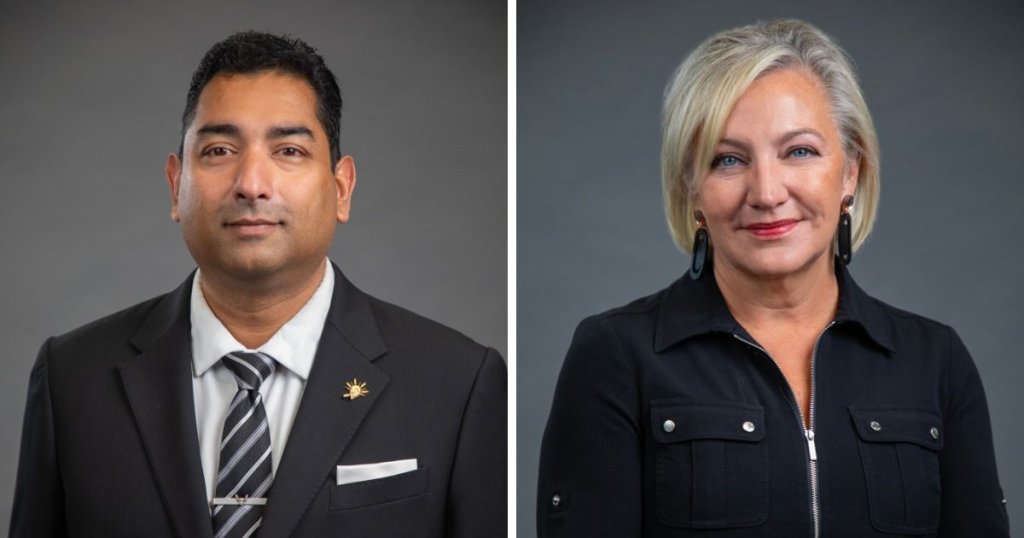
The connection runs through his current chapter. In their September 2026 message, Iyer and Toloff returned to the annual meeting, shareholder questions, career development and stewardship of land and resources. A company’s owners were asking about both today’s benefits and tomorrow’s opportunities. For a leader who began by hoping to leave Earth, this is a notably grounded set of concerns.
His career has covered aircraft, international programs, cyber businesses and spaceflight production. CIRI asks him to put that experience to work within an existing community and its long view. The next destination involves more people gaining the skills to lead, a portfolio earning its keep, and owners seeing the benefit. The flight plan has become a succession plan.