Susanna Song learned early that a story does not care how much time you wish you had. In a television newsroom, the clock wins every argument. A general-assignment reporter may have hours to locate the right person, test the facts, find the stakes, write the script, and stand in front of a live camera looking as though panic were merely a rumor. Sometimes Song had minutes. The discipline was brutal and useful: get it right, understand the audience, and know why the story matters before asking anyone else to pay attention.
Today, her newsroom is a global cellular IoT company. Song is chief marketing officer at Aeris, where the nouns arrive dense with engineering: eSIM orchestration, carrier networks, connected vehicles, device security, zero-trust policy. The machinery is largely invisible. The consequences are not. Aeris says its technology reaches 115 million connected devices around the world. Song's work is to give that enormous, quiet system a human scale.
Her route to the C-suite was neither a tidy corporate apprenticeship nor a sudden costume change. It began in broadcast journalism, moved through cybersecurity, and kept the same basic instrument throughout: a practiced ability to ask someone who knows more than she does the question the audience would ask if it had the microphone.
The newsroom operating system
Song grew up in Buffalo Grove, in Chicago's northern suburbs, and graduated from Stevenson High School. At Northwestern University's Medill School of Journalism, she studied broadcast journalism and religion, a pairing that seems unusually well suited to a career spent examining what people believe and how stories travel. She graduated in 2004, but she had already hosted an English-language talk show for Korean Broadcasting Channel in Chicago.
Then came the local-news ladder. At WEEK in Peoria, she reported, anchored, filled in on weather, and produced. At KSTP in Minneapolis-St. Paul, she worked as a general-assignment reporter and fill-in anchor from 2007 to 2010. WBBM, CBS's Chicago station, brought her home in December 2010. She stayed for more than seven years, reporting across the country's third-largest television market and filling in at the anchor desk.
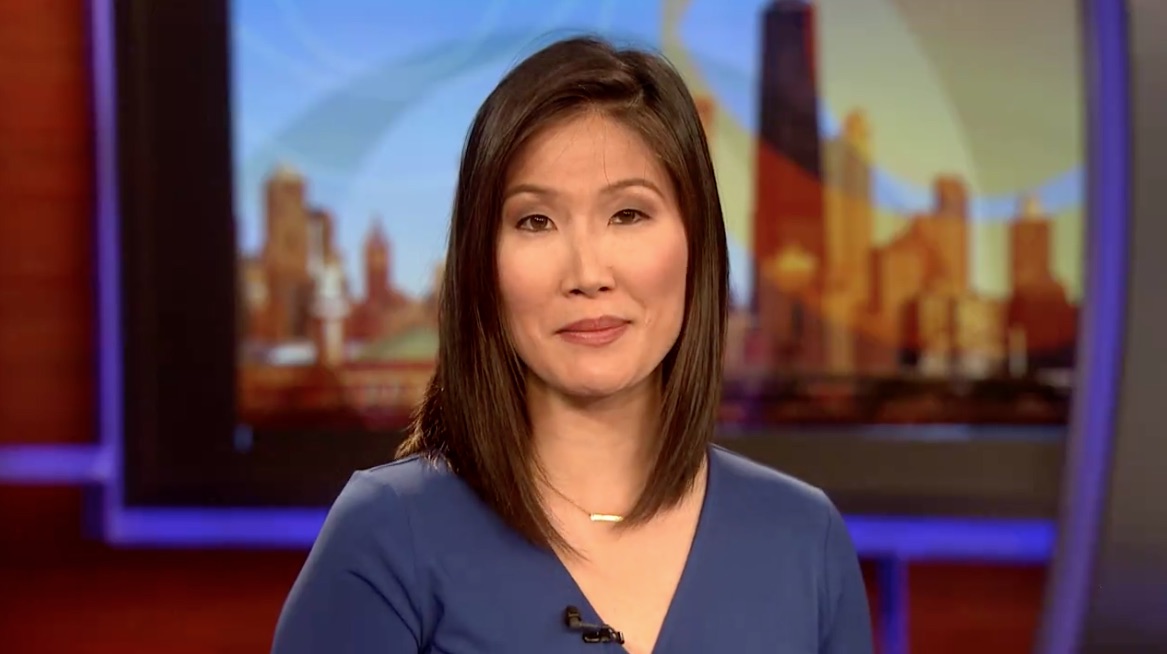
The work produced three Emmy Awards, seven Emmy nominations, an East-West Center journalism fellowship, and recognition from the Society of Professional Journalists. It also gave Song range. A resume from the period records Korean and Spanish proficiency, editing skills, and service as co-chair of the Asian American Journalists Association's Chicago chapter. She interviewed Barack Obama when he was still an Illinois senator. None of these facts, however, explains the core of her later marketing approach as neatly as the morning editorial meeting.
A reporter pitching to editors cannot simply announce that a thing happened. She has to explain why this thing, for these viewers, today. Song has said that audience awareness was ingrained so deeply that she would not pitch until she understood who was watching and why they should care. In marketing language, that becomes segmentation and positioning. In plain English, it means respecting people's limited attention.
A decision with two clocks
In February 2018, Song chose not to renew her CBS contract. Her next job was director of communications and marketing at High Wire Networks, a technology company in Batavia, west of Chicago. The move carried a personal calculation alongside the professional one. She said the role would give her the time and flexibility to maintain a career while being the best mother she could be to her two young children.
There is a familiar temptation to narrate such a choice as retreat or escape. Her next six years make that reading impossible. Song entered a smaller company as it built a managed security services business. She did not arrive with a conventional marketing résumé. She arrived able to interview, produce, write, edit, present, and operate against a deadline. Those skills became the scaffolding for a new department.
By 2020, she had launched Overwatch University and High Wire University, free training programs designed to help partners, field technicians, and employees improve their security knowledge. In 2021, she created and began co-hosting Cybersecurity Simplified. The title was a promise. Cybersecurity had become an executive problem while remaining wrapped in specialist language. Song's job on the show was not to impersonate the specialist. It was to draw useful knowledge from security practitioners and keep the conversation attached to business decisions.
The format found an audience. High Wire reported more than 100,000 downloads during 2022, listeners in more than 100 countries, and a place among Spotify's most-shared podcasts globally. Song also co-hosted The Working CEO with High Wire chief executive Mark Porter, a show built around practical conversations with company leaders. Podcasts allowed her old profession and new one to overlap almost perfectly: identify a consequential subject, invite someone worth hearing, ask direct questions, and edit for the person on the other side.
High Wire promoted her from vice president of marketing and communications to chief marketing officer in June 2023. The company credited her strategic work as its channel partner network grew to more than 625 organizations. That year CRN named her to its Women of the Channel list and its Inclusive Channel Leaders list. In 2024, she joined CRN's Power 100 Solution Providers and traveled to Warsaw to moderate a panel on cyber and hybrid warfare at the PISM Strategic Ark conference.
The invisible product problem
At Aeris, Song inherited a larger canvas and an even less visible product. Cellular IoT is the connective tissue behind machines that report, vehicles that communicate, fleets that can be managed remotely, and devices that must remain observable across carriers and borders. Aeris sells platforms for connectivity management, eSIM orchestration, and security. A customer is not buying a glamorous object. It is buying the continued, secure behavior of many objects it may rarely see.
Song has described Aeris's go-to-market approach as vertical rather than horizontal. The company does not assume everyone needs the same story. An automotive manufacturer, a utility, and a logistics operator encounter different risks, regulations, and definitions of reliability. The message has to begin with the specific audience and its stakes. It is the old editorial meeting, rebuilt as strategy.
She continues to use interviews as infrastructure. On Aeris's IoT Real Talk podcast, she has spoken with global carrier representatives about what IoT looks like after the buzzword phase. In 2026, she sat down with Aeris co-founder Syed Zaeem Hosain to revisit the company's beginnings and its growth past 100 million devices. The pairing is revealing: the founder supplies memory and technical context; the former reporter creates the route through it.
Her own public language remains allergic to abstraction. On CMO Journeys in July 2026, Song returned repeatedly to deadlines, audience, and relevance. She explained how Cybersecurity Simplified worked as brand equity without requiring the host to pitch a product. Talk about what matters to the buyer, bring credible expertise, make the category easier to navigate, and curiosity eventually leads some listeners back to the company. Trust arrives by the side door.
The second act keeps the first
Song's career contains a practical answer to the anxiety of reinvention. She did not discard journalism when she left television. She extracted its operating principles. Deadlines became launches. Story pitches became positioning. Interviews became customer and expert conversations. A live shot's demand for clarity became an intolerance for technical fog. Even the anchor's job survived in the podcasts and conference stages where she now guides discussions.
Colleagues describe a leader who remains calm when urgent requests collide, listens closely to sales teams, includes people in the work, and can move between a main stage and the trenches. Those qualities fit the career. A general-assignment reporter learns that control is temporary, preparation is portable, and composure is part of the service being delivered.
The irony is charming. Song now markets networks designed to keep machines connected, but her own specialty is connection of the older, less programmable kind: expert to audience, problem to consequence, complexity to a sentence someone can repeat. The scale has changed from one evening's viewers to devices spread across continents. The clock is still running. She still wants to know why the story matters.