Suhail Doshi found a business opportunity in something that looked suspiciously like duplicated homework. At Slide, the social-app company where he interned in 2008, people were building their own analytics tools. So were its competitors. Smart engineers, expensive servers, separate teams, all attempting versions of the same task. To a young programmer, this seemed an unnecessarily elaborate way to avoid buying software.
The obvious question was why nobody had made the software they wanted. The less obvious question concerned what that software ought to count. A pageview was a respectable unit of internet measurement. It was also becoming an awkward witness. Someone could listen to a song on Pandora or move through photographs on Facebook without loading another page. Plenty was happening. The page counter had very little to report.
Doshi and his co-founder, Tim Trefren, chose to track actions. Press play. Open a photograph. Use a feature. Their company, Mixpanel, would help product teams understand what people actually did inside an application. That choice supplied a business, a point of view and a recurring preoccupation in Doshi’s career: the distance between what a tool measures or permits and what a person is trying to accomplish.
The career that followed has included a cloud browser, image-generation research and a personal website filled with songs. Seen as a list of industries, it looks restless. Seen from the user’s chair, the connections become easier to follow. Doshi keeps noticing some obstruction between an intention and its execution. Then he starts pulling at it.
One classmate called back
Before the analytics company, there was a discrete mathematics class at Arizona State University. Doshi studied computer systems engineering; Trefren studied computer science. Doshi introduced himself to several classmates and floated the possibility of starting something. Several were interested. Trefren followed up. Entrepreneurship has plenty of ceremonies, but returning a message remains an effective entrance examination.
The pair left university after acceptance into Y Combinator’s summer 2009 batch. Doshi was twenty when he became CEO. His preparation consisted of programming and an internship, rather than a long apprenticeship in managing people. He later described the change from writing code all day to overseeing hundreds of employees with a candor that resists the usual founder mythology.
The early company was fragile. In an interview with Trefren, Doshi recalled reaching their last potential investor after being told that Mixpanel might make a decent side project. They approached the investor for advice, secured his involvement as an adviser and then asked for money. His lesson was practical: a conversation about the business could open a door that a request for a cheque had failed to move.
Even enthusiasm had a specific tell. Doshi said an earlier gaming-company idea had him going to bed at midnight. Working on Mixpanel, he found himself continuing until three in the morning. It was his own rough comparison of how much the two ideas interested him. Before the dashboards, he had noticed a change in his working hours.
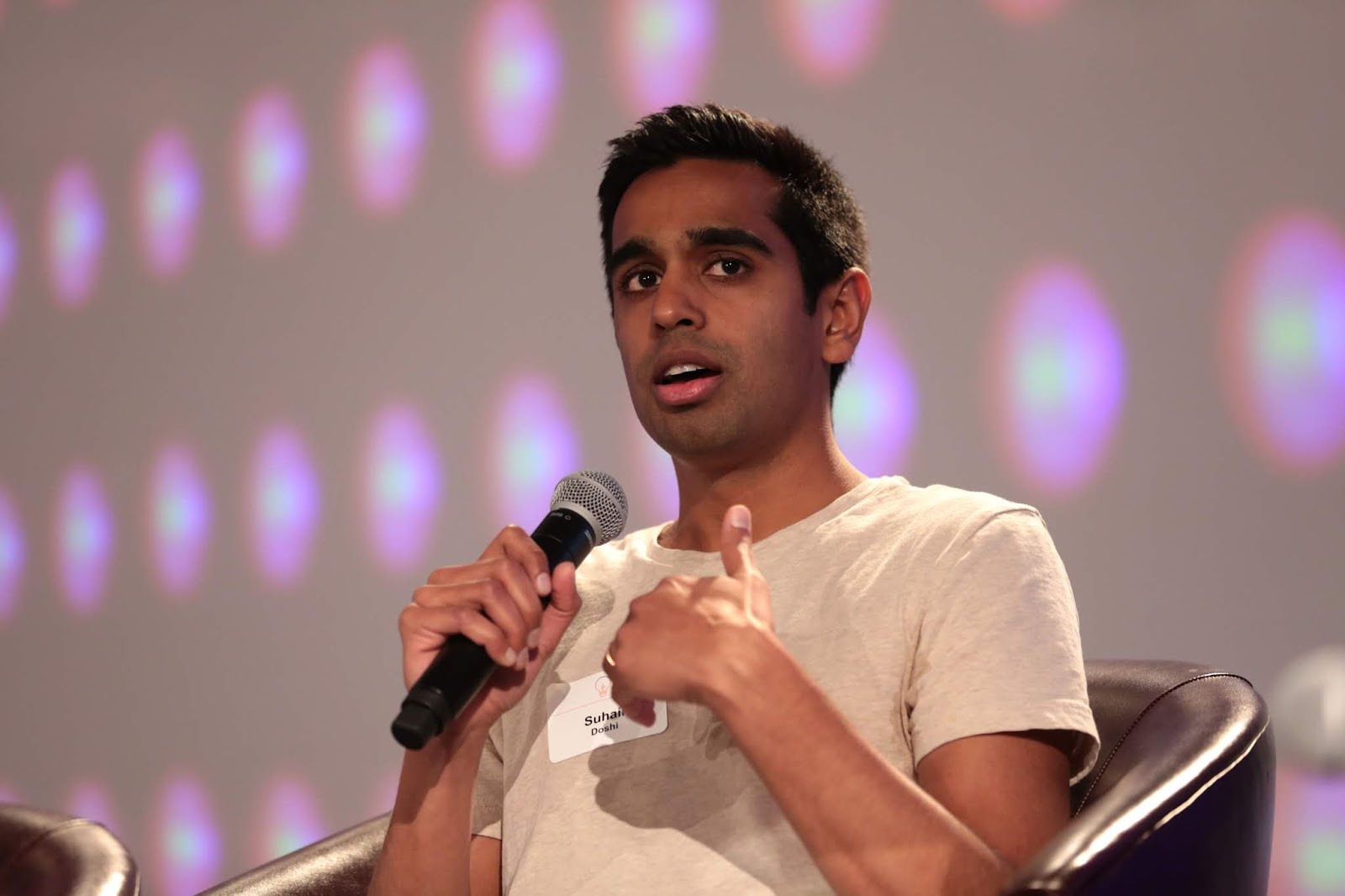
Selling a better question
A good product still needed customers who understood why it should exist. Doshi helped make the case for engagement measures to journalists and investors. If those people began asking founders about active use, the founders would need a way to answer. Teaching the market to ask a different question created demand for the instrument that could answer it.
Closer to the ground, the work was considerably less grand. Doshi later described talking directly with users and helping more than two hundred early customers through chat. He urged engineers to leave their monitors and sell. The first steps inside a product deserved as much care as everything that followed. A new visitor who could not get started was unlikely to admire the architecture.
His customer-acquisition advice carries the marks of someone who remembers being ignored. Email is comfortable. People can ignore it comfortably, too. He warned against chasing viral growth before users had a reason to return. Getting a larger audience for a disappointing early product could simply enlarge the disappointment. Retention needed attention before amplification.
Within Mixpanel, he also kept a distinction between measuring an outcome and imagining a worthwhile product. Making a button larger might increase clicks. That observation alone could not tell a team whether the enlarged button improved the experience. Creativity supplied possibilities; data helped judge their consequences. For an analytics founder, this was a useful refusal to give the dashboard the whole job.
The founder learns to let go
By 2018, Doshi had enough distance to write about what becoming CEO at twenty had taught him. Giving up control had been particularly difficult. At the beginning, everything seemed important, and he wanted a hand in it. As the company grew, that instinct became something he had to work against. A founder’s attention could become a queue everyone else waited in.
He recommended feedback, coaching and choosing a few concrete improvements each year. He also suggested telling employees what those improvements were. The person at the top could make their own learning visible. His account gave luck, mistakes and other people their share of the credit, rather than treating the organisation as an enlarged version of a single mind.
In April 2018, Doshi handed the CEO role to Amir Movafaghi and became chairman. The title change matters in a profile that can otherwise freeze him permanently as Mixpanel’s CEO. He had co-founded the company and led its early years. There would be other people responsible for its next chapters.
His earlier description of founding remains a useful corrective to the glamour of the title: “We’re the founders and the janitors.” A company generates tasks that need doing regardless of whether anyone finds them interesting. Giving colleagues the appealing work and taking on the unclaimed chores was part of the job. Ownership, in that telling, came with a broom.
“We’re the founders and the janitors.”Suhail Doshi, on the work of founding
A computer on the other end of the wire
Doshi started his second company in 2019. Mighty attempted to make the browser faster by moving its heavy work to a computer in a data centre and streaming the result back to the user. Anyone who has opened an ambitious collection of tabs will recognise the complaint. Mighty proposed a technically demanding answer to a rather ordinary daily irritation.
The larger ambition was a different kind of computer, with fewer limits imposed by the machine sitting on the desk. That ambition required solving awkward problems in networking and responsiveness. A streamed browser still had to feel immediate. Users were trying to work, and a perceptible pause would be part of the product whether the engineers liked it or not.
In November 2022, Doshi announced the move away from Mighty toward AI creative tools. The browser had demonstrated technical possibilities without finding a sufficiently large market. It is an episode worth keeping in view alongside Mixpanel. A difficult thing can work and still fail to become a business that justifies continuing it.
His writing from this period includes a revealing habit: ask industry experts why they think the company will fail. He had written out a seven-page plan and invited friends to challenge it. The invitation is almost comically inhospitable to reassurance. It also makes sense for someone whose first business involved persuading people to scrutinise the numbers they preferred to celebrate.
An image is only the beginning
Playground brought him into generative graphics. By December 2023, its work included an image editor and a model trained from scratch. The company had announced $40 million in financing. Doshi had been learning AI while building, returning to the position of someone who needed to acquire unfamiliar technical knowledge rather than rely on an established reputation.
The ambition extended beyond producing a picture from a sentence. A person making something usually wants to revise it. Change a detail. Keep another detail. Place the result somewhere useful. The generated image is one moment in that process, and a graphics tool has to serve the moments around it. Playground’s tools included editing and previews, bringing the question back to what a user could actually do.
In February 2024, Doshi appeared among six authors of the Playground v2.5 research paper. Its concerns were concrete: colour and contrast, different image proportions, and fine details involving people. The team also examined alignment with human preferences. Those are product problems as well as research problems. A model’s output eventually meets somebody with a particular picture in mind.
In conversations that year, Doshi discussed the gap between technical benchmarks and what people want, and the prospect of a model that could generate, edit and understand pixels. His focus on the full creative process makes the analytics connection visible again. A convenient measurement can describe part of the experience while leaving the person’s real objective outside the frame.
Five weeks, five songs
The personal website offers a smaller, more revealing inventory. There are links to Spotify, Apple Music and YouTube Music. Then a sequence of tracks, labelled by week: “roundandround,” “we are the night,” “pressure,” “halfway” and “all the way up.” A playlist gathers them under the name fiftytwo. The page lets the work introduce itself.
Music adds another dimension to the public record of a programmer and company founder. His interest had already surfaced in conversations about AI and creative expression. On his own site, the object is something a visitor can simply play. A song asks for a few minutes of attention, without requiring the listener to understand the infrastructure behind it.
There is a pleasing modesty in that weekly numbering. Company histories tend to arrange themselves around funding rounds, titles and announcements. Week One and Week Two offer another unit of progress: finish something, put it where another person can encounter it, begin the next. The labels make no claim about an audience’s eventual verdict.
Doshi’s public work keeps bringing him back to that encounter. The analytics customer needs to understand an action. The browser user wants the machine to keep up. The person making an image wants control over the result. The listener presses play. After years spent helping other people count engagement, he has supplied a few more things someone might choose to engage with.