Before there was an $800 million deal, there was a sermon that was awkward to play on a phone. In 2009, Tim Turner heard a challenge at church: use your gifts to serve the Gospel. He and his wife, Kristy, already knew how to make software. The question was what happened when they applied that knowledge to the congregation down the road.
Their company, Subsplash, had started four years earlier as a design and consulting studio. Its work included software for brands such as Microsoft, Samsung and Expedia. A church app was a change of customer, and a rather different kind of brief. The first one was built pro bono for their local church. Other churches soon wanted one.
- The customer: more than 20,000 churches and ministries worldwide.
- The product: church apps, media, giving and management connected in one platform.
- The economics: software subscriptions plus payment processing; giving alone has no monthly subscription fee.
- The deal: Roper acquired Subsplash for $800 million in July 2025.
The sermon that needed a shortcut
Turner’s January 2026 account describes the original nuisance precisely. Listening on a smartphone involved downloading, importing and syncing. Each step gave the listener another opportunity to put the whole thing off. A message intended for everyone had acquired the entrance requirements of a modest IT project.
He says the couple put all their savings into building the app. He also reports more than 10,000 downloads in its first week. Those are the founder’s recollections, and they explain the wager: make an existing activity easier, then see whether people repeat it. A phone could become a place to return to the church’s teaching during the week.
“If we can build this kind of innovative software for entertainment and business, we can certainly do it for the Gospel!”
Tim Turner, reflecting on the beginning in January 2026

Subsplash’s identity remains openly Christian. Its stated values are humility, innovation and excellence; its recruiting pages emphasize design and usable products. By its twentieth anniversary in August 2025, the company described a remote-first team of more than 300 people. The consulting studio had become a business devoted to the work of churches.
The church’s week becomes the product
An app creates a useful first connection. It also reveals everything beside it. A church needs somewhere to store recordings. It needs a website. A member wants to give. A group wants to talk. Someone has to schedule volunteers, register children and keep track of people. Separate tools can accomplish these jobs, but the handoffs become work of their own.
Subsplash followed that sequence. Giving arrived in 2016. Websites and one-click publishing followed during 2017 and 2018. Messaging and live streaming expanded the offering during 2019 and 2020. Subsplash One later brought engagement and church management together, including people records, groups, check-in, volunteers, service planning and events.
Illustrative workflow. Available features depend on the church’s package and configuration.
The media offering helps explain Subsplash’s position. Its hosted player keeps the church’s content in view without advertisements or competing video recommendations. Staff can tag recordings by topic, speaker or scripture and distribute podcasts. Live content can also reach Facebook and YouTube. The church gets a home for its library while still using outside channels to reach people.
For a church with several campuses, the shared experience has another purpose: continuity. Subsplash describes an app in which campuses can carry their own content, service times and giving within one church experience. The buyer is an organization; the daily users include staff, volunteers, congregants and donors. Software must make sense to all of them.
The price hiding inside free
Subsplash Giving has no monthly subscription charge. It still has a price. The support documentation lists standard and giving-only card processing at 2.99% plus 30 cents per transaction. Exclusive partnership pricing starts at 2.3% plus 30 cents. ACH bank transfers start at 1%, without a fixed transaction fee.
GrowCurve can reduce eligible effective rates as giving increases, as low as 1.9% for cards and 0.5% for ACH. Those reduced rates should not be mistaken for everybody’s starting rate. Donors can also cover processing costs; the fee is calculated on the enlarged transaction, and those covered transactions are excluded from GrowCurve calculations.
How much stays with the church?
Illustrative net proceeds at published starting rates. Excludes GrowCurve, donor-covered fees and software subscription costs. Actual terms vary.
Subsplash One is a separate buying decision. Its subscription price is quoted according to church size, features and usage. A finance team therefore has two sums to examine: what the software costs and what the donation mix costs. A congregation with many small card gifts will produce different arithmetic from one receiving fewer, larger bank transfers.
This is also where competitors deserve a look. Planning Center offers a shared people database and connected operational tools; its Giving product combines processing fees with a subscription based on donation count. Tithely also sells giving, websites, branded apps and church management. Integration is a contested territory. Subsplash’s pitch draws on the breadth of its media and engagement tools, then connects them with payments and administration.
A sermon gets a second shift
In December 2024, Subsplash announced its acquisition of Pulpit AI. The product takes sermon material and produces additional content: social video clips, recaps, newsletters, devotionals and small-group guides. The same recording can supply several formats without asking a church’s communications team to begin each one with a blank page.
The practical appeal is easy to see. A pastor has already done the thinking and speaking. A volunteer may have only a few hours to edit and distribute it. Pulpit AI works on the material between those two people. The outputs still need a human reader who knows the message and the congregation; useful automation is a starting point for editorial judgment.
The distribution strategy reached ministry education in September 2025, when Subsplash announced a partnership with Southeastern University’s Barnett College of Ministry & Theology. Students and future pastors would receive access to Pulpit AI for preparation and content work. The company was reaching the people who might later choose these tools for a church.
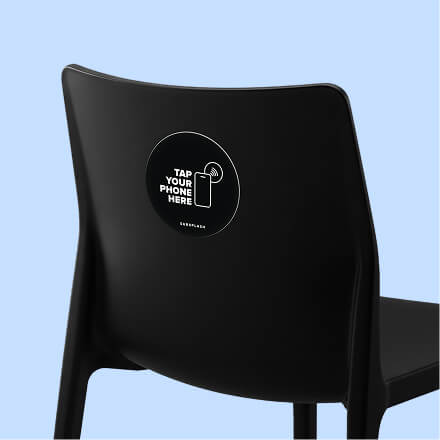
There is a pleasingly small physical companion to all this software. Subsplash Tap, announced in June 2025, uses contactless products to open links for giving, forms, events or joining groups. Standard discs are listed at $3 each; custom designs at $5. Staff manage destinations from the dashboard. A seatback can point to today’s action without acquiring a new sticker every week.
Ember Church appears in a customer spotlight about using Tap to simplify connection. The premise is the same as the original sermon app: an intended action is more likely to happen when getting there involves less fuss. The camera, the payment system and the humble disc are different answers to that recurring problem.
What $800 million bought
Roper announced its agreement to acquire Subsplash on July 21, 2025. The transaction closed on July 25. Its annual filing records an $800 million purchase price, net of cash acquired and certain liabilities assumed. That number belongs to an acquisition. It is not an $800 million financing round sitting in Subsplash’s bank account.
Roper’s purchase price for Subsplash.
K1, which invested in 2019, says annual recurring revenue grew organically by roughly seven times from the fiscal year before its investment. Its account emphasizes wider product capabilities, adoption by existing customers and more customers attaching payments to the platform. That is an investor’s account of growth, rather than a published annual revenue figure, but it describes the commercial logic clearly.
Roper placed Subsplash in its Network Software segment. When announcing the deal, it pointed to the company’s growth and opportunities to advance AI capabilities. For a customer, the consequential question is what sustained ownership delivers in development and support. The purchase price measures what the buyer paid; the weekly experience measures what the church receives.
Copy the small beginning
The useful lesson travels beyond church software. Start with an activity people already want to complete. Remove the steps that make it irritating. Then watch the neighboring jobs closely. Subsplash’s path suggests that a narrow first product can lead to a wider business when the same customer repeatedly encounters related problems.
A church evaluating that wider business can borrow the same discipline. Try publishing a real sermon, scheduling a real volunteer and reconciling a real donation. Subsplash’s own messaging guide recommends starting with a small-group ministry before expanding. A manageable pilot is more revealing than a demonstration in which everything has already been prepared.
The value depends on adoption. Keeping every old specialist tool while adding another platform may leave the handoffs intact. A church that needs only a simple donation page may have little use for the full suite. And a generated study guide helps only when someone reviews and uses it. The next step still belongs to a person. Subsplash’s business is to make that step easier.
Explore the platform
Subsplash website ↗ · Packages & pricing ↗ · Company blog ↗ · Newsroom ↗
LinkedIn ↗ · X ↗ · Instagram ↗ · Facebook ↗
WATCH THE TOOLS AT WORK▶ Subsplash One overview Product video ↗▶ Groups & Messaging demonstration Webinar ↗▶ Ember Church and Subsplash Tap Customer spotlight ↗