At St. Luke’s Cornwall Hospital, the linen lesson had already been taught. Staff had heard about use and costs. The hospital had adjusted the amount of linen on its exchange carts. Yet consumption kept climbing. An approaching linen loss bill suggested that the cupboard was winning the argument.
That is an awkward problem for a hospital. Clean sheets are essential; watching people take them is nobody’s idea of good patient care. Make supplies scarce and staff have another worry. Leave everything freely available and purchasing can become an expensive exercise in replacing things that should still be circulating.
- IPA builds the cupboard: automated scrub and linen equipment with controlled access.
- Software watches the stock: usage data and alerts help teams replenish it.
- Returns matter: scrub credits discourage garments from staying out indefinitely.
- The evidence is specific: reported hospital savings depend on local workflows.
01 / The cupboard changes the conversation
St. Luke’s had previously used IPA’s scrubEx to tackle scrub loss. It returned to the company for alEx, its automated linen centers. IPA studied utilization to identify useful locations, then helped set par levels - the quantities needed to keep each location stocked. Fourteen centers covered more than 80% of distributed linen. The laundry provider joined the planning and delayed the impending bill.
IPA’s published account reports $141,020 saved in the first year, equivalent to 25% of total linen costs. The hospital’s return performance improved enough for the laundry to issue a rebate. The intervention reached beyond a lock: location, stock levels, and the replenishment routine changed together.
“There was a lot of fear from our nursing staff about the change to alEx.”Joe Surace, then VP of Operations, St. Luke’s Cornwall Hospital
Surace said nurses changed their view after seeing how the system communicated with housekeeping to keep linen available. The sequence matters. A cabinet could look like an obstacle until the replenishment behind it became dependable. The practical bargain was fewer supply worries in exchange for a different way of taking linen.
02 / A machine for the last few feet
IPA, short for Innovative Product Achievements, makes equipment for the point where hospital inventory becomes somebody’s responsibility. Its specialty is surgical scrubs, linen, and uniforms. Hospital purchasing may negotiate the price of cloth; IPA concentrates on who takes it, whether it comes back, and whether the next person can find what they need.
The scrubEx line provides authorized staff with clean scrubs using controlled access. IPA advertises dispensing in less than five seconds. Machines come in different capacities and slim configurations intended for placement in or near changing rooms. alEx applies covered, controlled distribution to linen, including linen centers and single-dispense equipment.
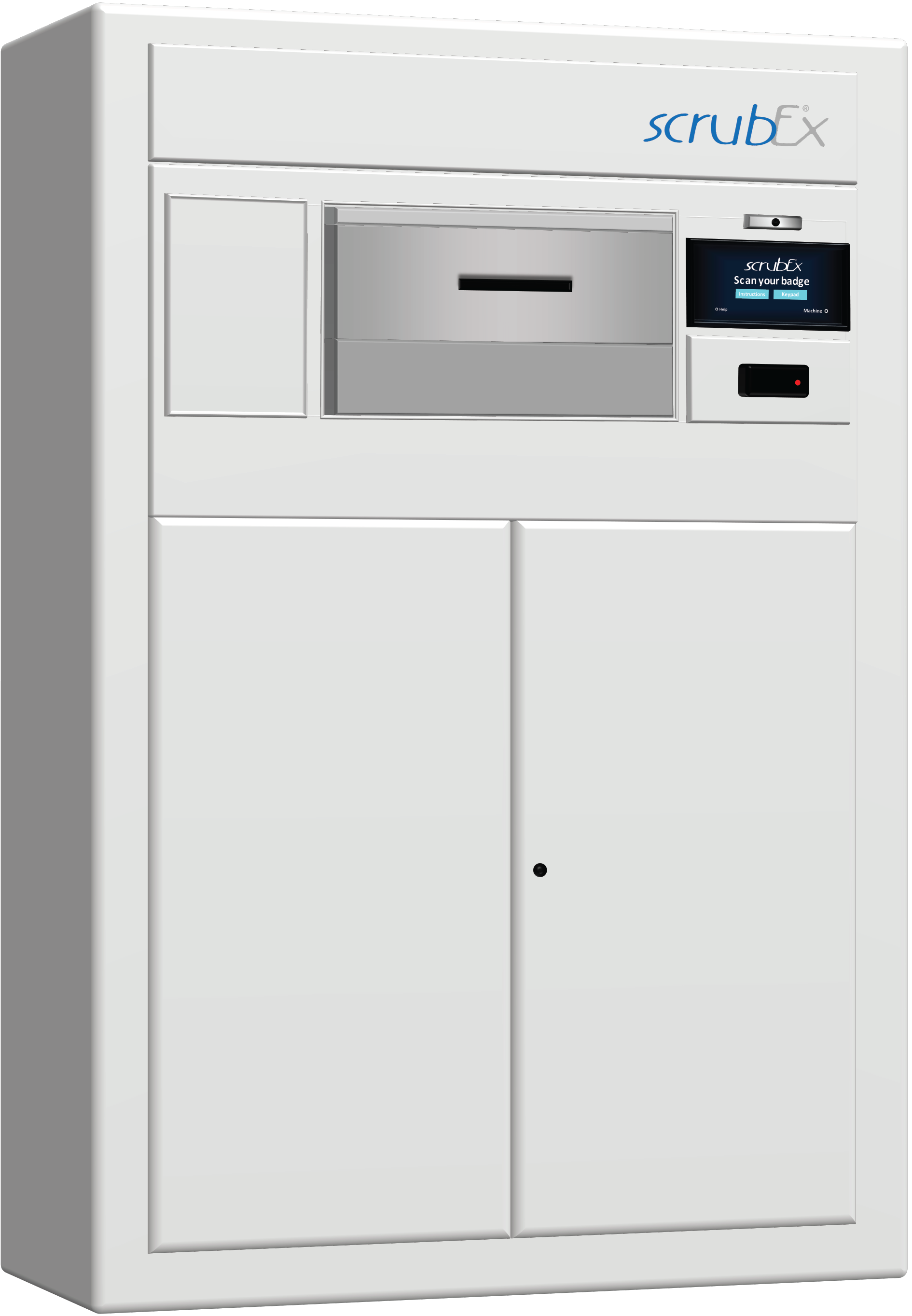 A place for the scrubs
to come back.
The credit arrangement in IPA’s Maricopa case study limits outstanding scrubs per surgeon. Return a garment and access can continue within the configured allowance. Maricopa had found that 40% of scrub wearers were unauthorized. It reported fewer replacements after restricting access, alongside less rummaging through disordered carts.
Current software, clariFy, supplies web-based utilization and inventory visibility. Dispenser and receiver fill levels, plus threshold alerts, tell linen teams where attention is needed. A user at a cabinet and a manager looking at a dashboard are dealing with the same stock from different ends of the problem.
03 / The arithmetic of a missing scrub suit
Sunrise Hospital & Medical Center offers a particularly clear breakdown. Environmental services director Sam Vasquez began investigating automation after finding monthly scrub costs averaging more than $20,000. The selection criteria were financial control, providing suitable scrubs to surgeons and staff, and enclosed storage.
In IPA’s case study, annualized replacement spending fell from $188,000 to $5,000. Processing spending fell from $60,000 to $22,000. Those are distinct savings: buying fewer replacement garments and washing fewer garments. Added together, the reported reduction was $221,000 annually.
Two expenses. One access problem.
Bars share a $188,000 scale. Historical customer result; equipment purchase and service costs are not shown.
A buyer still needs to separate an operating saving from a return on investment. This chart establishes neither the purchase price nor the full cost of ownership. Equipment, software arrangements, installation, maintenance, and local labor all belong in the purchasing calculation. IPA sells through a quote process, so a hospital must compare its own proposed contract with its own baseline.
04 / The visitor in orange
UC Irvine’s vendor program shows a different use for the same machinery. Vendors could arrive in scrubs from home or another hospital; matching staff colors made them harder to identify. The hospital introduced dedicated orange scrubs, paid access through vendEx, a separate dispenser, and a requirement to return the set before continued access.
The published one-year transaction summary lists a $5 scrub item charge and a $25 access fee. Together they generated $38,175. These are historical program charges, not cabinet prices. The color did part of the work the software could not: somebody walking down a corridor became easier to recognize as a vendor.
05 / A factory behind the interface
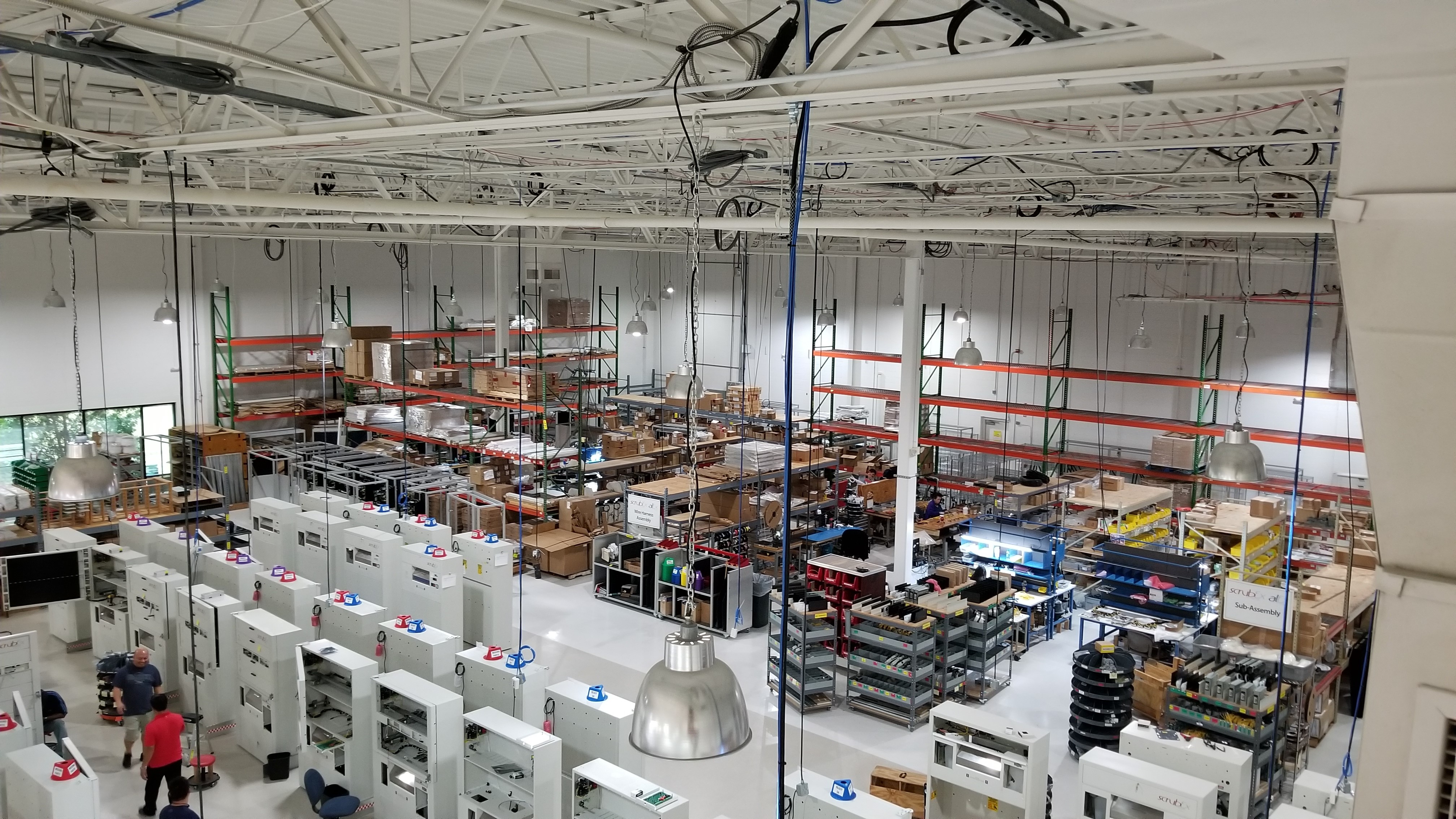
IPA introduced its first healthcare linen automation product in 1995. Roper acquired it in August 2014, when the sale announcement described installations in more than 650 North American hospitals. The acquisition placed a specialized equipment business within a larger technology group.
By January 2018, IPA announced its 10,000th manufactured unit, an alEx center. Its present company page reports installations in more than 1,000 hospitals worldwide, spanning community and academic facilities. Customers also include laundries and government healthcare operations. The company makes its solutions in the United States.
Keeping that installed equipment working is another offering. coverCare includes parts, labor, remote and on-site support, and preventive maintenance. IPA describes an annual inspection with more than 100 checkpoints. The commercial proposition joins physical equipment, software, operational expertise, and service. For a hospital, an available dispenser matters at the start of every shift.
06 / Study the cupboard before buying one
IPA occupies a specific part of healthcare supply management: the distribution transaction. It does not perform the laundry in these examples. It connects access to inventory information and supplies equipment through which local policies can operate.
Alternatives include manually managed exchange carts and automated systems such as ScrubTrak, marketed by Medline with Intelligent Dispensing Solutions. ScrubTrak also offers dispensing, returns, and tracking. IPA’s range extends from scrubs to broader linen control, with consulting and service attached. A purchasing comparison should examine cabinet footprint, stocking effort, return convenience, software, and support arrangements.
The transferable lesson is to measure the process before changing it. Separate laundry expense from replacement expense. Identify distribution points with heavy use. Agree on appropriate access and stock levels with the people who run the wards and laundry. St. Luke’s targeted deployment is a useful example of that sequence.
The same examples suggest the conditions the equipment needs. Alerts require a replenishment team able to respond. Cabinets need practical locations. Permissions must reflect actual clinical work. A busy department with weak restocking could turn controlled access into another frustration. Those are operational implications, not measured outcomes from the case studies.
Covered storage can support infection-control procedures; it should not be mistaken for evidence that a cabinet alone reduces infection rates. The more persuasive claim here is also the plainer one: hospitals can know more about ordinary supplies and put that knowledge to work. A clean sheet should reach a patient. It need not acquire an adventurous private life along the way.