In May 2008, Steven Francis stood against a wall at the Joyce Beers Community Center in San Diego, took a few deep breaths, and prepared to address the Hillcrest Town Council. He had three minutes. Then came five questions from an audience of about 50 people. One woman wanted to know who was paying for all those television commercials.
“From my own back pocket,” Francis replied.
It was an unusually literal answer to a familiar political question. Francis had money to spend because he and his wife, Gayle, had built AMN Healthcare. He wanted to become mayor because, in his telling, San Diego needed a different kind of leadership. A company could establish his credentials. A room full of residents would decide what those credentials were worth.
The scene captures a recurring feature of his career: entering institutions with very different rules. A legislature, a listed company, a neighborhood meeting, a nonprofit board. Each offers a chair. Each has its own way of deciding who gets to sit in it.
Before the founder came the legislator
Francis’s public career began in Nevada. Elected to the State Assembly in 1982, he served from 1983 to 1987 and became majority leader in 1985. He had graduated from the University of Nevada, Las Vegas, in 1978. Before founding AMN, he also held management positions in the hospitality industry.
Those details complicate the familiar picture of a business founder discovering politics after making a fortune. Francis had already worked inside government. The company arrived while he was still serving in the legislature. His career grew along two tracks before either became the story most people knew.
In March 1985, Steve and Gayle founded American Mobile Nurses. The original name was almost a business plan in three words: a profession, a country, and the willingness to move. Gayle was a co-founder, rather than a supporting character in somebody else’s entrepreneurial biography. Their names would appear together again when the business reached a very different stage.
Two years later, the company moved from Las Vegas to San Diego. Francis’s legislative service ended in 1987; the company’s relocation took place that July. The shift gave his subsequent business and civic work a common geography. San Diego would become the place where his commercial success was visible, his political claims were tested, and his institutional interests overlapped.
A company outgrows its original name
AMN’s early milestones have a pleasingly unglamorous specificity. Its first traveler was Doris Ward, placed in Reno in 1985. By November 1996, the business had 1,000 travelers on assignment. That same autumn, it launched its first websites. Expansion meant more people and a new way of reaching them.
The organization changed shape as it grew. It combined American Mobile Nurses and American Mobile Therapists in 1994. It acquired Medical Express in 1998. The AMN Healthcare name followed that December, bringing together a broader operation while retaining separate recruitment brands.
A founder’s achievement is often compressed into the phrase “built a company.” That leaves out the successive versions of the company that have to be built. The first placement and the thousandth assignment belong to the same history, but they require different organizational habits. Acquisitions add another complication: bringing businesses together without making every useful distinction disappear.
On November 13, 2001, AMN became publicly traded. Sixteen years separated the founding from the listing. The date supplies a clean milestone, though the work that precedes such a milestone rarely arrives in a clean line. Francis had helped take a business formed with his wife into a market where ownership, performance, and accountability were open to a much larger audience.
The chief executive changes chairs
In 2005, AMN arranged a leadership transition. Francis would become executive chairman, taking an active role in strategic development and operational oversight. Susan Nowakowski would become chief executive. She had been with the company for more than 15 years and had held senior finance and operating roles before becoming president.
This was a handover to someone who knew the organization from within. It also gave Francis a new relationship to the enterprise he had co-founded. Executive chairman carried substantial responsibilities, but the chief executive’s title and daily mandate would belong to somebody else.
Succession is a revealing passage in any founder’s story. The business has to keep moving when the person most closely identified with its beginning changes jobs. A long-serving colleague offers continuity; a formal change of authority makes the next phase possible. Both were present here.
Francis remained chairman until 2008. His biography therefore has several distinct AMN chapters: founding, executive leadership, chairmanship, and later action as a shareholder. Treating all of them as one uninterrupted position would miss much of what makes his relationship with the company interesting. An organization can remain central to a founder’s life after the founder no longer runs it.
City Hall has a different hiring process
Francis entered San Diego’s 2005 mayoral contest with a business-oriented platform. The city was dealing with financial turmoil following Mayor Dick Murphy’s resignation. Francis argued for applying business principles to government. He finished third, behind Donna Frye and Jerry Sanders, and missed the runoff.
The result exposed the limits of a commercial résumé in a political contest. A candidate can present executive experience; voters still have to want that particular executive, at that particular moment, to exercise public power. A company’s record provides an argument rather than an appointment letter.
Francis returned in 2008 with a more populist campaign. His official candidate statement promised pension and fiscal reform, open government, repairs to parks and potholes, protection of neighborhoods from large developers, and environmental leadership. He also offered to accept a salary of $1 a year.
That dollar was a compact piece of campaign theater. It made the promise of service easy to remember. The longer list of commitments was harder: it covered the practical inconveniences of city life alongside disputes over money, development, and power. A pothole may occupy less space in a speech than a pension deficit, but residents encounter it more often.
Three minutes, five questions
Back in Hillcrest, Francis spent much of his allotted speaking time criticizing Sanders. The questions then moved the conversation onto residents’ terms. Someone asked whether his administration would send representatives to neighborhood planning meetings. His answer offered personal attendance if necessary.
The exchange shows the particular demands of local politics. A citywide campaign can buy airtime. A neighborhood audience can ask who will actually show up. At this scale, access is a concrete matter: a meeting, a representative, an answer. The candidate’s wealth may explain the advertisements without satisfying the next question.
His environmental ambitions also reached beyond conventional party expectations. Francis, a Republican, had received a Sierra Club endorsement. He wanted San Diego to stand alongside San Francisco, Portland, and Austin on environmental initiatives. The aspiration was publicly stated during that campaign, tied to a specific office and a specific election.
The broader environmental platform included green building standards, hybrid vehicles for the city fleet, and a goal of making the city carbon neutral. These were proposals, rather than accomplishments. They show how far the 2008 pitch ranged from the business principles emphasized three years earlier. Sanders won reelection. Francis’s second attempt ended without the mayor’s job.
HILLCREST · MAY 2008“From my own back pocket.”
Steve Francis, asked who paid for his campaign commercials
The argument moves back to the boardroom
After leaving AMN’s board, Steve and Gayle Francis challenged aspects of the company’s governance. In February 2009, the parties reached a settlement. AMN agreed to lower the ownership threshold for shareholders to call a special meeting from 25 percent to 20 percent.
The company also agreed to a governance policy limiting its board’s ability to adopt a shareholder rights plan, commonly called a poison pill, without shareholder approval. The Francises agreed to dismiss their Delaware litigation and withdraw another shareholder proposal. They also agreed against soliciting proxies to oppose AMN directors at the forthcoming annual meeting.
The dispute ended in changes to procedure. That is a less cinematic outcome than a founder reclaiming the corner office, and more precise. The question concerned what shareholders could ask of the company and how the board could act. Five percentage points can sound small until they sit inside the rules governing who may convene a meeting.
This episode adds texture to the founding story. Steve and Gayle were still acting together, but now across the table from the organization they had started. Building an institution does not settle every future argument about its authority. Sometimes it gives the founders a particularly strong reason to keep arguing.
A civic life beyond the ballot
Francis also established the San Diego Institute for Policy Research in 2006. It produced economic and public-policy work, including a 2007 study with the Reason Foundation on competition for municipal service contracts. The report examined 11 areas, from printing and vehicle maintenance to libraries and parks.
Its estimates were proposals about possible savings, rather than a record of savings achieved. Francis wanted the work to influence how city leaders approached operations. Here was another route into civic decision-making: organize research, publish alternatives, and try to change the discussion without holding the mayor’s office.
His nonprofit work placed him in yet another kind of governing role. Father Joe’s Villages’ 2014 annual report listed Steven Francis as chairman of the S.V.D.P. Management board and president of Francis Enterprises. The same public life that produced campaign commercials also included the slower work of organizational oversight.
There was a family continuation in business, too. His son Adam founded Host Healthcare in 2012. Adam described growing up familiar with the staffing industry through his father’s involvement in AMN. The connection is a small but telling detail: an industry can become part of the background of a childhood before it becomes a career choice.
Experience becomes the next assignment
Francis chaired Medical Solutions during its 2012–2015 growth period and became executive chairman of AHS Staffing in October 2016. These positions extended his work beyond the company associated with his name. Leadership experience became something he could bring to another organization.
In February 2022, Opus Match announced that Francis and Wonolo co-founder AJ Brustein had joined its advisory team. The pairing brought a long-established staffing founder together with an entrepreneur associated with on-demand work. Opus’s business centered on software for staffing and workforce management.
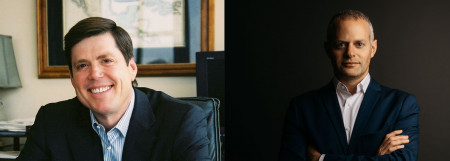
Francis remains listed as an advisor on Opus Match’s public team page. It is a fitting later chapter for someone whose early company name emphasized mobility. The methods of matching people with work have changed; the organizational problem still invites experienced judgment.
His career is best understood through those changing assignments. Nevada gave him elected authority. AMN gave him the chance to build and then hand over a company. San Diego’s voters twice declined to give him the office he sought. Boardrooms and civic organizations offered other places to act. The neighborhood meeting remains a useful image to carry away: a founder with a business behind him, three minutes ahead of him, and an audience ready with its own agenda.