Steve Stoute was sitting in his driveway in Queens when the voice arrived. The song was Nas's “It Ain't Hard to Tell,” released before Illmatic, and the teenager on the record sounded to Stoute like somebody he needed to know. There was no introduction waiting, no useful search box, no front desk at Queensbridge Houses. So Stoute went there and started asking. One of the first people he happened upon was Nas's brother, Jungle. The absurdly direct expedition worked.
It is tempting to file that episode under industry folklore: young operator hears genius, finds genius, eventually manages genius. Its better use is as a map. Stoute's career has repeatedly begun with a signal that did not come with directions. He hears something early, walks toward it and figures out the structure after he arrives. The method took him from artist management to executive jobs at Sony Music and Interscope Geffen A&M, then out of records and into advertising, then back into music through technology.
The scenery changed. The question underneath did not. Who is creating the value, and why are they so often the last person allowed to own it?
“When the unknown is a better option than the known, run in that direction.”Steve Stoute
The expensive CD and the cheap education
By the end of the 1990s, the record business looked enviably healthy. It also looked wrong to Stoute. A compact disc could cost $16.99 even when the buyer wanted one single. Distribution was controlled, radio and MTV were guarded, and a generous business model could make average judgment look clever. Napster had appeared at the edge of the picture. The economics had begun whispering their objection.
Stoute had done well inside that system. He had managed producers, worked with Nas and Mary J. Blige, helped shape Will Smith's recording career and occupied senior label offices. Leaving was not an escape from failure. It was a refusal to confuse a boom with permanence. He took a steep pay cut to work with advertising executive Peter Arnell and learn another industry from the inside. Stoute has described the move with characteristic economy: he did not yet know advertising, but he knew the familiar option was heading in the wrong direction.
One career, four rooms
Advertising had its own stale bargain. Agencies commonly divided audiences into Black, white and Hispanic lanes, then congratulated themselves for changing the language or casting. Stoute had learned from records that culture behaved with less respect for boxes. DMX sold in Iowa. Two teenagers with different backgrounds could meet inside the same devotion to skateboarding. The useful unit was not a census label but a shared value.
The missing piece was obvious to someone who had watched music move behavior. Artists could make glasses, clothes or slang desirable, while the commercial reward wandered elsewhere. When Will Smith's screen presence helped send demand for a style of sunglasses skyward, Stoute saw more than product placement. He saw an unpaid invoice from commerce to culture.
A rapper walks into a shoe company
The S. Carter sneaker deal made the argument visible. In 2002, Reebok announced a signature line with Jay-Z. Signature shoes belonged to athletes; this one carried the name of a rapper. Stoute, then working with Arnell Group, helped build the partnership and campaign. The heresy was wonderfully practical. Plenty of customers wore sneakers to match a shirt or signal taste, not to shave a tenth of a second off a sprint. Music had authority in that market. The shoe business simply had not written the correct job title for it.
The line reached stores in 2003 and sold quickly. A category widened. The deal did not invent the bond between hip-hop and sneakers, a fact that would have surprised every kid alive at the time. It did force a corporation to price that bond as something more substantial than borrowed cool.
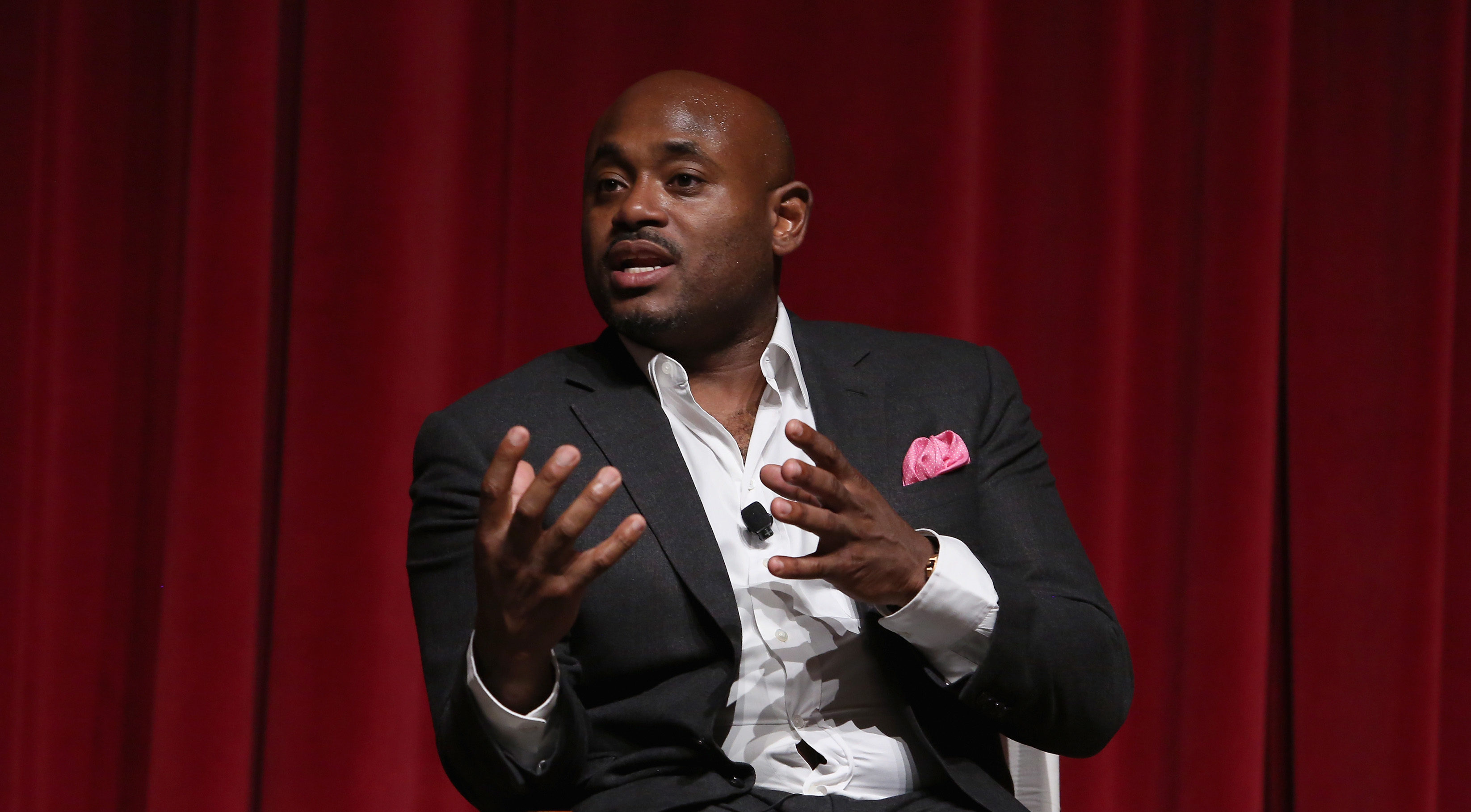
In 2004 he founded Translation, an agency whose name doubled as its assignment: explain culture to companies without sanding off the thing that made it matter. Its work stretched across brands including State Farm, the NBA and Beats. Stoute also participated in the artist-and-brand thinking around McDonald's “I'm Lovin' It” era. He later wrote The Tanning of America, his 2011 argument that hip-hop had rewritten the rules of mainstream culture and commerce. VH1 turned it into a four-part documentary in 2014.
The book's title has aged less neatly than its core observation. Culture was not traveling from a small “urban” niche into a stable mainstream. It was becoming the mainstream, reshaping fashion, language, marketing and ambition as it moved. Corporate America could either understand that movement or keep buying a tourist's map.
The Stoute ledger
The return ticket to music
Stoute left the record industry in 2004, but he did not stop watching it. Streaming repaired consumer convenience long before it repaired every artist's leverage. A song could reach the world in an afternoon, yet the people who made it still faced opaque accounting, delayed payments and contracts built around surrendering control. Technology had changed listening. Stoute believed it should also change the economics.
UnitedMasters, launched in 2017, was the return ticket. Its pitch was ownership with infrastructure: digital distribution, audience information, marketing tools, licensing opportunities and connections to brands. An artist could reach Spotify, Apple Music and other services without treating a traditional record deal as the only front door. The company described itself as a record label in your pocket, a neat phrase with a serious second half. The phone was not the point. Agency was.
The financing brought together Alphabet, Andreessen Horowitz, 21st Century Fox and Apple across the company's first three disclosed rounds. Those names offered capital, of course, but also revealed the bet's shape. UnitedMasters sat where media, software, advertising and music overlapped. Its NBA partnership placed independent artists across league content. Later arrangements extended the model to artists and entrepreneurs such as Brent Faiyaz and Davido, whose Nine+ Records partnership was designed around new acts retaining masters and royalties.
Ownership can become a decorative word if the machinery beneath it stays slow. In 2025, UnitedMasters introduced Real-Time Royalties for eligible artists, making Apple Music and Spotify earnings available on a near-daily basis instead of after the usual reporting delay. It also launched Blueprint AI, a career coach intended to turn platform data into release and marketing guidance. One tool addressed cash flow; the other addressed judgment. Both tried to supply functions once used to justify giving a label control.
Artists are businesses, not inventory
Stoute now talks about independent artists as small businesses. The comparison is less glamorous than the mythology of discovery, which is why it is useful. A serious artist needs working capital, distribution, marketing, customer knowledge, rights management and a way to collect money. So does a shop. The modern difference is that the storefront may be a feed and the inventory may be a catalog that can earn for decades.
His current ambition reaches beyond distribution. The next contest, as he describes it, is the direct fan relationship. Streaming services know the listener; the artist often receives an aggregate. Stoute wants artists able to collect first-party audience data, send the newsletter, sell directly and understand who returns. In that future, a musician is not merely a supplier to somebody else's platform. The musician owns a customer relationship.
There is an amusing consistency here. The executive who once walked into Queensbridge because there was no obvious front door has spent years trying to remove front doors that charge creators too much. He is not sentimental about institutions, including his own. His language is full of owners, businesses, equity and leverage. Culture may be thrilling; the paperwork still decides who gets paid.
“Artists create the culture. They should own the upside.”Steve Stoute
That conviction also explains his abrasiveness in old stories. Stoute has said he became an advocate because producers were not paid fairly and artists signed agreements they did not understand. Advocacy made him willing to be the disliked person in a room. One dispute brought Jay-Z's team to his Sony office expecting confrontation. They found Stoute alone and barefoot. He joked that there was no point arguing unless big houses were involved. Everybody laughed, and the relationship kept moving.
The episode is comic, but it contains the other half of his operating style. Conviction does not eliminate relationships; it depends on them surviving candor. His career network runs through Nas, Jay-Z, Jimmy Iovine, Will Smith, brand chiefs and technology investors. He translates because both sides take his calls.
Running toward the dark
Stoute's record is not a tidy sermon about always being early or always being right. He entered industries with entrenched powers and built businesses that still negotiate with those powers every day. Independent distribution does not abolish the difficulty of finding an audience. Retaining a master is valuable; making the master valuable remains work. Software can shorten a delay, not write the song.
His useful idea is narrower and tougher. When a system's incentives stop making sense, comfort is evidence, not reassurance. The booming CD business rewarded a product consumers were already learning to resist. Advertising's demographic boxes described the audience less accurately than its music did. Streaming solved access while leaving room to rebuild ownership, data and payment. Each time, Stoute moved before consensus and accepted the beginner's tax.
The boy in the driveway heard a record and went looking for its author. The executive heard a crack in a business model and went looking for another profession. The founder heard artists asking to keep what they made and built another route to market. Three decades apart, the motion is identical: recognize the signal, ignore the missing map, start at ground zero.