Steve Piggott has a favorite kind of entertainment, and the admission is admirably efficient. “Anything with a sword in it, I consume it. That’s just who I am.” A film producer could scarcely ask for a simpler audience profile. A game designer, however, has to go further. Watching a cavalry charge is one pleasure. Giving a person at a keyboard a reason to believe they belong in it is another.
Piggott has spent much of his working life on that difference. He founded Torn Banner Studios in 2010, following his work with the team behind the Half-Life 2 mod Age of Chivalry. The commercial game that followed, Chivalry: Medieval Warfare, arrived in October 2012. It gave the group an audience and the means to become a studio with an office. It also left its designer with a list of things he wished had worked better.
That list is a useful place to begin. Piggott’s story contains the familiar ingredients of independent game development: enthusiasts meeting online, a crowdfunding campaign, an unexpected commercial opening. What gives it its particular shape is his dissatisfaction after success. He returned to medieval combat with the conviction that the thing people enjoyed could become closer to the thing he had imagined.
The company arrived after the commitment
Age of Chivalry emerged in 2007 from the culture of modifying existing games. Piggott joined the project and later led the team as members departed and the group evolved toward commercial development. A mod offers a peculiar apprenticeship. People can share an ambition without sharing an employer, a timetable or even a country. Eventually someone has to persuade them that finishing matters.
The move into business exposed other gaps. Piggott recalled approaching publishers because the team understood its medieval game better than it understood marketing and legal work. Those conversations did not produce the deal it needed. Independence was partly a practical necessity. He placed unusual emphasis on being candid with both teammates and players: “trust is everything.” It is a modest phrase for a business plan, although it becomes rather demanding when people expect you to honor it.
The tools mattered too. Torn Banner moved from Valve’s Source engine to Unreal technology. In 2012, Piggott spoke enthusiastically about Unreal Development Kit, particularly its visual scripting tools and frequent updates. He saw the financial terms as a way to reduce the barriers facing small developers. Technical choices could determine how much of an idea a team could afford to attempt.
pledged by 2,027 backers
The Kickstarter campaign supplied a very public test. Between August 16 and September 15, 2012, 2,027 backers pledged $85,934 against a $50,000 goal. Those numbers describe a group of people willing to pay before the finished game existed. They also place the project’s beginning at a human scale. The later studio grew from commitments that could still be counted in the low thousands.
A battlefield with permission to misbehave
Chivalry offered a direct proposition: put the player inside a medieval melee. Its first-person perspective made distance and timing personal. An opponent with a long weapon occupied space differently from one closing in for a short strike. Piggott’s lead-design credit belongs to a game in which the next few feet could be the whole argument.
Yet the atmosphere had another ingredient. Alongside the cinematic fighting came shouting, taunts and the sort of indignity that armor does very little to prevent. In discussing Chivalry’s appeal, Piggott connected its dramatic side with Monty Python humor. Solemnity was optional. The game could borrow the scale of a medieval film without asking its players to behave like respectful historical reenactors.
This mixture helps explain his creative interests more clearly than the executive title alone. The battlefield is a setting for people to do things to one another, and to surprise one another. The imagined scene must survive contact with an actual player, who may be far more interested in an improvised joke than in preserving the director’s mood.
A hit left room for a better game
The success of Chivalry allowed Torn Banner to open a Toronto office in 2013 and begin working together in one place. That was a change in the conditions of making games, as well as in the company’s fortunes. A group assembled around a shared interest now had a shared working environment.
The next major experiment did not repeat the commercial result. Mirage: Arcane Warfare arrived in 2017, moving the studio into a fantasy setting with magical abilities. Torn Banner’s own retrospective acknowledges that it was commercially unsuccessful and says the experience taught the team about production and managing creative vision.
That admission deserves to remain in the story. A founder’s record becomes less useful when every release is treated as an inevitable step toward the next success. Mirage was an attempt that failed to find the business its makers wanted. The studio carried the experience into later work, but learning something does not retroactively make a failed commercial release inexpensive.
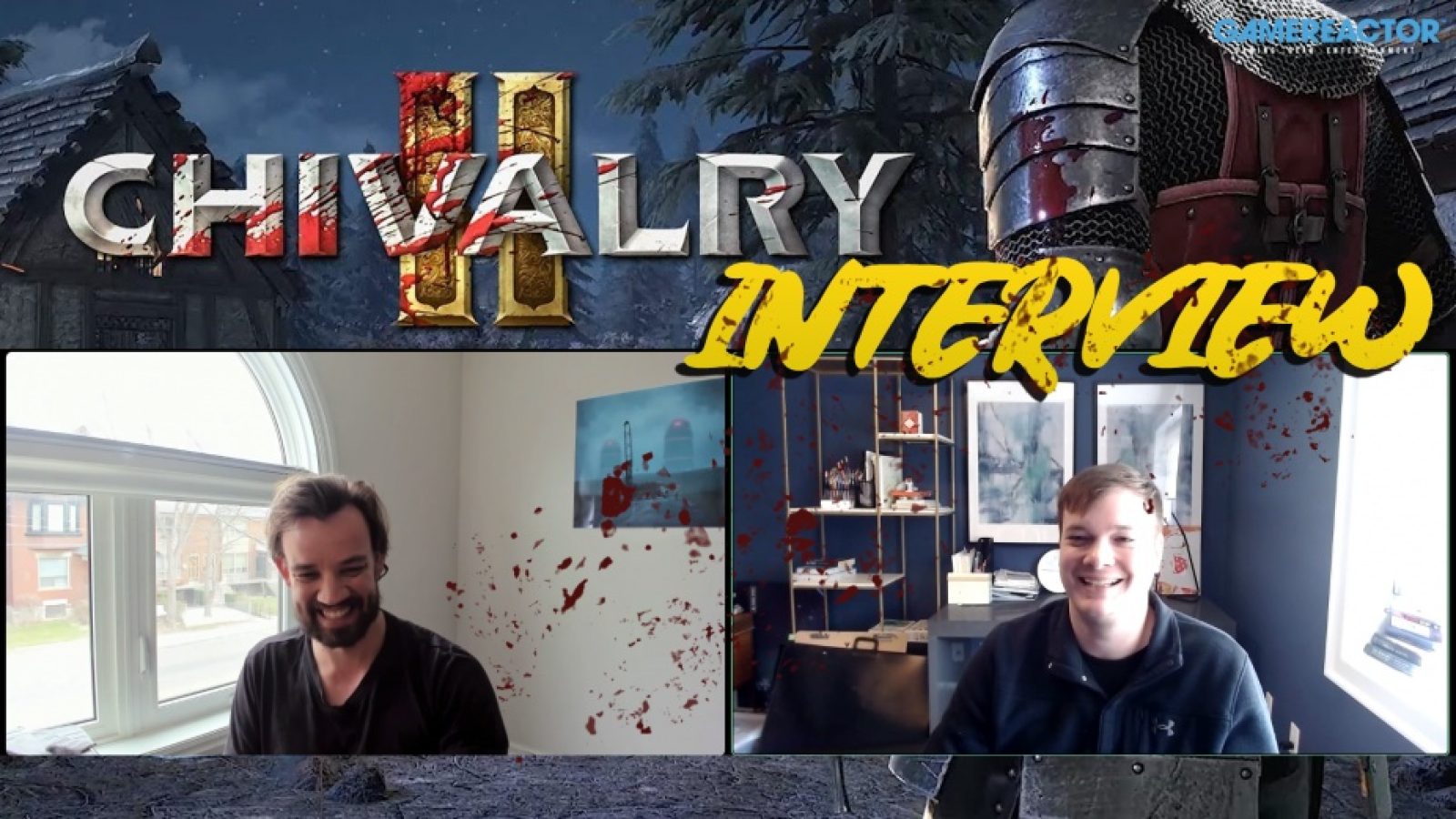
By the time Piggott was discussing Chivalry 2 in 2020, he had a wonderfully excessive phrase for the return: a “revenge mission.” The object of his grievance was the unrealized potential of the earlier game. The sequel would revisit what had been left unfinished, with a larger battlefield and more ways for players to handle the trouble inside it.
Give the player another move
Scale presented a concrete design problem. Piggott contrasted maps originally designed around 24 players with a sequel built around 64. More combatants create spectacle, but they also create more opportunities to be overwhelmed. An encounter that feels legible between two people can become a muddle when several others arrive with opinions and axes.
The expanded combat options were part of the answer. Piggott described dodging, jabbing, kicking and countering as ways to vary the timing of a fight. A jab could interrupt an opponent’s advantage. A kick could unsettle a defender. The choices gave a player something more interesting to consider than repeating the previous exchange until somebody fell over.
How the opponent moved mattered just as much. The first game’s extreme turning could produce attacks that looked implausible to the person receiving them. Piggott described a new animation system intended to distribute rotation through the character’s body. Behind the talk of cinematic battles sat a quite specific problem: a player should be able to look at another fighter and understand the danger.
“Our primary influence is Hollywood.”Steve Piggott, discussing Chivalry 2 in 2021
He also wanted players to understand how to improve after losing. Better tutorials and clearer feedback formed part of the sequel’s work. In a competitive game, defeat arrives often enough to become a teaching method. If the lesson is unintelligible, the newcomer may simply leave.
Piggott’s comments about making the sequel adjustable reveal another change in outlook. He expected players to discover possibilities the developers had missed, so the team built systems it could tune afterward. That is a practical kind of humility. Design continues after release because thousands of people, given enough time, will find uses for a rule that its author never considered.
The bridge, the shields, the exploding trebuchets
For all the discussion of systems, Piggott can be delightfully specific about the moments he enjoys. At Chivalry 2’s June 2021 release, he chose The Fall of Lionspire as a favorite map. He described allies forming shields in narrow streets, arrows and ballista fire overhead, then the fight over the bridge near the end.
His account finished with the trebuchets exploding and characters being flung into the air. Victory and defeat both received a spectacular send-off. There is something revealing about a creative director celebrating a moment that makes losing entertaining too. The scoreboard has its purpose; a good incident can outlive the score.
Chivalry 2 sold a million copies within its first two months. The work continued through new maps, weapons, modes and mounted combat. In May 2022, Piggott joined design director Leif Walter for a scheduled preview of horses ahead of public testing. Even cavalry needed an appointment in the development calendar.
When the designer has to sign the letter
In July 2024, Piggott signed a message declaring Chivalry 2 complete in content and features after its Regicide update. The letter counted eleven major content releases and an increase in Team Objective maps from five to thirteen. It also said official servers, matchmaking and maintenance for critical issues would continue.
The distinction mattered to the people still playing. Finishing a content schedule leaves a game in circulation, with a community whose attachment need not end when development moves elsewhere. Piggott’s letter also pointed toward further multiplayer projects, including work in the Chivalry universe and cooperative games. A studio has to decide where its next years will go.
The cost of those decisions became visible later that year. In December 2024, Torn Banner announced layoffs and restructuring after No More Room in Hell 2 entered Early Access. Piggott described the pressures facing an independent, self-funded developer. Affected employees were to receive severance, with help finding other positions. Creative ambition and responsibility for a company had become inseparable parts of his job.
On August 11, 2026, Torn Banner announced No More Room in Hell 2’s departure from Early Access, alongside its arrival on consoles. The cooperative project had reached its 1.0 release. It added another chapter to a career that began with people modifying someone else’s game and grew into the work of sustaining a studio of their own.
Piggott’s public story keeps returning to the distance between an imagined experience and a finished one. A first release can establish the idea. Years of work reveal where it resists its own promise. His response has repeatedly been to return to those details: the move a player needs, the animation an opponent can read, the battlefield incident worth remembering. Somewhere amid the shields and trebuchets is a designer still looking for a better second attempt.
Continue the conversation
- Torn Banner Studios ↗
- Steve Piggott on LinkedIn ↗
- The 2012 Kickstarter ↗
- 2020 conversation: returning to Chivalry ↗
- 2021 video interview with Rasmus Löfström ↗
- Watch: Unreal Engine developer interview (YouTube) ↗
- Piggott’s 2024 letter to players ↗
- August 2026 studio update ↗
- Torn Banner on X ↗
- Torn Banner on YouTube ↗