Stephen Punzak took a back road through Willington, Connecticut, and found an address for a software company. He and his co-founder, Eric Akstin, eventually made a home at The Mill Works, converting 4,800 square feet into an open, light-filled office. It is a pleasingly unglamorous episode in a founder’s life: a drive, a building, a place to put the desks. Even an internet business must occasionally decide where to put the kettle.
By February 2016, One Medical Passport had 35 full-time employees across the country. Eleven worked in Willington; four were based at its Houston implementation center. The enterprise had been founded in 2000. Its existence owed rather more to persistence than to a well-timed photograph beside a venture capitalist.
Punzak’s story has room for both ambition and restraint. He spent years financing the business largely himself, brought in outside capital when he judged the timing right, and later agreed to an acquisition. Along the way, he wrote with visible impatience about surveys, complicated technology and the peculiar things people say at work.
Fifteen years before the first institutional cheque
Punzak had studied finance at Boston College’s School of Management. Business was an established interest, rather than a fashionable accessory added after the company started attracting attention. One Medical Passport, previously known as Medical Web Technologies, grew into a cloud software business with a patent awarded in 2011.
The chronology matters. A company founded in 2000 was still preparing for its first institutional financing in late 2015. Fifteen years is a long apprenticeship in deciding which expenses deserve to survive. Punzak later described self-funding as “a good discipline for us.” The phrase is modest, though the arrangement gave him a very direct acquaintance with the cost of his decisions.
There is a particular intimacy to paying for the company you run. Priorities become less abstract when the money has a familiar owner. In Punzak’s telling, the experience taught the team to operate within its means and choose its work carefully. Outside investment would arrive after the business had acquired customers, colleagues and years of operating experience.
The moment to invite company
In December 2015, Punzak was discussing a $4 million Series A led by FCA Venture Partners. He was the company’s majority owner, and the team numbered roughly 40 full-time equivalents. His stated ambition was $20 million in annual revenue within three to five years. That was a goal, with all the uncertainty a goal carries.
The decision followed discussions with a board whose members had been involved for years. Punzak believed the market had reached a point where additional investment could change the company’s pace. An introduction through the business’s network brought FCA into the conversation. Matt King, John Burch and Andrew Bouldin joined the board.
A January 2016 announcement put the Series A at $4 million. Punzak had considered several investment firms before choosing FCA. His explanation emphasized their practical involvement and understanding of the market. After years of paying his own way, he was choosing the people who would share the table as carefully as the money they would bring.
“A good discipline for us.”
Stephen Punzak, on self-funding the business
The mill had room for more desks
The Willington office gives this financial history a physical setting. Punzak and Akstin transformed their mill space into somewhere people could work together. In February 2016, the company planned to increase staffing in Willington by about half. This was expansion at the scale of actual people arriving for work.
The company also had an implementation center in Houston. The detail is useful: a software company needs people who can help customers start using what it sells. Development and implementation appear together in this small geographical portrait. One office housed the largest local group; another handled a different part of the work hundreds of miles away.
Whitney Vitale, then vice president of marketing, described an open, collaborative working environment. That description belongs to a particular moment in the company’s history. It sits comfortably beside the transformed mill: a business with a distributed team was also making a deliberate place for colleagues to gather. Growth could be measured in square feet as well as financing announcements.
A software salesman with sympathy for the buyer
Punzak’s public comments on introducing technology show an interest in the person expected to approve it. In a 2019 interview, he described the reluctance to recommend a system that might fail. The employee who raises a hand can feel personally exposed. An elegant demonstration does little to settle that worry by itself.
His prescription was practical: reduce initial financial barriers, make the product understandable before anyone signs, and make implementation run smoothly. He also recognized that busy employees have little spare time to learn something difficult. A purchase therefore carries two prices: the invoice and the attention required to make the thing useful.
Read as business advice, this is a fairly demanding view of the vendor’s responsibilities. The product has to earn a place in an already occupied day. Punzak’s emphasis on experience, clear explanations and a manageable introduction suggests an operator attentive to the uncelebrated work after a sale. The ribbon-cutting photograph rarely includes the person answering the support ticket.
The survey enthusiast who wanted fewer questions
In December 2019, Punzak published an essay with the wonderfully inhospitable title Death by a Thousand Surveys. His company administered surveys. He nevertheless thought people were being asked to complete far too many of them. A founder willing to complain about his own product category is at least offering the reader some entertainment.
He moved from an automotive advertisement boasting of a lengthy questionnaire to an Uber ride during which the driver was listening to a dating radio show. One participant apparently sent questionnaires after first dates. Punzak found the collision of romance and customer research ridiculous. The anecdote was something he heard on the radio, rather than an episode from his own dating life.
His serious recommendation was to ask fewer, better questions and spend more time having actual conversations. He suggested keeping discretionary surveys to five questions or fewer. The essay’s joke ending invited readers to rate the blog. He understood the temptation to measure everything well enough to make himself part of the punchline.
Two words for an awkward room
Another essay, published in April 2020, concerned conversations that acquire momentum and travel somewhere their participants ought to have avoided. Punzak described a colleague’s proposed interruption: “Code Pineapple.” The absurd phrase offered a way to stop an inappropriate exchange before anyone had to compose a small speech of objection.
He credited the invention to the colleague, who had combined an existing workplace signal with a joke from the film Trainwreck. Punzak’s contribution was the explanation: humor could interrupt the momentum and give everyone a graceful opportunity to return to work. The small social mechanism interested him enough to devote an essay to it.
He also drew a firm boundary around the suggestion. Deliberate harassment and bullying, he wrote, were serious matters to raise with supervisors. The pineapple was for a conversation drifting out of bounds. The distinction gives the piece its weight: a comic phrase can help people speak up, while management still has responsibilities that require plain language and action.
Choosing the next people in the room
The company’s leadership continued to change as it grew. In April 2020, Craig Silverman joined as chief revenue officer. Punzak welcomed him as the person to lead the next phase of growth. Hiring a revenue leader was another concrete step in the company’s development, alongside the earlier investment and the office expansion.
On October 1, 2021, Mnet Health completed its acquisition of One Medical Passport; the announcement followed four days later. Punzak’s remarks focused on the additional investment and resources the combination would provide. The business he had spent years financing himself was entering a larger organization.
The following April, Mnet Health and One Medical Passport adopted the One Mnet Health name. The sequence is straightforward: a long independent build, an institutional investment, a leadership addition, an acquisition and a shared brand. Each stage brought a different answer to the question of who would help carry the company forward.
Before the pitch, a better question
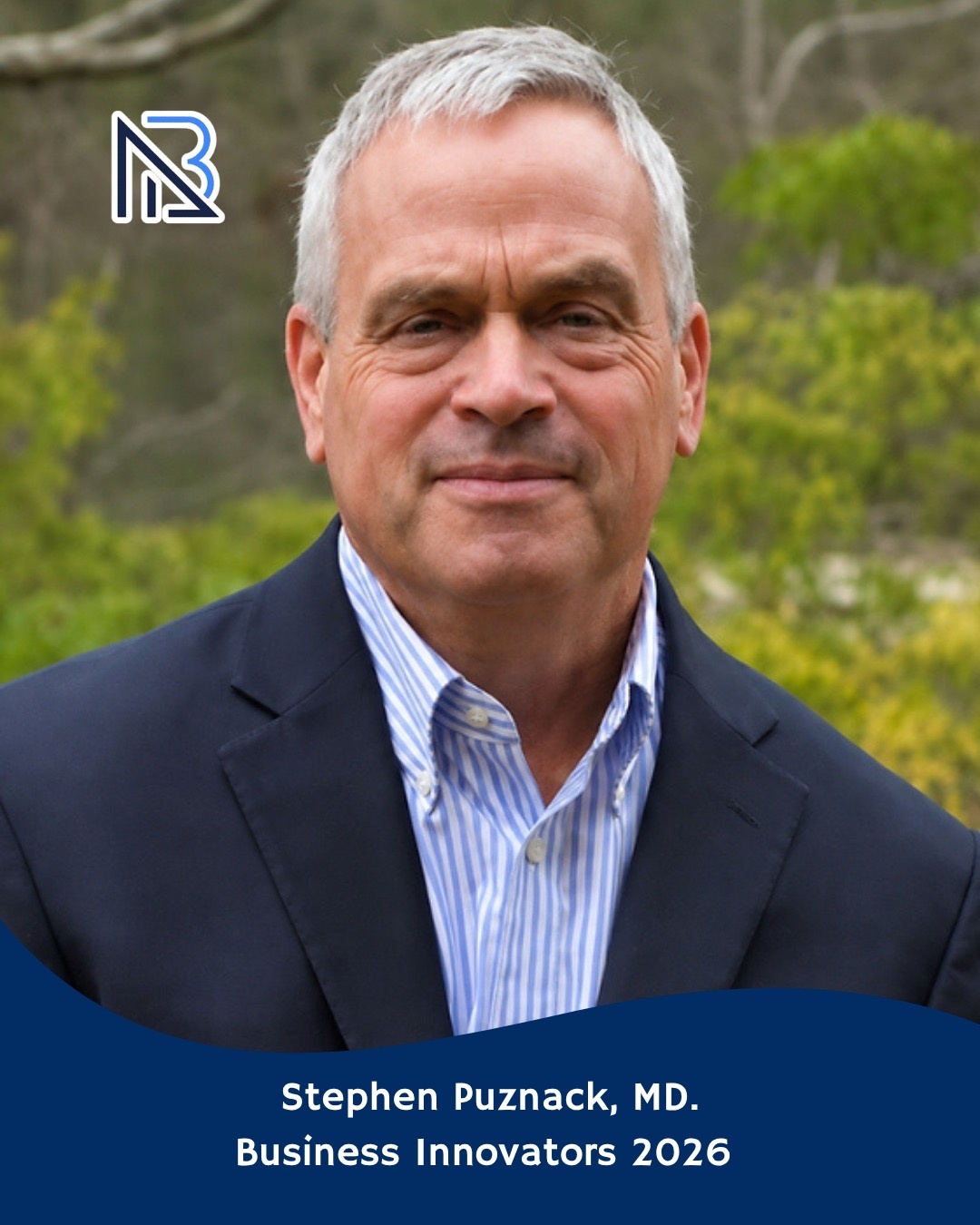
The Business Innovators Program lists Punzak among its 2026 cohort mentors, teaching a session on founder mindset. The stated topics include testing demand before building a product and earning trust in a market where credentials matter. Teams are asked to interview prospective users about a specific daily problem and turn those conversations into a validated problem statement.
It is an appropriate assignment for a founder whose public business history includes a long period of self-funding and whose writing urges people to ask better questions. A substantial market can look inviting from a distance. The workshop asks participants to establish who has a problem, and whether they can reach those people, before getting carried away with the size of the opportunity.
There is a certain economy to that ending. After the funding announcements, the mill conversion and the acquisition, the teaching brief returns to a conversation with a potential customer. Punzak’s next classroom audience is being asked to do something concrete before polishing a pitch. The desks may move. The first useful question still deserves a chair.