An operating room can be ready before its patient is. The booking exists. The team has a schedule. Somewhere else, a health history awaits review, a clearance remains outstanding, or a patient has a question about the bill. One Mnet Health has built its business around these unfinished conversations. Its proposition is practical: bring them forward, connect the people responsible, and leave fewer problems to surface on surgery morning.
- Clinical software prepares patients and coordinates surgical teams.
- Billing services handle patient balances before and after care.
- Cancellation prediction helps staff decide which cases need attention.
The company’s natural habitat is the ambulatory surgery center, or ASC, where patients undergo procedures without an overnight hospital stay. It also serves hospitals, physician groups and other healthcare providers. The interesting detail is how much of its work happens outside the procedure itself. There are questionnaires, reminders, uploaded documents, payment plans and messages to the person driving a patient home. Ordinary tasks. A surprisingly intricate chain.
Two halves of the same patient
In October 2021, Mnet Health acquired One Medical Passport. Mnet brought patient financial services; One Medical Passport brought cloud software for surgical workflows. The combined organization said it would serve nearly 1,500 facilities. In April 2022, the businesses announced their shared identity: One Mnet Health.
The acquisition gave a financial-services business a position much earlier in the patient journey. A patient’s first useful conversation need not begin when an unpaid balance becomes overdue. It can begin when the procedure is booked, when there is still time to explain the expected financial responsibility and arrange payment options.
There was clinical experience on the other side of the deal. One Medical Passport founder Stephen Punzak is a physician; Mnet founder David Hamilton came from patient finance. SSM Partners had announced a growth investment in Mnet in January 2021. The resulting combination joined two kinds of expertise that a patient experiences as parts of the same appointment.
The form that asks another question
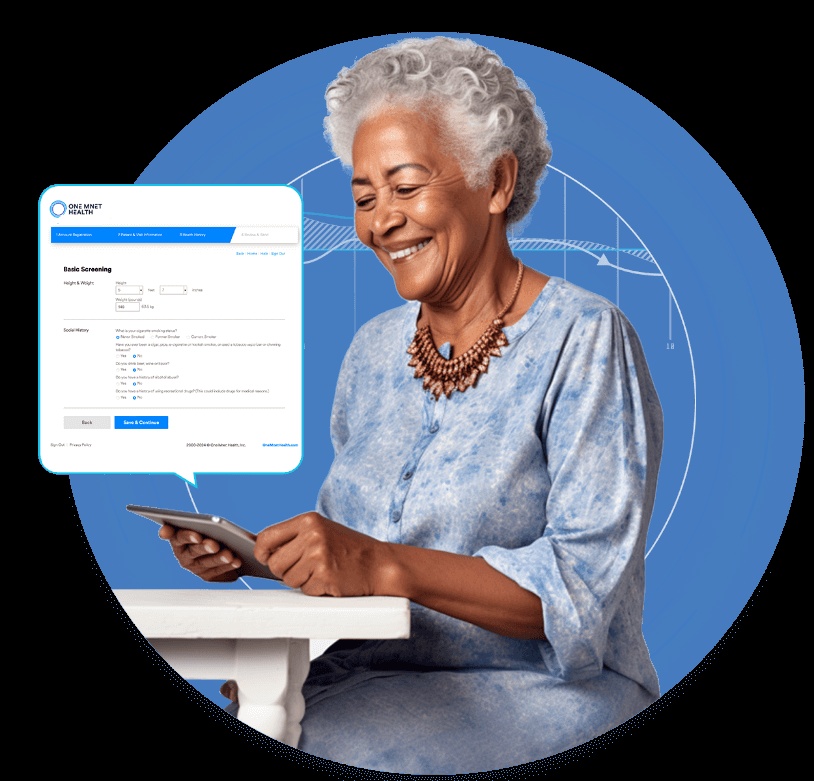
Medical Passport collects health histories through adaptive questions: an answer can trigger a request for more detail. Staff can review clinically significant conditions, medication information and outstanding tasks. Its admission-guideline capabilities compare patient information with a facility’s own criteria and flag possible requirements for clearances, tests or consultations. Clinical judgment remains with the care team.
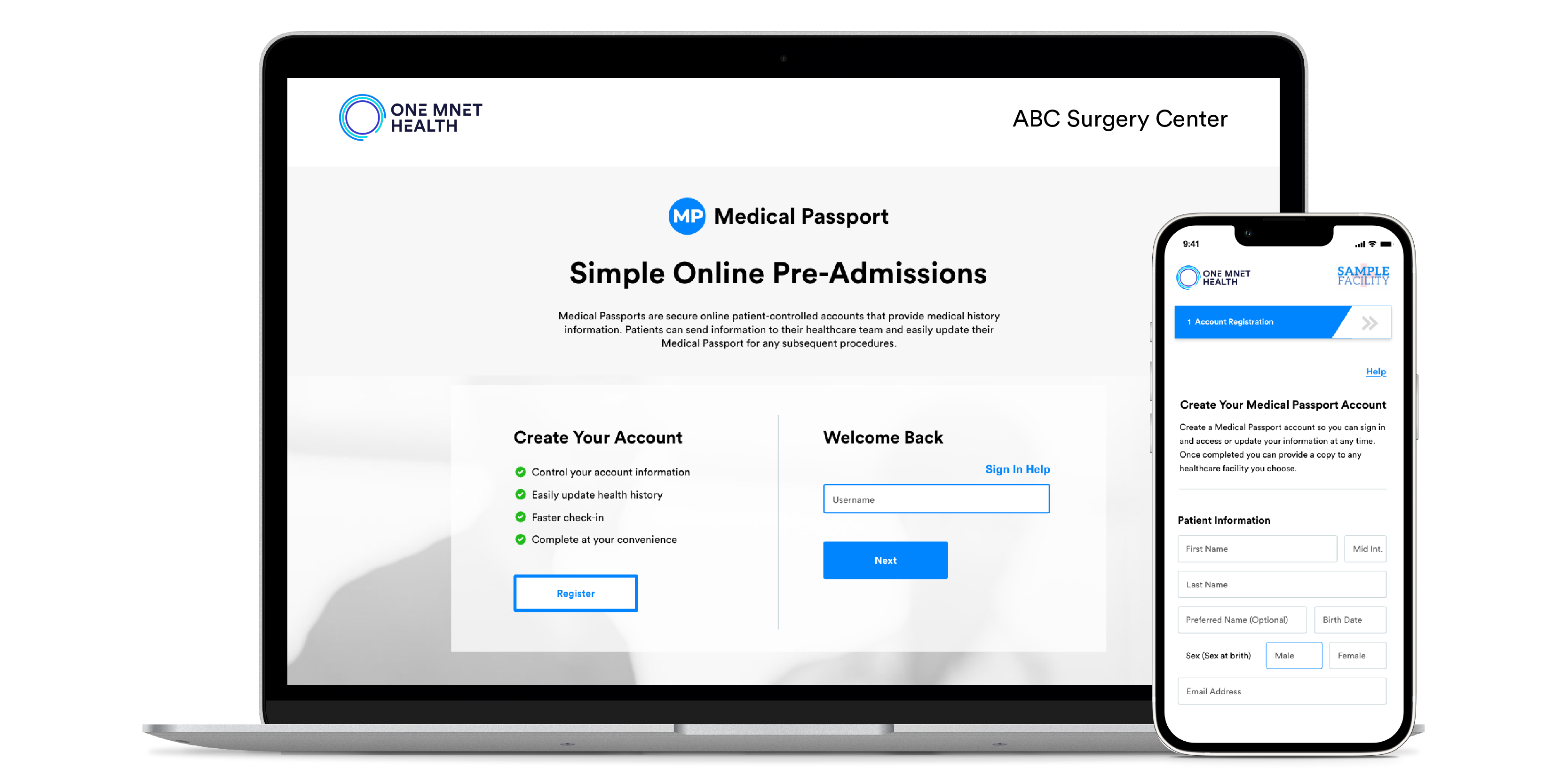
Engage handles another part of preparation: communicating instructions by text and email, including links to educational videos. Messages can reflect the procedure, physician and patient history. Patients can respond to certain messages to confirm, reschedule or cancel. If a case is cancelled, pending messages are omitted. That last detail matters: an automated reminder should know when the appointment has disappeared.
Inside the facility, Big Board displays patient status through views configured for different teams. It can also notify a ride-home contact. Office lets physician practices submit booking requests and exchange documents with facilities. Vendor Management connects with Torq to coordinate vendors and instruments. These products occupy the territory between a booking and a completed procedure, where missing information generates more work.
“Office® eliminates errors in scheduling, missing paperwork, and frustration on the part of the whole O.R. team and surgeon offices.”
Angelina Milite, RN · Grand View Health · company-published testimonial
A score needs a human
In June 2024, One Mnet Health launched Cancellation Prediction. The company said its model examined more than 40 patient attributes and predicted cancellations with greater than 85% accuracy. That is a company-reported performance claim. Operationally, the product sorts cases into high, medium and low risk, explains contributing factors and recommends interventions.
- 01CollectHistory and engagement
- 02PrioritizeRisk and time remaining
- 03ActMessage, call, coordinate
- 04ReviewReadiness and outcome
The point is to change the next conversation. Staff can spend attention on the cases most likely to need help, then document what they did. A prediction earns its keep when someone follows through. Some cases should be cancelled for clinical reasons; identifying that earlier can give the facility time to consider another patient for the opening.
Who pays for the handoffs?
One Mnet Health sells software and services to providers, with products available separately or together. Patient Billing includes pre-service financial engagement, Early-Out billing after insurance and third-party bad-debt recovery. Live agents work alongside payment technology. The company advertises billing services on a contingency basis: it gets paid when it collects, with no upfront fees.
Clinical software has separate, configuration-dependent pricing. Its published professional-service rates include $100 an hour for forms customization and $200 an hour for custom programming, interface development and additional web training. Integration work can therefore affect the buying decision alongside the software itself. A provider needs to scope its workflows and interfaces before estimating the full cost.
The market offers alternatives by task. Simple Admit provides preadmission questionnaires; RevSpring operates in patient engagement and payments. Existing EHR functions and internal billing teams are options, too. One Mnet Health’s distinctive proposition is the connection across clinical preparation and collections. Its integration list includes Epic, MEDITECH and HST Pathways; its Acmeware partnership targets easier billing integration for MEDITECH hospitals.
Count what is still unresolved
The useful lesson extends beyond buying software. In September 2026, One Mnet Health published a guide to seven preoperative workflow metrics, including unresolved flags, clearance turnaround and readiness by a target date. Those measures expose work early enough to change it. A completed form has limited value if it waits unreviewed.
The approach depends on accurate incoming information, usable integrations and staff who own the follow-up. Patients needing assistance also need a workable route through intake; Medical Passport includes a nursing portal for staff-created histories. A dashboard cannot supply missing clinical capacity.
The company appointed Hamilton Bowman CEO in March 2026 and Matt Ellis chief revenue officer in July, with Ellis charged with connecting software and billing commercially. The question for customers is concrete: do more patients reach their procedure prepared, with fewer unresolved tasks? Every handoff is a chance to find out.