Stephen Farquhar's career begins with an unglamorous verb: plan. Before the chief-executive titles, the international moves and the neat corporate language about transformation, there was a young media planner-buyer at Leo Burnett in 1996. The work would have involved the old disciplines of attention: Who is this for? Where can they be reached? What can the client afford? What will make anyone notice? A career in advertising can acquire an impressive altitude, but its gravity remains a brief and an audience.
That early training still makes Farquhar legible. He has worked across creative strategy, media, data, technology and client leadership, yet the recurring job has been translation. He turns research into a choice, a sprawling agency into a coordinated team, and a global promise into work that must function in a particular market. His ascent has been steady enough to look inevitable in retrospect. Careers, like campaigns, acquire coherence after someone edits the deck.
The useful education of a planner
Farquhar joined ZenithOptimedia in 2000 as a business director on Toyota. Four years later he moved to Mindshare to lead strategy, then returned to Zenith in 2007 as head of strategy. The second stint came with pitches for a wonderfully mismatched client list: Warner Music, O2, comparethemarket.com, Oxfam and RBS-NatWest. A mobile network, a charity and a bank do not share much besides the need to be understood. The planner's task is to find the sharp question hiding beneath the category furniture.
Two projects from those years survive in the official memory. Farquhar helped develop a method of brand research for Diageo that changed the way the company planned and bought media. He also led the creation of Open Planning, a new approach for Zenith clients. Both are telling achievements. They are systems, not slogans. They suggest a strategist interested in making insight repeatable, available to a team and useful after the meeting ends.
The craft led to management. By 2010, he was managing director of Zenith in London. He had spent much of the previous decade learning how an agency thinks. Now he was responsible for the conditions under which other people did the thinking. It is a common promotion with an uncommon trap: the better one becomes at directing the machine, the farther one can drift from the audience that justified the machine in the first place.
“I'm very excited to be joining such a strong and vibrant agency as Zenith China in easily the most dynamic market in the world.”Stephen Farquhar, on his 2012 move to China
Three Chinese cities and a larger map
In October 2012, Farquhar moved from London to become managing director of Zenith China. The remit covered Beijing, Shanghai and Guangzhou. His arrival statement spoke of talent, digital capability, planning skill and a desire to turn an established return-on-investment discipline into a digitally led one. The phrasing belongs to its moment, when agencies were trying to stop treating digital as a special department and start treating it as the weather.
The interesting part was not the jargon. It was the move. Farquhar left a market where he knew the references and took responsibility for three offices in a country moving at a different speed. International leadership is sometimes described as if experience simply accumulates in the executive's luggage. In practice, it demands the opposite: a willingness to notice which instincts do not travel.
1996-2012
2012-2014
2014-2023
2024-now
After China came a sequence of jobs that expanded the scale without abandoning the underlying method. Farquhar became president of VM1, Zenith's dedicated agency for Verizon, then president of strategic and global solutions. In 2019 he appeared at an advertising trust summit as president of global solutions, discussing what trust should mean during agency reviews. Soon he was leading Publicis Groupe's work for GSK and Haleon. By 2023, as chief marketing officer at Publicis Media, his assignments ranged across telecommunications, pharmaceuticals and consumer goods.
The official shorthand says his health-marketing and media experience spans 92 markets. Ninety-two is an impressive number and a slightly absurd one, because nobody experiences a market as a pin on a map. Markets are languages, laws, habits, colleagues, channels, budgets and the stubborn fact that a good idea elsewhere may be useless here. His real expertise is not omniscience across 92 places. It is learning how to ask local questions inside a global system.
A portfolio with eight front doors
Publicis named Farquhar CEO of its U.S. health network in December 2023, with the job beginning on February 1, 2024. He inherited day-to-day responsibility for eight businesses. The creative agencies were Digitas Health, Heartbeat, Razorfish Health and Saatchi & Saatchi Wellness. The specialist roster included BBK Worldwide, Insagic, Langland U.S. and Payer Sciences. A portfolio like that is less a single agency than a busy neighborhood. Every shop has its own craft, clients, history and opinion of the best route to the station.
The appointment also came with a deliberately distributed leadership structure. Alexandra von Plato moved from CEO to chair. Eric Muller became chief operating officer. Tracey O'Brien joined as chief client officer. Farquhar's own statement was brief and revealingly plural: he was grateful for the opportunity and looked forward to collaborating with von Plato and the team. No conqueror's trumpet, just the practical language of joining an organization already in motion.
In January 2025, Matt McNally arrived as global CEO of Publicis Health while Farquhar continued to lead the U.S. business. The arrangement placed another layer on the map: global direction, national operation, specialist agency identity and client work all had to align without becoming identical. The glamorous word for this is orchestration. The honest word is meetings. Farquhar's planning background, with its habit of sorting competing inputs into a usable choice, suddenly looked less like an origin story and more like job preparation.
- Begins as a media planner-buyer at Leo Burnett.
- Joins ZenithOptimedia as a business director on Toyota.
- Moves from London to oversee Zenith's Beijing, Shanghai and Guangzhou offices.
- Leads Publicis Groupe client work for GSK and, later, Haleon.
- Becomes CEO of Publicis Health in the United States.
- Takes charge of Publicis Health Media.
The person at the other end of the system
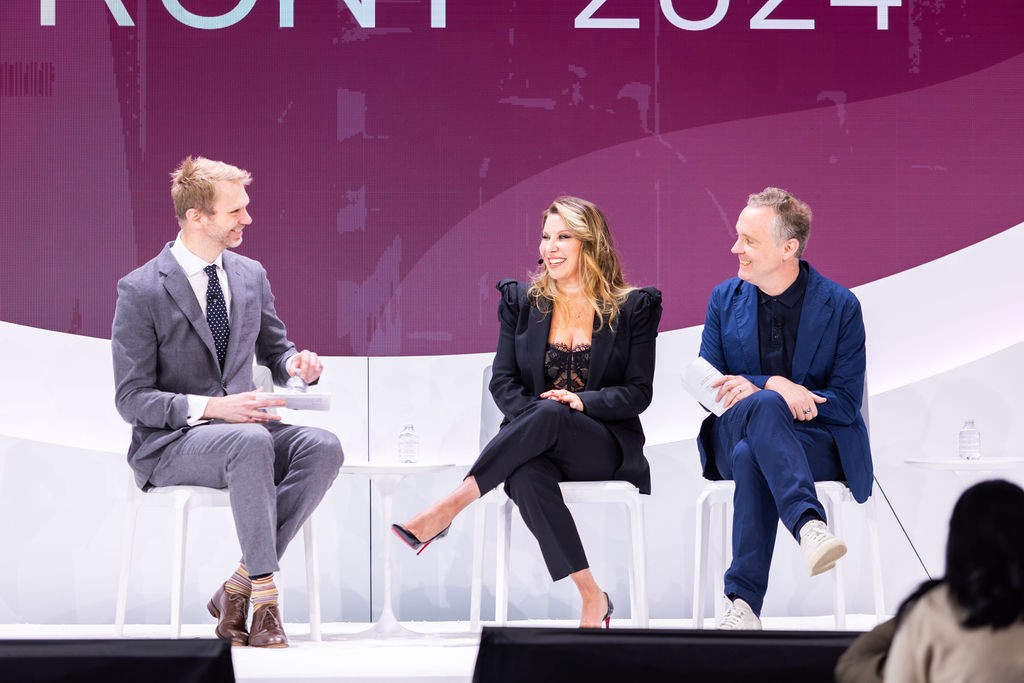
At the 2025 PHM HealthFront, Farquhar discussed direct-to-consumer communication during a period of policy change. His emphasis was on support, awareness and using data and technology to build a better relationship with the person at the center. It was an unsurprising position for a health executive, but consistency is worth noticing. From Open Planning to his work at Publicis Health, his public language returns to the same triangle: information, useful structure and human consequence.
Colleagues have supplied a glimpse of the temperament behind it. After a Q&A with Publicis Health interns, one attendee wrote that Farquhar had seemed unexpectedly real, kind and present. Another remembered his perspective on humility in leadership. Testimonials on professional networks are rarely works of ruthless criticism, but these observations are specific. Presence is not charisma. It is the courtesy of making the room feel less hierarchical than the org chart.
There is also a pleasing tension in the record. Farquhar works in a business famous for noise, yet he maintains a relatively quiet public profile. There is no personal website staging a philosophy of leadership, no stream of motivational aphorisms, no attempt to turn every breakfast into content. His biography is mostly made of appointments, projects, markets and teams. Even an old colleague's congratulatory note about football approached his apparent support for Hibernian with a question mark. The internet, for once, declined to finish the anecdote.
In August 2026, Farquhar took over as CEO of Publicis Health Media. The specialist agency works across strategy, media investment, data and campaign optimization from Philadelphia, New York and Chicago. It is a fitting next chapter for someone whose earliest recorded role was buying and planning media, though the media now bear little resemblance to those of 1996. Search has fragmented. Platforms have multiplied. Data are abundant and trust is scarce. Artificial intelligence can sort material at great speed while leaving the judgment about what matters stubbornly human.
The fashionable tools keep changing. Farquhar's job remains familiar: decide what the information means, and help a large group of people act on it.
The long route back to the brief
A CEO appointment encourages a story about arrival. Farquhar's career makes more sense as a loop. The planner learned to ask what an audience needed. The strategist built methods for answering. The managing director learned to make those methods work across offices. The global client lead learned how they bend across markets. The network chief became responsible for keeping all those translations coherent. Now, at Publicis Health Media, he returns to an organization whose central material is media itself.
Thirty years is long enough for an industry to rename nearly everything. Media plans became ecosystems. Audiences became segments, then identities, then signals. Digital moved from a specialty to the substrate. The enduring work is less fashionable: pay attention, choose clearly, respect context and remember that the recipient is a person rather than a cell in a spreadsheet.
Farquhar's aspirations, at least in public, are expressed through collaboration rather than autobiography. He speaks about creative force, better uses of data and technology, and stronger relationships. That reserve leaves some biography unwritten, but it makes the professional through-line unusually visible. He is an operator trained as a strategist, repeatedly asked to make larger systems intelligible. The titles changed. The brief did not.
Keep reading
Official profiles, current work and the announcements that mark Farquhar's route through the industry.