The useful word in Eric Muller’s first statement as chief executive of Lucid Group is not “chief,” “executive,” or even “Lucid.” It is “builder.” Titles describe the chair. Building describes what happens after someone sits in it. Muller arrived in August 2026 with more than 25 years in healthcare communications behind him and a compact list in front of him: talent, client partnerships, data and technology. Four ordinary nouns. One rather complicated job.
The appointment put him in charge of an independent healthcare communications and commercialisation company whose work stretches from early clinical development to product launch and, eventually, loss of exclusivity. Lucid’s pitch is integration: strategy consulting, scientific and medical communications, and commercial communications working together. The risk with such lists is that they become a directory rather than a team. Muller’s task is to turn the directory into a sentence.
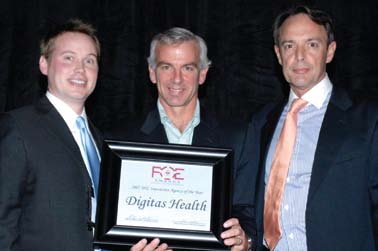
He has spent a career learning where those sentences break. He began at Grey Advertising in New York. By 2007, he was photographed at an industry ceremony accepting a DTC Interactive Agency of the Year honor for Digitas Health. A decade later, he was the agency’s North America managing director. He went on to become its president, then added the newly created role of chief operating officer at parent network Publicis Health in 2023. By the time he left, his remit had grown to group president and chief operating officer.
The operator learns the machinery
Advertising careers are often narrated as a parade of ideas. Muller’s is also a study in machinery: how people are arranged, how standards travel, how decisions cross from one discipline to another. When Publicis Health created the chief operating officer post for him, the brief was explicit. He was to standardize good practices across agencies, streamline key processes and improve the speed of delivery. Glamorous? Only if you have ever watched a promising idea perish in a meeting about who owns the spreadsheet.
At the same time, he kept the presidency of Digitas Health. That combination matters. One role asked him to see the network; the other required him to remain responsible for an agency. It is the difference between drawing the railway map and hearing whether the trains arrive. His public comments during those years repeatedly returned to people making better decisions, whether those people were patients, physicians or agency employees deciding where to work.
That dual view also explains the attraction of Lucid. He has seen what coordination looks like from above and what delivery feels like from inside the shop. The new post lets him bring both perspectives to one company, with fewer organizational borders between the plan and the finished work.
In 2020, Digitas Health appeared at number eight among large companies in Ad Age’s Best Places to Work ranking. Muller gave the credit to the agency team and talked about building a place where people wanted to work through “fluidity, flexibility and fit.” There is a tidy operating idea in that alliteration. People do not only need a ladder. They need enough room to find the rung that suits them.
A weekend email and a quick yes
The neatest glimpse of Muller’s style comes from a small story told by someone else. During the disruption of 2020, Jonathan Cooper, then a content-intelligence leader at Digitas Health, read about a couple using garage-based 3D printers to make equipment for frontline workers. Cooper knew almost nothing about 3D printing. He did know that the agency had a printer sitting in an empty office.
He emailed Muller on a Saturday or Sunday. The note was half proposal, half raised hand: somebody at the agency probably knew how to do this, and if not, could Cooper put the machine in his garage? By Monday, senior production designer Keith Hatton had permission to collect it. That evening, the team was downloading specification files and printing prototypes. Components later went into face shields donated in Philadelphia.
Muller is not the hero of that anecdote, which is precisely why it is useful. Cooper had the idea. Hatton had the engineering ability. Other colleagues cut and assembled material. Muller’s contribution was a quick clearance and an absence of ceremonial fog. Good operating leadership often looks like making it easier for other people to become the interesting part of the story.
The clarity problem
More inputs raise the value of selection, not merely production.
An editorial illustration of Muller’s stated thesis, not a quantitative dataset.
The scarcity has moved
Muller’s case for the next era of healthcare marketing begins with abundance. Scientific advances are arriving quickly. Data multiplies. Development accelerates. AI increases the supply of possible outputs. In that environment, he argues, the critical work is knowing which evidence matters and which creative expression can persuade. The bottleneck shifts from production to judgment.
This is not a claim that technology is incidental. Data and technological capability sit on his immediate Lucid agenda. It is a claim about sequence. A machine can widen the menu. Somebody still has to choose dinner, mind the allergies and notice who is actually at the table. In regulated healthcare communications, those choices carry more consequence than a poor restaurant review.
Lucid gives Muller an interesting laboratory for this argument. It is global in work but independent in structure. The company says the senior people who win an engagement stay with it through delivery. That may sound like an administrative detail. It is really a theory about preserving intent. Every handoff can add expertise; every handoff can also turn a clear idea into office soup. Keeping experienced people close to the work is one way to retain the flavor.
From scale to closeness
The contrast with Publicis Health is not a morality play. Large networks offer reach, specialist depth and experience across markets. Muller learned to operate inside that scale. His move to Lucid asks a more practical question: what can an independent company do with shorter distances between strategy, science, creativity and execution?
Lucid’s board chair, Rod MacKenzie, framed the hire around commercialisation across a medicine’s full life. Outgoing chief executive Rick Sannem, the founder of DiD Agency, moved into a strategic advisory role. So Muller inherits rather than invents the company’s independent culture. The appointment is a handover from entrepreneurial formation to a different phase of building. Foundations are already down. The new work concerns rooms, wiring and whether the people inside can hear one another.
Begins his career at Grey Advertising in New York.
Represents Digitas Health at the DTC advertising awards.
Serves as Digitas Health’s managing director for North America.
Adds Publicis Health chief operating officer to his Digitas Health presidency.
Becomes chief executive officer of Lucid Group.
His own language about the move is notably workmanlike. He describes the foundation as strong. He says the company is still small enough to move fast. He invites people doing good work, or wondering where to do it next, to get in touch. The message doubles as recruitment and diagnosis: the strategy will depend on attracting people who can move between deep expertise and shared work.
The test will not be whether Lucid can add AI to a capabilities page. It will be whether its science becomes clearer without becoming thinner; whether strategy guides creative work without embalming it; whether technology speeds judgment instead of merely accelerating volume; and whether the senior attention promised in the pitch remains present after growth arrives.
Build the decision, not the noise
Muller says he came to build a business that helps clinicians, patients and caregivers make better decisions about the things that matter most. It is a restrained destination for an industry fond of transformation. Better decisions are less theatrical than disruption. They are also easier to recognize in the wild.
His career suggests he will approach the job through the operating system as much as the advertising idea. The old awards photograph catches a young executive at the edge of a frame, holding the result of collective work. The 3D-printer story catches a president approving someone else’s experiment. The Publicis role catches an operator asked to make many agencies work with more consistency. Now the frame is larger, but the theme survives: connect the people, remove unnecessary distance, decide what matters.
A builder at heart, then. The phrase has earned itself a blueprint. Whether the building works will be judged not by the brightness of its sign but by how easily useful ideas can move through it.