The useful detail in Stefan Groschupf’s origin story is a computer reading books. He was a teenager from Halle, in eastern Germany, fascinated by the machine in Three Days of the Condor. Robert Redford was on screen. Groschupf’s attention went to the possibility of software finding meaning in text. For a keen reader, a machine that could help make sense of more books was an attractive accomplice.
That interest became practical work. By the end of high school, he was building search software for a university library. The institution wanted him to keep working on the system before beginning university. Business intervened. He went on building companies. His first customers needed help finding information; decades later, his customers would need help deciding what to do with it.
There is something pleasingly inconvenient about this beginning. The familiar technology-founder story starts with a determination to build a company. Groschupf’s starts with wanting to read. The business arrived through the work. The recurring problem was already there: computers could hold extraordinary quantities of information, while the people beside them still needed a way in.
A long way from the library catalogue
In Halle, he programmed the library’s search catalogue and built websites. He later worked with colleagues on open-source software and consulting. A good product, he discovered, also needed selling. Technical competence could get the software built; persuading an organization to buy from a small supplier required a different education.
He found much of that education across the Atlantic. In his late twenties, he was repeatedly flying to the United States because so many customers were there. He described a German market in which buyers preferred established vendors and worried about the survival of small suppliers. Eventually, he moved to Silicon Valley. The journey followed demand as much as ambition.
His relationship with Halle survived the move. In 2015, while living in San Francisco and running Datameer, he still rented his old small apartment there. Datameer also employed developers in his hometown. The apartment makes a better biographical detail than another photograph beside a venture-capital logo: geographical distance had failed to produce a clean emotional departure.
His engineering work meanwhile entered a much larger conversation. He contributed to Nutch, the open-source search project from which Hadoop emerged. The project’s change history credits him with fixes involving plugins, search results and fetching pages. These are specific, unglamorous pieces of software maintenance. An industry can grow from work whose immediate reward is that something finally stops hanging.
Three boxes, rather a lot of ambition
Groschupf co-founded Datameer in 2009. Hadoop was changing how organizations stored and processed data. His commercial interest lay in making that capability usable by people outside the infrastructure team. A marketer or financial analyst might understand the business question perfectly and still depend on someone else to extract an answer.
Datameer brought data integration, analysis and visualization together, with an interface familiar to spreadsheet users. The underlying technology could be complicated. The person asking a question should have a manageable route through it. That product choice helps explain the continuity in Groschupf’s career: he repeatedly works at the awkward meeting point between a technical system and its human operator.
The business grew. In a 2018 account of his time as founding CEO, he said Datameer had doubled revenue for six consecutive years and attracted about $100 million in venture funding. He credited a sales operation organized around data. Those are his reported figures, and the lesson he drew from them concerned daily operating habits as much as software.
He advocated clear ownership of metrics, small experiments and checking whether data was useful before committing to a large integration project. A weekly export could be enough to test an idea. There is a welcome lack of ceremony in that advice from someone selling sophisticated technology. A spreadsheet, used well, could earn its keep before an enterprise project acquired a steering committee.
The sidekick gets the paperwork
SalesHero, launched in 2017 and later renamed Automation Hero, moved closer to the work itself. Its assistant, Robin, handled repetitive tasks around sales workflows. The name fitted a company with a superhero theme, but the assignment was decidedly terrestrial: less time maintaining records and more time with customers.
That shift followed a frustration Groschupf had encountered in analytics. Companies could inspect what had happened without necessarily turning the answer into action. Information also arrived in forms that ordinary databases did not neatly accommodate. Documents and messages created work for people who had to read, interpret and transfer their contents.
By 2021, he described Automation Hero as a system for automating processes including invoicing, input management and customer engagement. The emphasis was on turning unstructured material into information a process could use. An invoice entering an organization should not require a small relay team simply to become an entry in a system.
For Groschupf, the interface mattered. He wanted people to benefit from AI without having to become specialists in its machinery. His explanation returned to inputs, outputs and the process connecting them. The ambition was practical: let someone configure useful work without organizing their professional life around the technology that performed it.
“It’s always about the people.”
Stefan Groschupf, 2021
The person at the other end of the software
His writing about management helps explain this preoccupation. In 2014, he argued for hiring people according to their ability to learn through unfamiliar situations. He suggested asking candidates about moments when their work became obsolete, when a problem defeated their existing knowledge, or when the demands exceeded what they could finish.
Those questions reveal more than a polished account of an earlier success. They ask what happens after the instructions stop helping. For someone whose career has moved from search to analytics to automation, the appeal is understandable. Technical categories change. The employee who can investigate a new problem still has somewhere useful to begin.
That same year, he wrote about creating conditions for concentrated, absorbing work. Clear goals, a balance between challenge and reward, and short cycles of visible accomplishment were central to his argument. He applied the thinking beyond engineering, including to marketing. Finished work needed a recognizable moment of completion, so the next challenge had something solid beneath it.
Read alongside his products, these ideas suggest a consistent concern with the texture of a working day. A person needs enough difficulty to stay interested and enough progress to know the effort matters. Software that fills the day with repetitive administration makes a poor contribution to either. The expensive machine has somehow found itself a human assistant.
He has also spent time helping others understand the tools. In October 2018, he led an executive seminar at HHL in Leipzig on data integration, storage, processing and visualization. Doctoral students and practitioners attended. Explaining the path from raw material to a useful answer remained part of the job.
A family name above a new door
By February 2026, Groschupf was speaking at Manifest in Las Vegas as founder and CEO of Centrum AI. The company addresses supply-chain planning. He explained that its name honored his father: Centrum was the name of the largest building his father had constructed. A venture concerned with global movement carries a reference to something firmly built in one place.
The new problem comes with familiar ingredients. Companies have data in different systems, uneven records and decisions that must be made before the information becomes perfect. Centrum AI’s stated approach draws on the team’s background in financial risk modeling and enterprise automation. The destination has changed; the difficulty of making information usable has travelled with him.
Groschupf’s example was a delivery lead time stored as a fixed fifteen days. In practice, he explained, it could vary between nine and eighteen. Planning around a single number can conceal a range that matters. The example is ordinary enough to be understood without a demonstration, which is precisely what makes it effective.
His planning example: a fixed system entry can hide a variable delivery window. Illustration, not performance data.
His ambition now includes helping organizations anticipate disruption and adjust inventory decisions to different levels of risk. Yet he also described adoption and change management as central obstacles. A more elaborate model still has to find its place among people, habits and responsibilities. The organizational work waits patiently for every new generation of software to discover it.
The unfinished reading assignment
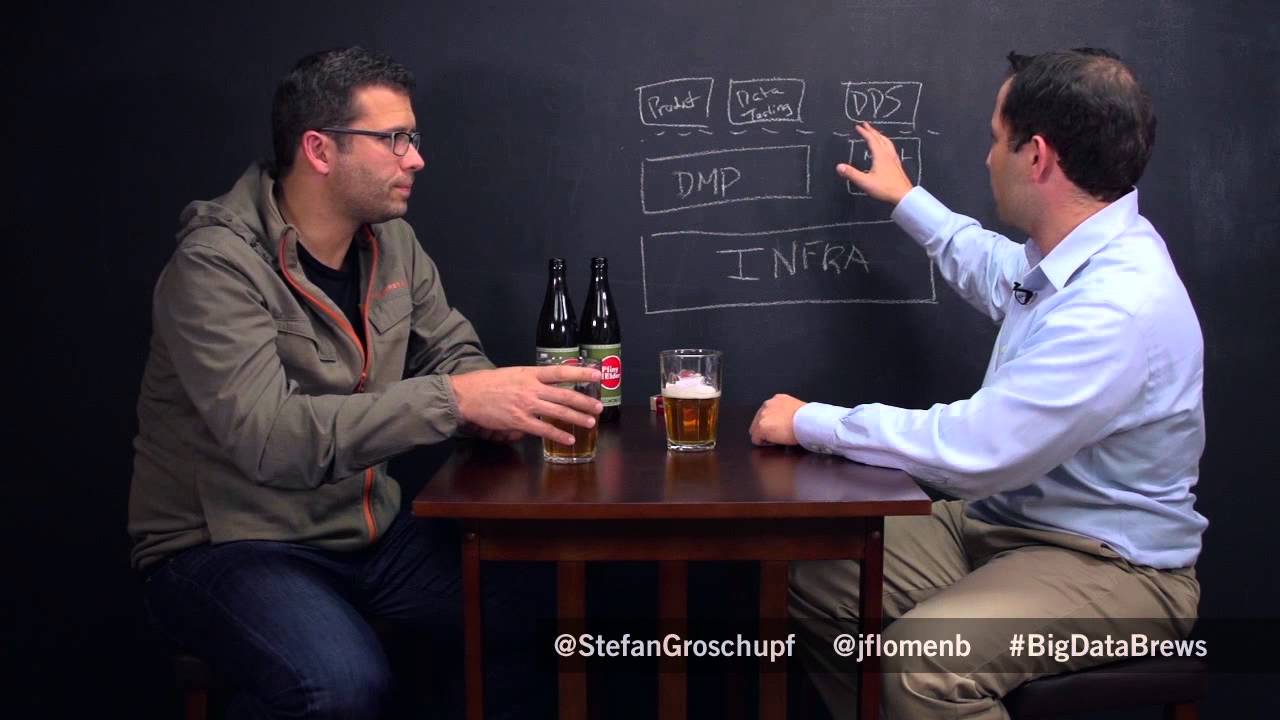
Groschupf’s public interests extend beyond the office. A conference biography lists backpacking, sea kayaking, kiteboarding and mountain biking. His recorded conversations with other technology figures offer another view of him: a founder willing to sit down with a chalkboard and talk through an industry rather than confine himself to a product presentation.
His January 2026 writing also turned to autonomous coding teams and patterns for managing AI agents. It is a recent addition to a career spent shifting the boundary of what software can take on. The vocabulary keeps changing. His interest in how people direct that work has remained recognizably consistent.
The teenager captivated by a computer reading books did not end up building a machine that relieved him of curiosity. He built businesses around extending what people could do with information. The library catalogue, the spreadsheet interface, the sales assistant and the supply-chain model each offered a different route toward a useful answer.
A computer can store the record. Someone still needs to understand the question, decide whether the answer deserves trust and act on it. Groschupf has spent a working life moving those steps closer together. The reading assignment, it seems, has become quite extensive.