A laboratory sample is a small object with a surprisingly long biography. It is collected, labeled, split, moved, tested, retested, approved and reported. Instruments produce files. Analysts make judgments. Regulators may arrive months later and ask who changed a number at 3:17 on a Tuesday. STARLIMS exists to keep that biography intact.
The Hollywood, Florida company makes laboratory information management systems, or LIMS, plus the adjoining tools that handle research notes, method execution, raw instrument data and operational analytics. Its software sits in pharmaceutical plants, public-health labs, chemical facilities, food companies and diagnostic operations. These are places where “save as final_v7.xlsx” is not a charming office quirk. It is a data-integrity risk.
Founded by Itschak Friedman in 1986, STARLIMS now says its technology runs in more than 2,000 laboratories across 85-plus countries. Its current website cites more than 700 customers, while older corporate material and LinkedIn cite more than 1,100. That discrepancy is worth noting, but not obsessing over. The durable point is scale: this is established enterprise infrastructure, not a weekend notebook app dressed in a white coat.
The product is proof
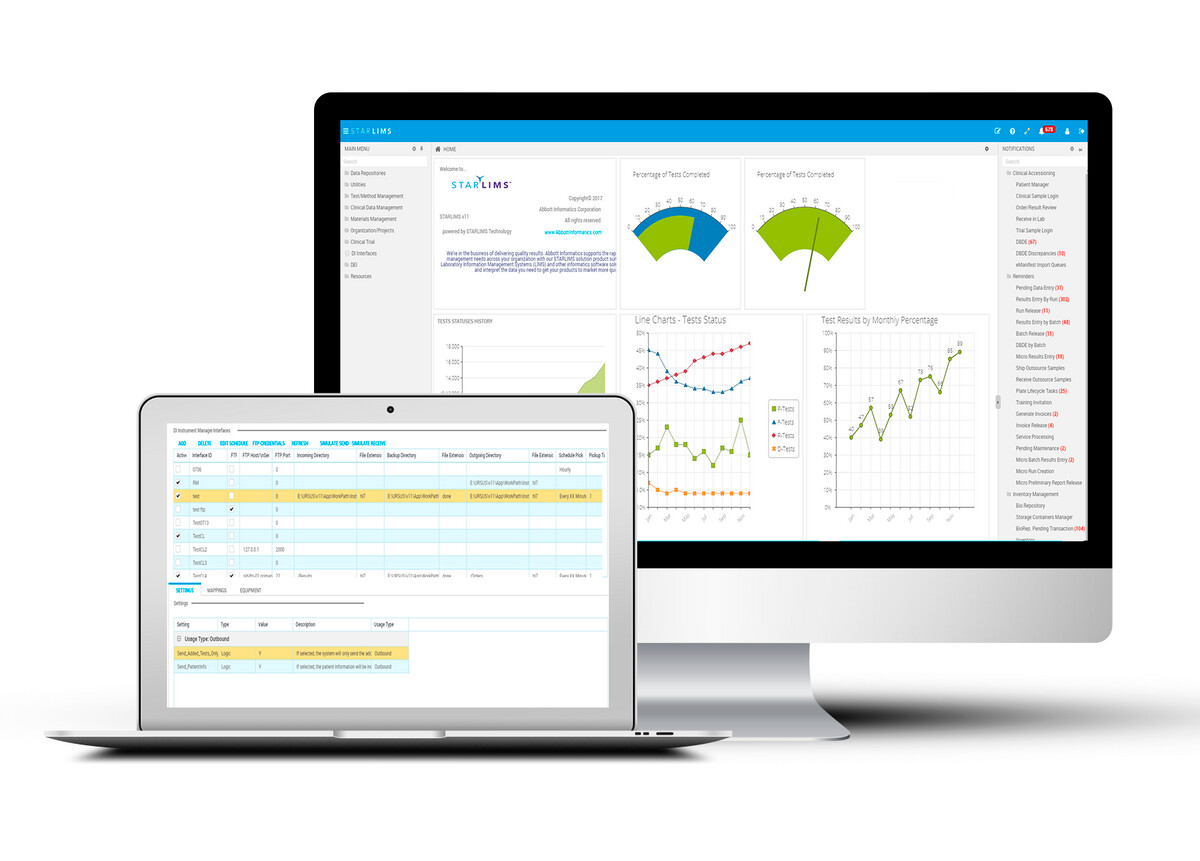
At its center, STARLIMS tracks samples, tests, specifications, results, inventory, approvals and reports. A laboratory execution system guides analysts through controlled steps. Its scientific data management system catches files coming from instruments and keeps raw evidence attached to the record. Advanced Analytics turns workflow exhaust into dashboards that can reveal a late-testing queue or an overloaded team. Mobile tools move data capture closer to the bench.
The newest upstream piece is Labstep, the cloud electronic laboratory notebook STARLIMS acquired in 2023. A classic LIMS is comfortable with structured, repeatable processes. Early research is messier: protocols evolve, observations arrive sideways, and chemists and biologists may describe the same project in different dialects. Labstep was designed by scientists to capture that looser work without forcing it into a manufacturing template too soon.
That connected sequence is the company’s differentiation. Rivals such as LabWare, LabVantage and Thermo Fisher’s SampleManager also sell serious enterprise LIMS. Benchling and Dotmatics are prominent around research. STARLIMS is trying to own the handoffs across both territories, using one vendor relationship and an industry-specific foundation rather than a collection of point products stitched together after purchase.
Its market position is therefore broad but specific: STARLIMS is an enterprise platform for organizations whose laboratory is attached to a larger operating system. A pharmaceutical quality lab needs batch, specification and release context. A public-health lab needs chain of custody, surveillance reporting and links to government systems. A food manufacturer needs recipes, suppliers and rapid investigation when a result drifts. The underlying data model may rhyme, but the last mile does not. STARLIMS has accumulated expertise in those last miles through industry packages and long deployments.
What they actually changed
The customer stories are refreshingly practical. At Western Australian energy company Synergy, STARLIMS connected laboratory instruments, scheduled routine tests, pulled verified results into a central database and reduced manual report writing. Synergy estimated that the system saved five hours per technician each week. Engineers could compare water chemistry with turbine and boiler performance instead of hunting through separate packets of data.
MK Restaurants says it cut time spent manually documenting testing data by 64 percent. Wyoming’s public-health laboratory consolidated functions into one system for faster turnaround and end-to-end traceability. A pharmaceutical customer in Asia-Pacific reported reorganizing work equivalent to six full-time roles and adding production capacity without adding people. These are company-published cases, so treat them as examples rather than universal promises. They still identify the mechanism: remove duplicate entry, connect instruments, standardize decisions, and make the status of work visible.
“An informatics platform that addresses a brand owner’s full lifecycle ... is a solution the market has been increasingly asking for.”Brandon Henning, chief strategy and marketing officer
That request changed the product strategy. Customers did not merely want a better quality-control database; they wanted continuity from the first experiment to commercialization. STARLIMS could have stretched its traditional LIMS upstream. Instead, it bought Labstep, whose interface and flexible protocols were built for research behavior. The move is a copyable bit of strategy: when customers ask you to serve an adjacent job, first decide whether your existing product’s mental model belongs there.
A business made of software and archaeology
STARLIMS sells licensed enterprise software and cloud subscriptions, then adds the professional work required to make the system useful: implementation, configuration, instrument and enterprise integration, validation, migration, training, maintenance and support. Its AWS-hosted cloud offer bundles licensing and managed infrastructure into a monthly fee, but the company does not publish prices. The only clean public price tag in its corporate story is not a subscription at all: Abbott paid $123 million to acquire STARLIMS in 2010.
Implementation is where the neat product diagram meets the untidy laboratory. GSK’s global deployment involved product management, quality teams, business analysts, lab leadership, IT, STARLIMS and consultancy CSols. The design had to be globally repeatable and locally executable. That is workflow archaeology: discovering which spreadsheet is secretly critical, which exception only one veteran analyst understands, and which site uses the same word for a different process.
So what does it cost? There is no public menu, and any single number would be misleading. A buyer is paying for software, environments, user scope, modules and support, then for the human work of mapping processes, migrating data, connecting instruments, validating the system and training staff. The cloud subscription removes the need to buy servers and bundles managed infrastructure, but it does not erase organizational work. A useful buying comparison is total operating change over several years, not the license line alone. If the proposal does not price migration, validation and upgrades, it has hidden the hard part.
What fails first in this category is often not the database. It is organizational readiness. A lab can buy software without agreeing on standard methods, data ownership or the authority to retire old processes. Over-customization then turns flexibility into a private software branch that becomes expensive to upgrade. STARLIMS itself now emphasizes out-of-the-box industry solutions with only necessary configuration, a tacit acknowledgment that every clever customization sends a bill to the future.
Good conditions
- Regulated, repeatable laboratory work
- Multiple sites or many instruments
- Executive support for standardization
- Clear owners for methods and data
Wrong conditions
- A tiny team with simple workflows
- No appetite for process change
- Customization before standardization
- No resources for migration and validation
The long corporate experiment
STARLIMS has been unusually durable. It went public in Tel Aviv in 1993, listed on Nasdaq in 2007, entered Abbott in 2010 and spent 12 years with the brand largely retired. Francisco Partners acquired the business in 2021 and restored STARLIMS as an independent name. In January 2026, software investor Turn/River Capital made a strategic investment and Francisco Partners exited. Five months later, Max Schultz became chief executive, bringing a background in scaling enterprise software.
The latest plan includes deeper customer engagement, market expansion and what the company calls responsible use of AI. The phrase matters. A laboratory system cannot let a language model invent a result or improvise a chain of custody. AI is more plausible around governed tasks: finding relevant procedures, summarizing controlled records, surfacing anomalies, predicting bottlenecks or helping support teams navigate documentation. STARLIMS’ advantage is not that it can add a chat box. Everyone can. It is that decades of structured, permissioned laboratory data could give that assistant something trustworthy to work with.
The moat is not the dashboard. It is knowing which data must survive the audit, which workflow cannot bend, and where a human still has to sign.
What readers can steal
First, sell the record, not the feature. STARLIMS is valuable because it creates a defensible account of work across people, machines and time. Second, follow the dropped handoff. The Labstep acquisition addressed the point where exploratory research data used to fall out of the structured quality system. Third, package expertise. Industry templates, training and implementation are not embarrassing services around the software; in a regulated market, they are part of the product.
Finally, know when the machine is too large. A five-person research lab with modest compliance needs may move faster with a lightweight ELN or cloud LIMS. STARLIMS becomes more persuasive as the cost of fragmentation rises: more sites, more instruments, more audit exposure, more products and more handoffs. It works when leaders are willing to standardize the process as well as install the code. Without that condition, even a capable platform becomes an expensive new place to preserve old confusion.
The company’s four-decade history suggests that laboratories will keep generating more data and more demands to prove what happened. The strategic question is whether STARLIMS can make its accumulated complexity feel like confidence rather than weight. That is not a cosmetic redesign. It is the next experiment.
Continue the experiment