The Two Marketers Who Turned Body Scans Into 150 Sizes of Shirt
Kirk Keel and Matt Hornbuckle had no apparel experience and one stubborn idea: that most men's shirts fit badly because there aren't enough sizes. So they built 150 of them.
Walk into any department store and the men's shirt wall tells the same lie in three letters: Small, Medium, Large. It is a coarse map of a very specific place - the human torso - and for most men it is wrong. A collar that closes leaves a body swimming in fabric. A chest that fits pulls at the waist. Stantt, a New York menswear brand founded in 2013, is a decade-long argument that this is not a fashion problem. It is a data problem, and data problems have answers.
The founders, Kirk Keel and Matt Hornbuckle, are the unlikely part of the story. Neither came from apparel. They left marketing jobs with an idea that industry veterans had long treated as settled: that the gap between an off-the-rack shirt and a tailored one was permanent. Custom clothing was expensive and slow. Ready-to-wear was cheap and ill-fitting. Everyone had picked a side. Stantt's whole premise is that the middle was empty because nobody had bothered to measure it.
The ideaWhat Stantt actually does
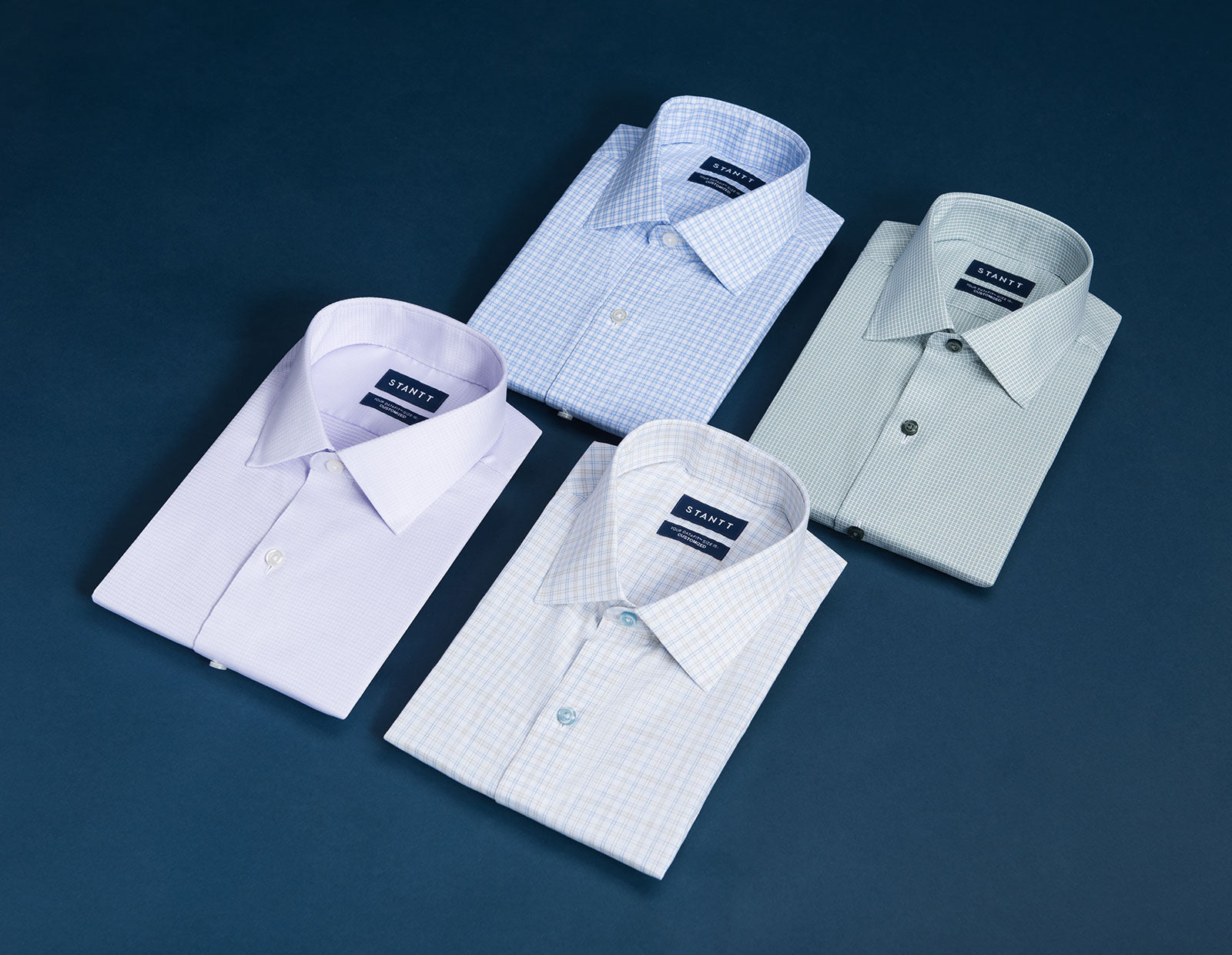
Stantt makes men's dress shirts, casual shirts, pants, suits and sport coats to order, in more than 150 sizes rather than the usual half-dozen. You do not send in a tailor's tape or book a fitting. You give three numbers - chest, waist and sleeve length - and the company's sizing engine, called DataFit, matches you to one of its sizes. The garment is then made specifically for that order and shipped, typically in about 10 to 14 days.
The sizes have names, not codes. Instead of a 16-34 or a "Medium," a customer might be an Essex, a Broadway or a Carmine - each named after a New York City street. It is a small trick that does a lot of work: it turns a spreadsheet row into something that feels like an identity. You are not settling for the nearest size. You have a size.
The methodHow DataFit replaced S/M/L
The engine underneath is the reason this is a company and not a catalog. Stantt spent years collecting 3D body scans - the brand cites thousands of them and millions of individual data points - and looked for the patterns in how real torsos vary. The output was not one perfect shirt. It was a grid of sizes fine enough to catch the differences that S/M/L flattens: the barrel-chested man with a narrow waist, the lean runner with long arms, the combinations a three-letter system pretends do not exist.
Reducing that grid to three measurements is the consumer-facing magic. A tailor takes a dozen; Stantt's system infers the rest from the population it scanned. The company has secured two U.S. patents - 10,504,170 and a later 11,836,813 - covering the sizing approach, which is unusual. Apparel brands patent fabrics and closures. Patenting the math of sizing itself is a bet that the algorithm, not the cotton, is the defensible part.
Sizes offered: the gap Stantt is filling
Approximate, for illustration - a tailor is one-of-one but slow and costly; Stantt sits between mass sizing and bespoke.
The modelMake it after you buy it
The quietest interesting thing about Stantt is the operating model. Because each garment is produced only after it is ordered, the company does not sit on a warehouse of unsold Mediums. There is no dead stock, which means no end-of-season markdowns and far less waste - a structural advantage that also happens to be the sustainability story. The trade-off is speed, and Stantt's answer is a made-to-order supply chain fast enough to deliver in a week or two rather than the months a traditional custom order can take.
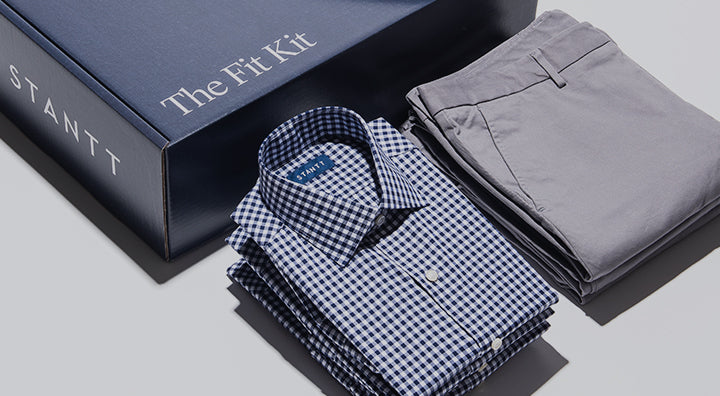
Enter chest, waist and sleeve length - or use the home Fit Kit to confirm your size.
The algorithm assigns one of 150+ sizes, each named for a New York street.
Your garment is produced to order and delivered in roughly 10-14 days.
Distribution runs on two tracks. Stantt sells direct through its website and a Manhattan showroom, and it wholesales through more than 350 retail stores nationwide, including Nordstrom. The retail footprint matters for a fit-based product: a shirt you can try before committing lowers the risk of buying "your size" sight unseen. Once a customer knows their Stantt size, reordering is friction-free - the replenishment habit that investors flagged as the real prize.
The customer is easy to picture because most men have been him at least once: someone who buys a shirt that fits the shoulders and then lives with a tent of fabric at the waist, or the reverse. Stantt frames its market as the large share of men who compromise on off-the-rack sizing - not a niche of clothing obsessives, but the ordinary buyer who never questioned why nothing quite works. That is a wider audience than most fit-tech brands chase, and it is the reason the product had to be sold in physical stores as well as online. A man who has been let down by size charts before wants to feel the collar close correctly before he trusts an algorithm with it.
The marketWhere Stantt sits
Stantt is boxed in on both sides, which is exactly the point. On one flank are the off-the-rack modernizers - Bonobos, Untuckit, Charles Tyrwhitt - who compete on style and price but still sell a handful of sizes. On the other are the made-to-measure players - Proper Cloth, Indochino, Ratio Clothing - and the tailors, who deliver true one-of-one fit but ask for more measurements, more money or more time. Stantt's claim is the seam between them: near-custom fit, ready-to-wear convenience, no fitting appointment.
The category is unglamorous, and that is likely why the opening existed. Men's dress shirts are not a space that attracts a rush of founders. But the fit frustration is close to universal, and a business that turns a tolerated annoyance into a repeat purchase has a durable reason to exist. Stantt's growth from a Kickstarter-funded launch to hundreds of stores, plus recognition including a Best Emerging Brand nod from MR Magazine and coverage in Fast Company, TechCrunch and Business Insider, suggests the middle was worth measuring after all.
The backingMoney and momentum
Stantt has raised roughly $5.25 million across its life, including a Series A that closed in early 2019. The round drew a strategic anchor in Randa Apparel & Accessories, one of the largest apparel-accessories companies in the world, alongside Fernbrook Capital, Consumer Ventures, Overton Venture Capital, New England Development and others. A strategic investor with deep retail relationships is a useful thing for a brand trying to widen its store count; it is capital and distribution in the same check. Estimated annual revenue sits in the low millions, and the team remains small - on the order of 14 people - which fits a company that outsourced its scale to an algorithm and a made-to-order supply chain rather than a big headcount.
The takeawayWhat you can copy
The transferable lesson in Stantt is not "sell shirts." It is the sequence. Find a frustration everyone has quietly accepted. Refuse to treat it as fixed. Turn it into data. Patent the answer, and brand the output as identity rather than as a spec. The made-to-order model that eliminates leftover inventory is the operational half; naming a size after a street so it feels like yours is the marketing half. Both come from the same instinct - that the boring category was boring only because no one had looked hard enough.
Where it would not work is instructive too. This is a bet that requires patience: a decade of scan collection, two patents and a slow build to 350 stores is not a growth-hack timeline. A made-to-order chain that ships in two weeks is a genuine operational feat, and any brand that cannot match it loses the convenience half of the pitch. And the whole thing rests on the premise that fit is worth a premium and a short wait. For the men who have given up on the shirt wall, Stantt's answer is simple: you were never a Medium. You just never had another option.