At Bloomingdale’s, Brian Berger was trying to replenish his underwear. A salesperson surveyed his predicament and asked, “Are you confused yet?” Berger recalled the encounter in a 2025 retail interview. It is an unusually useful question for a department store to ask. Confusion, after all, is expensive. You can pay for it with money, or with twenty minutes spent wondering whether last year’s comfortable pair still exists.
- Mack Weldon sells premium men’s basics built around fabric, fit and easy replenishment.
- Its Ace sweats became a major route to new customers and repeat purchases.
- The business lesson: comfort needs sound acquisition economics to pay the bills.
Berger and co-founder Michael Isaacman answered with Mack Weldon, which publicly launched in 2012. The proposition was modest enough to be credible: make the things men wear repeatedly more dependable, then make buying replacements easier. Underwear was a sensible starting point. It wears out. It touches skin. And nobody wants an annual research project devoted to a drawer.
A wardrobe begins where nobody looks
The launch range included underwear, undershirts, T-shirts and socks. Underwear cost $19.50-$24; tees and undershirts were $28-$32, and socks $12.50. These were premium purchases presented as practical ones. The original announcement emphasized consistent fit and volume-based pricing. Once a customer found something comfortable, replenishment could become a smaller decision.
That distinction still helps explain where the company sits. Mack Weldon competes in premium basics, between inexpensive multipacks and fashion underwear sold partly on the power of a famous waistband. Calvin Klein, Tommy John and MeUndies are plausible alternatives in the drawer; premium casualwear brands become alternatives farther up the body. Mack Weldon’s argument rests on what the garment does during an ordinary day.
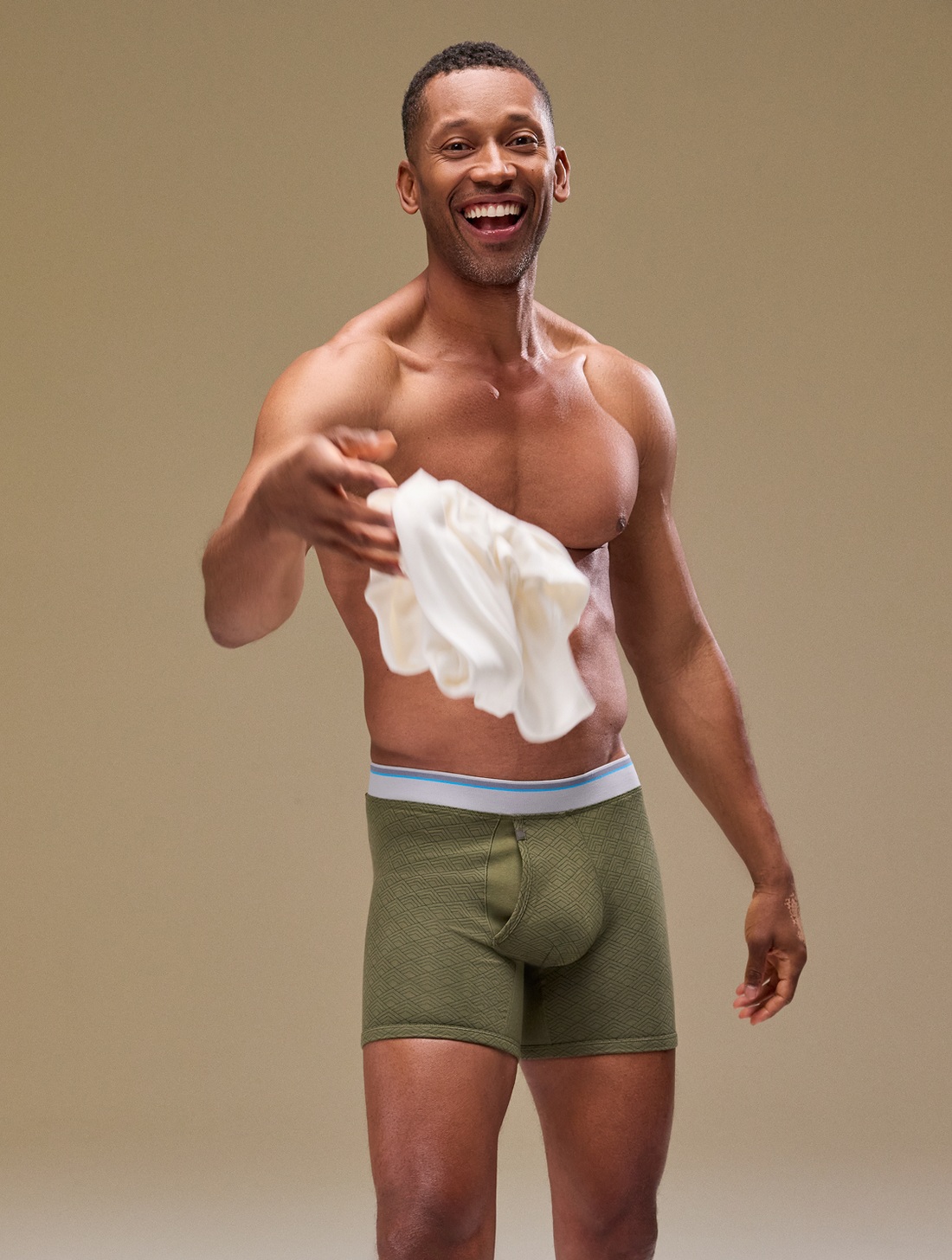
Its core audience is professional men aged 25-50, Berger told NRF in June 2025, although buyers extend beyond that range. They can assemble underwear, tees, socks, polos and sweats without treating each category as a new expedition. For someone who enjoys shopping, that may sound joyless. For someone who wants his clothes to work and his Saturday back, it is a respectable bargain.
The label is on the outside
Consider the care instructions. Mack Weldon prints them on the outside of its underwear because, the company explains, printing can become scratchy after washing. This is hardly a glamorous innovation. It is also wonderfully specific. The wearer gets to keep the information without keeping it against his skin.
The signature 18-Hour Jersey combines long-staple cotton, modal and spandex. Silver uses silver-bearing fiber, which the brand markets for odor management. AIRKNITx takes a different route with microfiber, stretch and targeted ventilation. These are distinct material choices, rather than one fabric dressed up with several names. Buyers should choose for the activity and feel they prefer.
“When our products are ready to launch, we launch them.”Matthew Congdon, design executive, speaking to GQ in 2016
Congdon described longer fabric-development lead times and freedom from a department store’s delivery calendar. His account concerned seams, waistbands and leg openings. The expertise here is apparel development: make a small physical improvement, then repeat it reliably in production. A website can explain a seam. It cannot make an irritating seam comfortable.
The customer who forgot his underwear
In April 2017, AIRKNITx arrived online and in Equinox club shops. The launch underwear was $28, the tee $42 and the socks $24. Berger offered a deliciously practical reason for the partnership: some men enter the gym shop because they have forgotten their underwear or socks. The product appeared beside the problem.
That was the company’s first major offline retail venture. Its first own store followed at Hudson Yards in March 2019, with fabric information on tablets, quick-purchase displays and, less predictably, two arcade cabinets. The store gave shoppers a way to discover the clothing physically while online ordering remained useful for replenishment. By 2025, reported wholesale partners included Nordstrom, Bloomingdale’s and Dillard’s.
Then the sweatpants opened another door
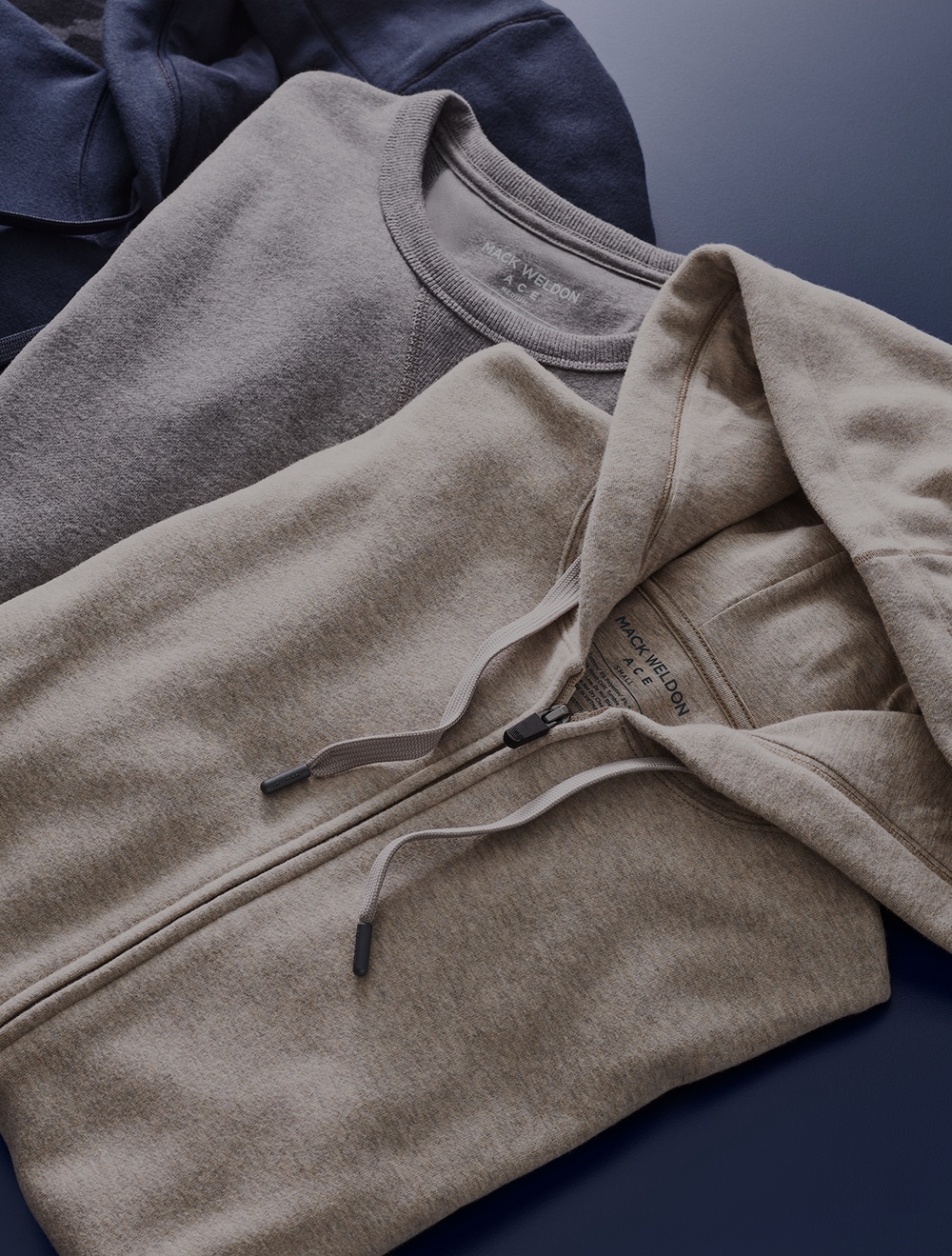
Underwear explains the origin. Sweats explain an important expansion. In August 2025, Glossy reported that the Ace Collection, built around micro-brushed French terry, had sold more than a million pairs of sweatpants. The range supplied a quarter of 2024 revenue while representing roughly a tenth of the assortment.
About 10% of the assortment. A disproportionately useful part of the wardrobe.
Glossy also reported that Ace converted more than 50,000 first-time buyers into repeat shoppers. A small blazer run sold out in a week, encouraging a more permanent place in the collection; bomber jackets followed in August 2025. Familiar fabric supplied permission to try unfamiliar shapes. The company could expand around something customers already liked.
A comfortable product can have uncomfortable economics
The route to customers needed repairs too. Modern Retail reported that Mack Weldon cut short a 2020 television test after Apple’s privacy changes disrupted digital advertising economics. By January 2025, Berger described a stricter requirement: customers had to be profitable on their first order. Higher-value baskets, a broader product mix and a change of fulfillment provider helped support the reset. Television returned with Comfortable Anywhere.
Capital had supported earlier expansion. A $7 million Series B in 2016, led by KarpReilly, was earmarked for product development, marketing and technology. North Castle Partners invested in July 2019 on undisclosed terms. The lesson for another founder is uncomfortable but portable: repeat buying is valuable, yet it cannot automatically rescue an acquisition price that the first sale cannot support.

In April 2025, the company promised to hold underwear prices through July 4 and briefly offered 18-Hour Jersey for $14.50. Berger pointed to inventory and limited China sourcing as reasons he could commit. Other businesses can copy the clarity of that promise; the stock position and supplier exposure have to come with it. And shoppers still decide whether the comfort deserves the premium. No amount of fabric vocabulary can make that decision for them.