A confirmation letter is a modest piece of office theatre. Someone has completed a period of training and assessment. A decision has been made. The document could arrive quietly in an inbox, wedged between a calendar invitation and a reminder to submit expenses. At Gemini Consulting & Services, the leadership team hands it over personally. Founder and CEO Srini Raj G participates alongside operations director Pavuluru Raveendranath. The employee gets a letter, a meeting and a moment of recognition.
It is a small ritual for a business concerned with large systems. Gemini works in enterprise software, cloud services and artificial intelligence, fields whose vocabulary can make people disappear behind diagrams. Here, someone has to show up. The ceremony gives a human scale to Raj’s recurring concern: how to build a company in which people feel responsible for the work and connected to the people doing it.
Read his career through that question and several apparently separate interests begin to fit together. There are the employee conversations, the emphasis on learning, the long client relationships and the community fundraising in St. Louis. The recurring task is getting people to commit to something that lasts beyond a single transaction.
A boutique with a growth problem
In 2014, Raj was speaking about Gemini as its senior vice president. His preferred description was “boutique provider.” The company’s core work involved enterprise resource planning software, the systems that connect an organization’s business processes. His argument for growth was specialization: choose particular industries, invest in understanding them, then keep working at those problems.
The numbers were rather less boutique. Gemini recorded revenue growth of 3,870 percent between 2010 and 2013 and revenue of $6.5 million in 2013. It ranked No. 91 on that year’s Inc. 5000 list. Those are historical figures, a snapshot of an early growth period. They explain why the problem of keeping a company personal would become consequential.
Gemini’s reported revenue growth over three years. In 2014, it placed No. 91 on the Inc. 5000.
Rapid expansion makes an attractive headline. It also raises an awkward operating question: can the habits that worked in a smaller company survive the arrival of more people, more clients and more places? Raj’s later emphasis on access, accountability and training reads as an answer to that question. Growth gives the organization more reach. It also gives its leaders more distance to overcome.
The job behind the title
Raj’s professional background extends across strategy, account management, consulting and the delivery of large programs. By 2023, he had more than 25 years of experience in IT services. That year, an interview with him appeared in the Journal of Global Information Technology Management, examining artificial intelligence and the management of teams across countries.
The combination matters. Software consulting requires people who can understand both a technical system and the organization paying for it. A useful program must survive budgets, competing priorities and the habits of its users. The distance between a working demonstration and a useful everyday tool can be surprisingly crowded.
Raj’s experience covers several points along that route, from shaping a proposal to carrying responsibility for delivery. It helps explain why his public conversations keep returning to people and working practices even when the subject is technology. A global team needs more than an agreed platform. It needs ways to make decisions, surface trouble and keep responsibility from dissolving between offices.
Give the project a captain
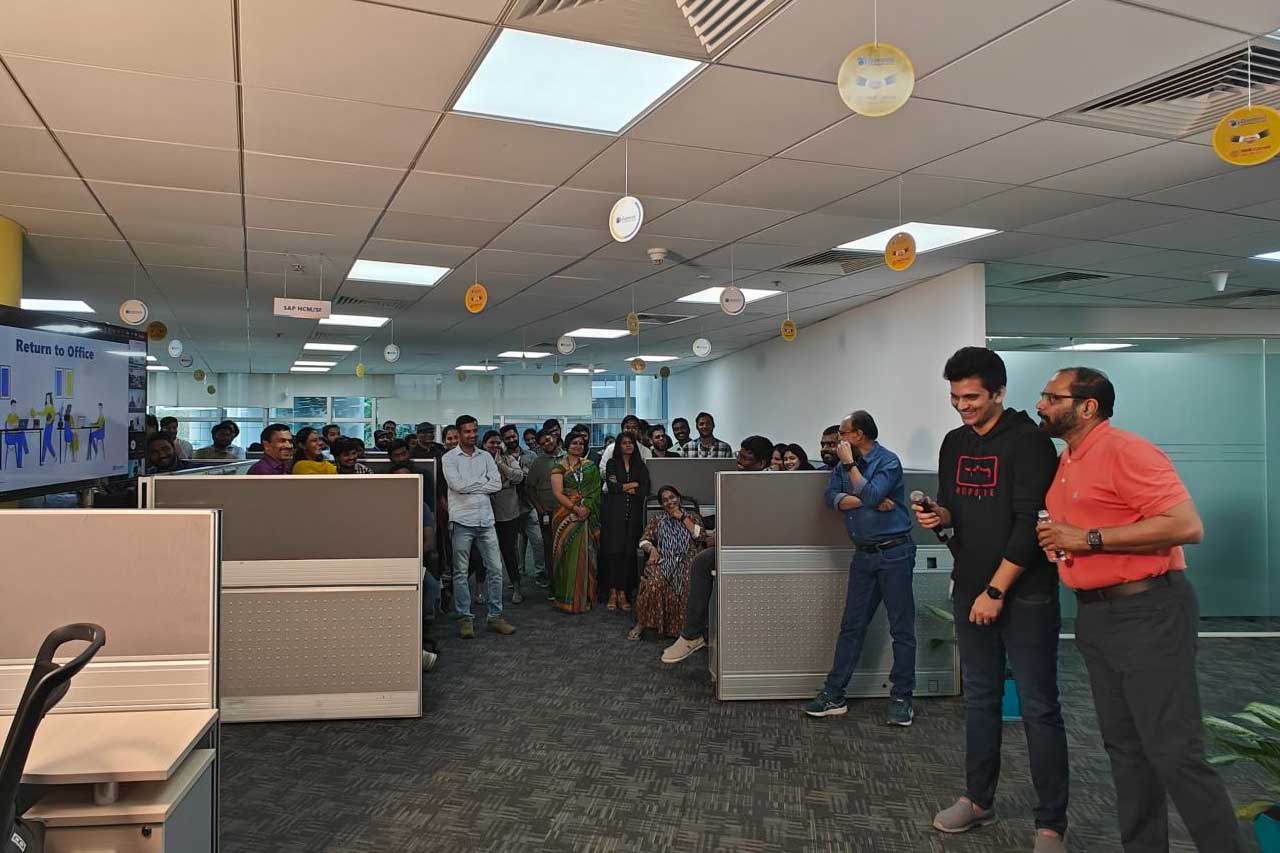
On March 3, 2023, Raj addressed Gemini employees in Hyderabad. His subjects included delivery, the working environment and the development of new leaders. He proposed a group of emerging leaders called Project Captains, people who would take responsibility for projects, work through obstacles and help deliver the required result on time.
The nautical title is cheerful; the assignment is exacting. A project captain has to see how the pieces fit together. Raj asked employees to examine projects as a whole, anticipate bottlenecks and think through solutions before problems arrived. He paired that expectation with values including integrity, attention to detail, teamwork and a willingness to learn.
“You can approach me anytime. I am here to guide you.”
Srini Raj G · employee address, March 2023
The invitation makes ownership a two-way arrangement. Employees are asked to take responsibility, while the leader offers access. Whether a deadline is going well or badly, that relationship has practical consequences: someone must be willing to bring a difficult question into the room. A captain needs somewhere to take the weather report.
The letter comes after the learning
Gemini’s confirmation-letter practice sits inside a longer process of training, evaluation and support. The company describes confirmation as a considered decision following an employee’s development. The handover marks the end of that stage and gives the employee a chance to meet senior leadership.
There is a useful distinction between celebrating arrival and celebrating progress. This ceremony recognizes work already done. It makes the transition visible to the person receiving the letter, and gives managers a reason to acknowledge that person individually. For a firm selling expertise, the development of expertise deserves a little ceremony.
Raj’s conversations with teams have also emphasized effort, ownership and improving skills as market requirements change. That is a demanding combination. Access to a leader does not remove the expectation to improve; it puts the expectation into a conversation. The warmth and the standards are meant to occupy the same room.
Learning to lead, repeatedly
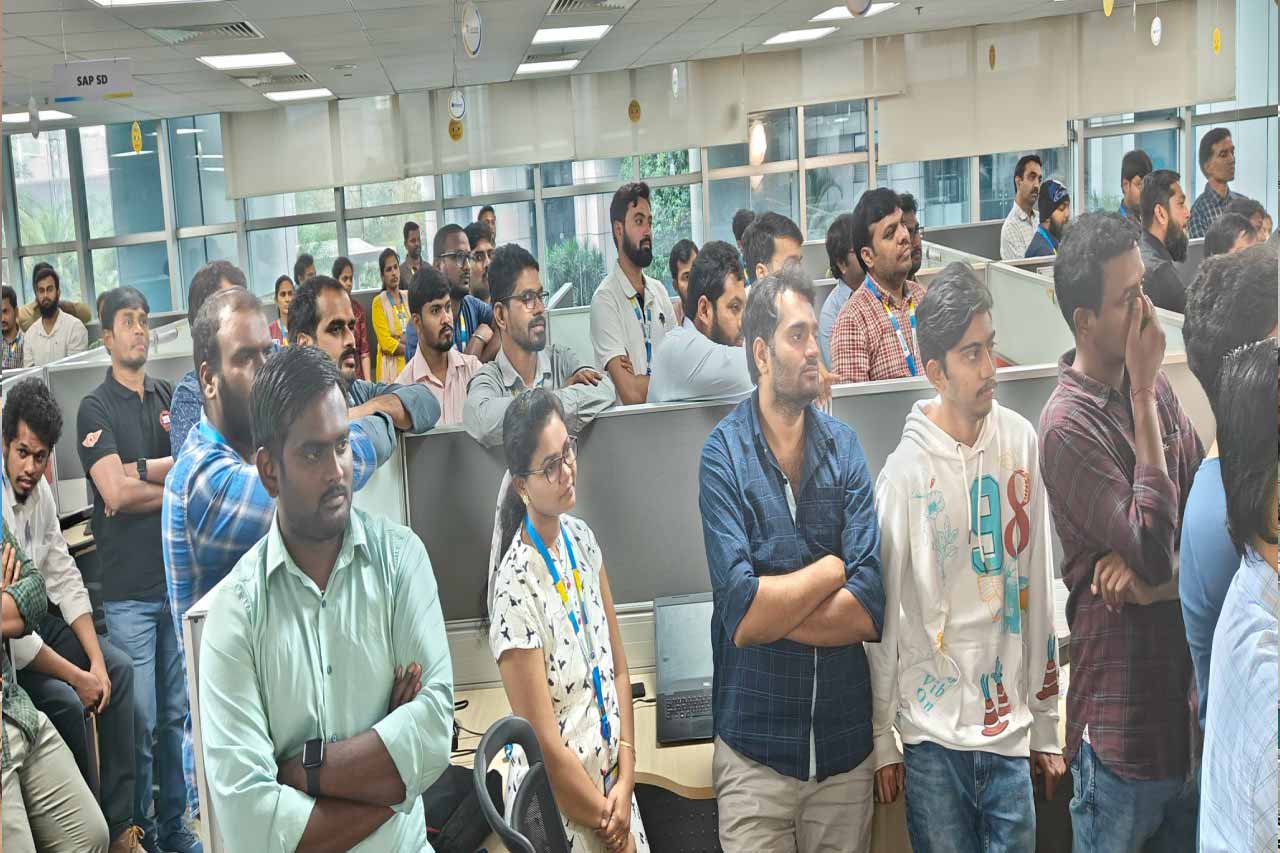
In a podcast conversation about building strong teams, Raj presents leadership as something improved through effort and practice. He emphasizes responsiveness to the people being led. It is an unglamorous proposition in the best sense: the leader also has homework.
Consider what follows from that idea. If leadership can improve, a job title cannot be its finishing certificate. Listening becomes part of the work, and feedback becomes useful information rather than an interruption. The same expectation of development that applies to a new employee can apply to the person handing over the letter.
That theme also makes the podcast an apt companion to his formal business interviews. The organizational questions are personal questions at a different scale. How do you respond when someone needs direction? How much room do you give them? What do you do when your own first answer needs revision? Raj’s emphasis on practice leaves room for those questions to stay open.
Close enough to understand the work
By May 2025, Raj was describing a 15-year relationship with Cornell University. He placed cultural alignment at the center of Gemini’s approach to clients. In the same interview, he said roughly a third of profits went back into employee training and upskilling, and identified cloud computing, AI and machine learning as priorities.
His example from Rajasthan concerned RRVPNL, an electricity utility. Gemini connected web and mobile tools for field reporting with the utility’s SAP system. Teams went into the field while development was supported from Hyderabad and Bhubaneswar. The example gives his interest in proximity a practical setting: understand the work where it happens.
On February 21, 2025, he took that technology-and-energy agenda to the third National Sustainable Energy Innovation Conclave in Chhattisgarh. His keynote addressed technology’s role in the transition toward greener energy. The company’s delegation also explored partnerships with officials and industry participants. Here, his audience extended beyond employees and clients to the organizations shaping an entire sector.
In a leadership message, Raj describes a client workshop that shifted toward measurable business results, and an AI experiment that developed into a tool used in daily decisions. These are his accounts, and the emphasis is revealing. He wants technology discussed through the changes it produces in someone’s working day.
St. Louis, with room for a long ride
Raj’s commitments extend into community life. His biography records leadership at the Hindu Temple of St. Louis and involvement in raising $1.7 million that helped make the temple debt-free. He has an MBA from Nagarjuna University in India. He also enjoys cricket, films, food and long rides on a Harley-Davidson.
The motorcycle is a pleasingly specific detail in a career otherwise full of enterprise systems. It supplies a different scale of movement: one rider, one road, a journey measured without a project dashboard. His interest in organizational behavior, meanwhile, keeps the question of how people work together close at hand.
The temple fundraising belongs in this portrait because it involves another durable institution, another group of people and another shared obligation. The connection is an editorial reading of his commitments: a business and a community organization both need people willing to keep contributing after the first burst of enthusiasm.
Back at Gemini, the confirmation letter offers that commitment in miniature. Training has happened. Progress has been reviewed. A leader turns up to recognize it. A growing company cannot put every relationship into a ceremony. Choosing one moment to make personal is a workable place to begin.