Imagine that a hospital needs a doctor. It has the doctor’s name, a phone number, and a perfectly respectable smartphone. There is only one complication: someone else is covering the shift. The device works. The directory looks plausible. The message has gone to a person who cannot help. This hypothetical is a useful way into Spok, a company whose subject is the distance between having contact information and actually reaching the person responsible.
- Spok connects hospital switchboards, schedules, alerts, smartphones, and pagers.
- It reports more than 2,200 hospital customers and 70 million messages a month.
- Its 2022 retreat from Spok Go put established products back at the center.
- The lesson for buyers: investigate the handoff as carefully as the device.
Scale figures are Spok’s current reported totals.
The number is only half the answer
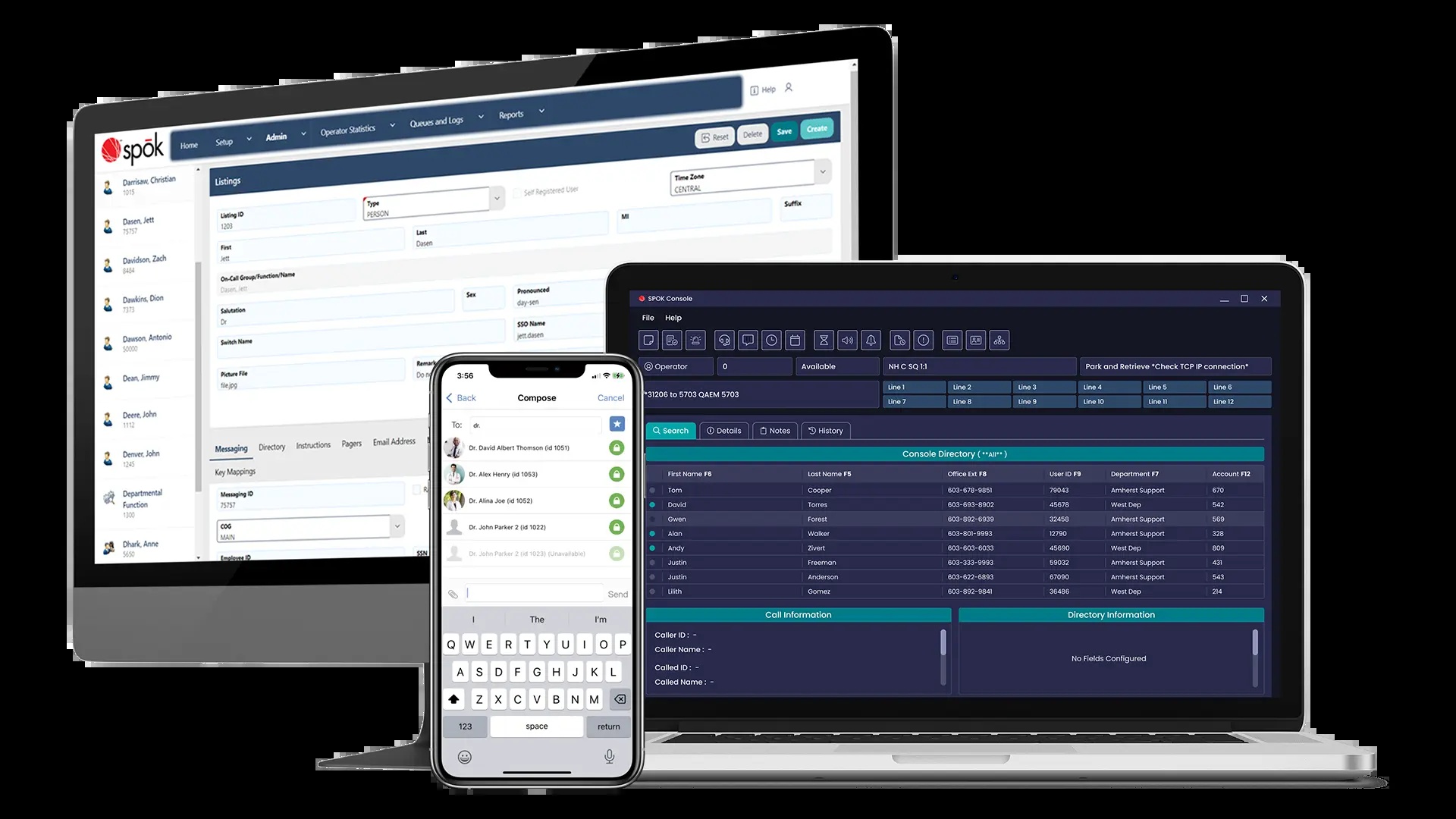
Spok operates in clinical communication and collaboration: the practical business of moving information between people who must do something with it. Its Care Connect suite combines several jobs that hospitals often encounter together. An operator needs a directory. A clinician needs the on-call roster. An alert needs a destination. A message needs an appropriate device.
With role-based on-call messaging, a sender can address the covering role instead of guessing which individual occupies it. The underlying schedule can change while the job remains the same. That is a modest feature with a substantial implication: the sender should not have to become an amateur investigator before asking for help.
Spok Mobile and secure messaging connect directory and schedule information with clinical systems and the electronic health record. Staff can share messages and patient context, with communication logs and controls designed to support HIPAA requirements. A buyer still has to configure access and use the system properly. Security is a practice with software inside it.
*The route and response rules depend on the installed solution, device, and hospital configuration.
A switchboard with a very long memory
Spok’s history resembles a family tree more than a founder’s garage. Jack Collins founded Amcom Software in Minneapolis in 1984. On another branch sat the paging businesses that became USA Mobility through the 2004 combination of Arch Wireless and Metrocall Holdings. USA Mobility acquired Amcom in 2011; the integrated business took the Spok name in 2014.
The name has a mechanical explanation. According to the company history, it evokes the spokes of a wheel: separate parts supporting a greater whole. Care Connect debuted in 2014, giving that metaphor a product to accompany it. The ancestry matters because Spok inherited experience in both software and the infrastructure that carries messages. The hospital does not have to resemble a clean sheet of paper before it can become a customer.
The pager has acquired manners
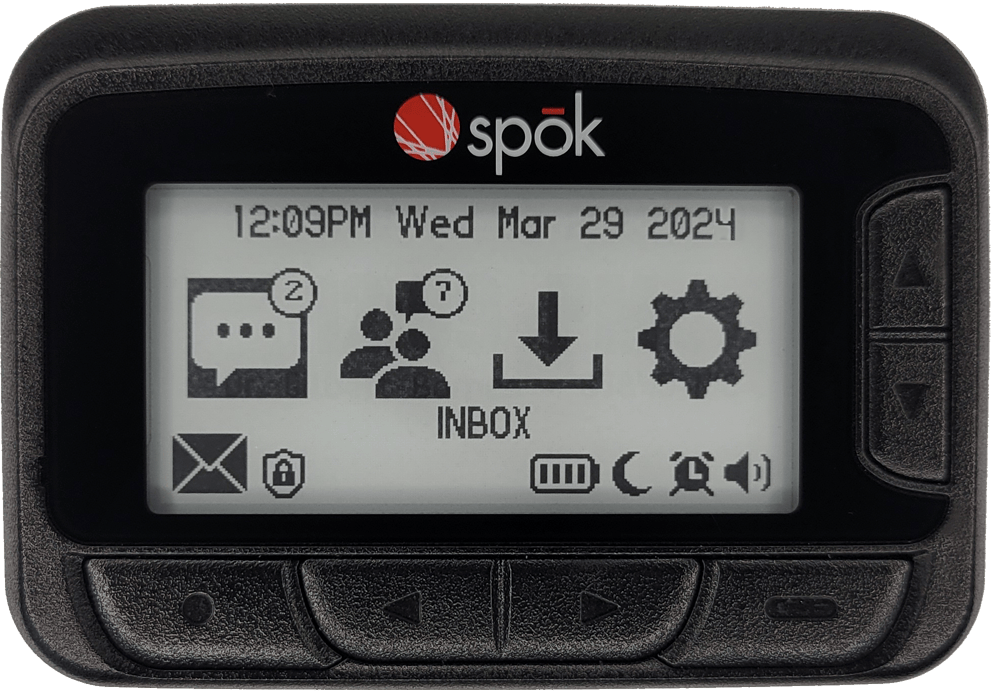
The pager is the detail most likely to make an outsider smile. Spok’s GenA device offers an ePaper screen, an estimated month-long battery life, and encryption support. Its datasheet specifies one AA battery, a display lock, remote data wipe, and over-the-air administration. Encryption requires Spok’s encryption service. These are specific capabilities, not a guarantee that every paging deployment is secure.
There is something rather elegant about a device that does not demand a charger every evening. More seriously, Spok sells a mixed-device approach. Some staff carry smartphones; others use dedicated pagers. Its PageLink offerings also bring virtual paging to phones. A physical pager and a smartphone app have different dependencies, so their resilience should be tested in the actual building.
Spok’s market is crowded enough to discourage romance. Stryker’s Vocera combines secure communication with workflow tools and supports multiple devices. TigerConnect combines clinical collaboration with physician scheduling. Neither alternative is merely a chat box. Spok’s distinctive proposition is the combination of hospital contact center software, directories, scheduling, clinical alert integration, and its wireless paging service. The sensible comparison begins with the hospital’s existing systems and the work each vendor can support.
The future that did not arrive on schedule
Spok also tried to build a different future. Spok Go was its integrated, cloud-native communication platform. In its 2020 results, the company said the pandemic had impeded customer meetings, though it secured five new platform customer relationships in the second half of that year. Interest and adoption were proving to be different things.
In February 2022, Spok decided to discontinue Go. Its quarterly filing described insufficient customer traction and a level of costs and personnel the business could not sustain, citing pandemic challenges among several factors. The record points to a commercial problem; it does not establish that the technology broke first.
The retreat had a human and financial price. Later filings reported 176 eliminated positions. Spok’s 2022 results recorded $7.329 million in severance and restructuring expense. That number is the expense for that year, not the total lifetime cost of developing Go. The company redirected attention toward Care Connect, wireless services, cash generation, and returns to shareholders.
A product can have a future and still be too expensive for the company trying to reach it.
Editorial observation
The lesson is uncomfortable enough to be useful. A proposed successor does not become inevitable merely because it is newer. Customer willingness to adopt, the time required to sell, and the money required to keep developing all deserve their own seats at the table.
Two businesses, one balance sheet
Spok’s 2025 results make its economics unusually visible. Of $139.708 million in total revenue, $72.522 million came from wireless and $67.186 million from software. Wireless declined 1.4% from 2024; software increased 4.8%. Maintenance and subscriptions contributed $36.433 million of software revenue. The business includes licenses, projects, managed services, hardware, and recurring support, alongside paging subscriptions.
What does it cost a customer? The contracts are substantial enough to require care: Spok reported twelve six-figure and two seven-figure software operations bookings in the fourth quarter of 2025. Those are contract bookings, not a menu of standard prices. Its $8.26 wireless average revenue per unit for that quarter is also an accounting metric, not a quoted tariff. A hospital’s actual bill depends on what it buys, integrates, and asks Spok to operate.
What an operator knows that an app forgets
The VHC Health case study brings the machinery into focus. VHC uses a MediCall console, WebXchange directory and scheduling, Spok Mobile, and paging. It added Voice Connect in 2024 to handle routine calls and transfers through interactive voice technology. The published case reports 483,727 calls and 397,707 mobile and SMS messages per month. These are customer-case figures, not results every hospital should expect.
“Everything runs smoothly because of that great integration of all those different systems in the hospital”
Isaac Appiah, Director of Communications, VHC Health · published customer case
Notice where Appiah places the emphasis: integration. The operator’s world includes emergency notifications, contact details, schedules, and ordinary callers. A beautifully delivered message is of limited use if the directory beneath it is wrong. Voice automation can take routine transfers off an operator’s hands; the operator still occupies a critical place in the system.
At North York General Hospital, Spok’s assessment consultants identified opportunities involving HL7 feed modifications, product updates, optimization, and data integrity. That is a useful antidote to the notion that improvement always means buying a new application. Sometimes it means repairing the information feeding the one you already own and helping staff remember how to use it.
A smaller company, with its ears open
The tradeoffs continued in 2026. In April, Spok announced a realignment involving approximately 10% of its workforce, more than $6 million in anticipated annual savings, and estimated restructuring charges of $1.6 million to $2 million. It also outlined AI-related improvements and development priorities. These were plans and estimates, rather than completed savings or demonstrated clinical outcomes.
The July results reported $35.011 million in second-quarter revenue and $4.120 million in net income. Spok lowered its full-year revenue guidance midpoint to $136 million while retaining a $30 million adjusted EBITDA midpoint. An $8 million sale of selected narrowband spectrum licenses closed on July 20. The company remains engaged in managing a mature business while investing in its established products.
For a reader evaluating Spok, the useful move is to trace a single urgent message. Check the directory entry, the covering role, the device’s coverage, and who owns escalation. Repeat the exercise at a shift change. This is an editorial buying test, not evidence that any one product will pass it everywhere.
A hospital with inconsistent schedules, poorly maintained integrations, or weak staff adoption will need to address those conditions alongside the purchase. A team that needs only simple chat may have little reason to buy this much infrastructure. Spok makes most sense where communication crosses departments, systems, and devices. In that setting, being reachable is a surprisingly elaborate accomplishment.
Follow the signal
Explore Spok’s website, Care Connect, company news, and the blog. Watch the Care Connect video or company overview on YouTube.