The hardest part of splitting dinner is rarely division. It is remembering who ordered the second negroni, deciding whether the birthday guest pays, and asking a close friend for $18.40 without sounding like a collections department. Splitwise built a business by placing software in that uncomfortable inch between arithmetic and affection.
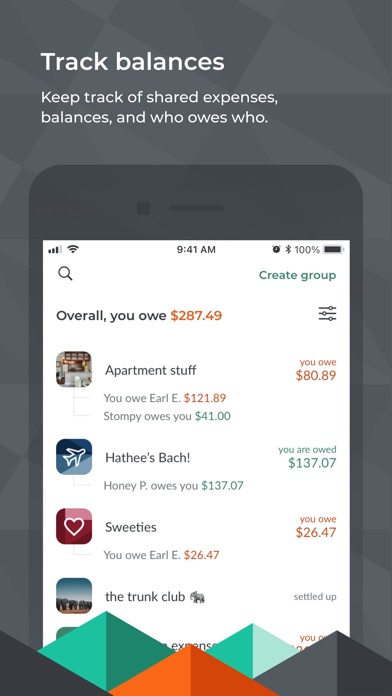
The Providence company keeps a shared ledger for roommates, couples, families and travel groups. One person records an expense, chooses who participated and defines the split. Everyone sees a running balance. The app can divide equally, by exact amount, percentage, shares or adjustments; it can also collapse a knot of IOUs into fewer repayments. In supported markets, users can move from “you owe” to actual settlement through Splitwise Pay, Pay by Bank, Venmo or PayPal.
That sounds modest because the product is deliberately narrow. Splitwise is not a bank statement, a household budget or an accounting suite. It is the agreed memory of a group. Its customers are people who would otherwise use a spreadsheet, a notes app, a group chat or the famously reliable system called “I’ll remember.” Tens of millions have used it, and by 2024 they had recorded hundreds of billions of dollars in shared costs.
It began with the unfair bedroom
Jonathan Bittner, a former Harvard astrophysics graduate student, first worked on a rent-splitting calculator. The problem was deliciously specific: two roommates may share an address, but one gets the large bedroom, better light or a private bath. Fifty-fifty is easy. Fair is harder.
Bittner, Ryan Laughlin and Marshall Weir launched the product in 2011, initially under the SplitTheRent name. The calculator supplied a neutral answer where negotiation had become personal. Soon the founders noticed the larger pattern. Rent was only one entry in a continuous ledger of utilities, groceries, lunches and holidays. Their friends were tracking it with refrigerator notes and complicated spreadsheets. Splitwise became the general-purpose version.
This is what made it different from a basic calculator. Splitwise preserved history and made the result visible to everyone. A friend could disagree with an expense, add a comment or inspect the record, but nobody needed to reconstruct a month from bank alerts. The product acted as referee without pretending to be a judge.
A social graph made of tiny debts
Splitwise’s core product is available on the web, iPhone and Android. Users create groups for an apartment, trip, couple or loose collection of friends. Each expense has a payer, participants, date, category, currency and optional notes or images. Recurring bills handle rent and utilities. “Simplify debts” can reduce the number of transfers needed without changing anyone’s net balance.
$20
$20
$20
Pro is the paid layer. As of August 2026, the US price commonly presented was $4.99 a month or $39.99 a year, though storefront pricing can vary. It removes expense-entry limits and advertising, then adds receipt scanning, itemization, transaction import for US cards, currency conversion, charts, search and reusable default splits. The distinction is sensible on paper: occasional users get the shared ledger; people running a household or frantic multi-city trip pay to remove repetitive work.
The company also offers fairness calculators and a developer API. These are smaller edges of the same thesis. One provides neutral advice before a shared cost is recorded. The other lets outside tools work with a user-authorized ledger. Splitwise’s expertise is not payment processing by itself. It is relational accounting: turning messy social obligations into a record that humans will accept.
03 / The price of patienceWhat did it cost?
For users, the core service begins at zero and the full product costs roughly forty dollars a year in the US. For investors, the journey has cost about $30.2 million in disclosed capital. The important detail is when that money arrived.
In 2014, Splitwise raised a $1.4 million seed round. That year, users had recorded more than $1 billion in US-dollar expenses, even though the company said it employed only two engineers. Venture rounds in 2016 and 2018 added roughly $8.8 million. Insight Partners led a $20 million Series A in April 2021, when Splitwise said tens of millions of registered users had managed approximately $90 billion through the product.
Capital arrived after the habit
The business model also evolved slowly. Splitwise disclosed ads and an early premium plan costing at least $1 a month in 2014. Back then, Pro offered a few web-only beta features and many subscribers seemed to be paying as a show of support. Today the subscription has a clearer utility bundle. The supplied company dataset estimates annual revenue at $3 million, but Splitwise does not publicly confirm revenue or valuation.
04 / The first cracksThe math worked. Coordination failed first.
Splitwise’s own 2014 account is unusually candid about early failures. Invitations were tricky to accept on mobile. People created duplicate accounts with different email addresses. Totals were hard to share. Contact integrations behaved inconsistently. Reminders went out one email at a time. None of these problems involved calculating 37 percent of a grocery bill. They involved getting several distracted humans to maintain one reliable record.
The second failure was the last mile. A perfect balance is only a polite accusation until money moves. Splitwise initially described itself as “not a payments company,” preferring the identity of a network that managed money relationships. PayPal and Venmo integrations helped US users leave the ledger and pay elsewhere, but the handoff remained friction.
Then came a more deliberate tension: monetization. The free tier now limits how many expenses a person may enter each day. The precise allowance has changed over time and can differ by platform or experiment. The strategic problem does not. A limit is most visible during a group trip, precisely when the app’s value is highest and a user is logging taxis, coffees, museum tickets and dinner in rapid succession. The paywall is well placed for conversion and badly placed for goodwill.
From recording payments to moving them
What changed Splitwise’s mind about payments was not a philosophical epiphany. Customers kept asking for the missing step. The company’s own Splitwise Pay page calls direct in-app payment its number-one requested feature. Eligible US residents can connect a checking account and send money through Splitwise Pay, whose banking services are provided by Coastal Community Bank. Standard electronic transfers carry no Splitwise transaction fee or monthly wallet fee, though eligibility and bank conditions apply.
Europe required different plumbing. In 2024, Splitwise partnered with Tink, the open-banking company owned by Visa, to launch Pay by Bank in the UK. Tink verifies account ownership and initiates bank-to-bank payments inside the flow. In 2025, the partnership expanded to France, Germany and Austria. Users in unsupported regions still settle elsewhere and record the payment in Splitwise.
This did not turn Splitwise into a universal wallet. It made the ledger more complete where regulation, banking coverage and partnerships allowed. That restraint matters. Payment rails are local, regulated and expensive to maintain. The company’s global advantage remains the calculation and shared record, not identical settlement everywhere.
What can a reader copy?
Not the bill-splitting interface. There are dozens of those. The useful lessons sit beneath it.
Splitwise chose a problem where a neutral answer has emotional value. The software is useful because people prefer blaming the math to blaming a friend.
A group ledger improves when every participant joins. Invitations are not a marketing layer; they are part of completing the job.
A calculator is visited once. A history of rent, groceries and trips creates return behavior and modest switching costs.
Scanning, itemization, conversion and unlimited entry matter most to frequent users. Segment by workload, not decorative customization.
The company also demonstrates patient category expansion. It began with fairness, broadened into a ledger, layered on Pro tools, then attached payment rails market by market. Each step shortened the same job rather than sending the company into unrelated finance products.
07 / Where the model breaksYour friends are the moat - and the condition
Splitwise works best for a recurring group that values transparency, is willing to maintain the ledger and already knows at least one member who will enforce the habit. It is especially useful for roommates, couples with partially separate finances and travel groups handling multiple payers or currencies.
If several people refuse another app or login, link-based rivals, a spreadsheet or one diligent treasurer may win.
High-frequency users who will not subscribe can rotate expense entry among friends or leave for a no-limit competitor.
Payment features vary by country, bank, currency and eligibility. A strong local wallet may finish the job faster.
People seeking bank reconciliation, cash-flow planning, tax records or household net worth need a different product.
Competition is now sharper. Tricount, Settle Up, Splid and Kittysplit attack price, account friction or travel simplicity. Venmo Groups begins with an existing US payment network. New entrants advertise unlimited logging and receipt automation, often defining themselves against Splitwise’s paywall. Switching a bank is hard; switching the ledger for next weekend’s cabin trip is not.
Still, Splitwise owns a recognizable verb and a long history of balances people care about. Its durable insight is almost embarrassingly human: money between friends is not merely money. It is memory, fairness and tone. The next phase depends on whether the company can monetize the people doing the most work without making them feel punished for doing it.
Follow the ledger