The check arrives, and suddenly a pleasant dinner becomes a minor audit. Someone ordered wine. Someone skipped dessert. One person paid for the taxi, another covered the tickets, and everybody has a slightly different memory of events. Jonathan Bittner built his career in this narrow interval between appetite and accounting, where the arithmetic is easy and the social physics are not.
His route there began with physics in the literal sense. Bittner earned a physics degree from Yale, then entered graduate study in astrophysics at Harvard. He left the doctoral program and spent a brief period as a pricing consultant. The subjects changed dramatically, but a recognizable habit endured: define a messy system, find the variables that matter, and test whether the model agrees with reality.
In 2011, that system was an apartment. Bedrooms are unequal; rent is fixed; roommates want an answer that feels fair. Bittner did not pretend that fairness could be declared from a keyboard. He built a rent calculator, surveyed friends about apartment-sharing scenarios, and calibrated the formula against human judgments. An early feedback set included 1,338 respondents. The prototype was quantitative, but its raw material was opinion.
“Fairness is a funny thing. One person's fair is another person's rip-off.”Jonathan Bittner, writing on the Splitwise blog
A spreadsheet sets the bar
The service launched as SplitTheRent with Bittner, Ryan Laughlin and Marshall Weir as co-founders. It soon became Splitwise, a name broad enough for the thicket of debts that follows roommates, couples and traveling friends. The early competitive benchmark was gloriously unglamorous: a shared Google document.
Bittner wrote that the founders had used one themselves. Other IOU products asked for too much clicking and too many fields. If specialized software took longer than a spreadsheet, specialization was no advantage. Splitwise's Quick-Add feature answered with plain-language entry. Type who paid, how much and why. Keep your fingers on the keyboard. Return to the evening.
The company kept applying this test as the product widened. Its 2011 public beta added percentage splits and multiple payers because real bar tabs refuse to arrive in tidy, equal pieces. Mobile apps followed for iPhone and Android. The web application was later described as another client of the same API used across platforms, a technical choice that made the ledger portable without changing its basic grammar. Add a cost. See the balance. Settle when the group is ready.
Bittner's posts from this period read like a workshop notebook left open on the bench. He explained what shipped, admitted what remained awkward, thanked volunteer testers and invited corrections. When Android lagged behind iPhone, he said so plainly and explained the testing burden across devices. When a Venmo update broke an integration, the company published time-stamped updates until the connection returned. The tone was practical, sometimes droll, and rarely distant from the person who had just encountered the bug.
This is the durable product insight in Splitwise. The app is a neutral memory. It does not need to decide whether the extra appetizer was morally defensible. It records what the group agrees happened, simplifies who owes whom, and lets settlement occur later. Bittner once warned that paying after every little event makes payments the only thing people talk about. Deferred settlement is not merely convenient. It protects the occasion from its own receipt.
His parallel writing for Forbes made the territory unusually visible. Bittner explored the economics of couch-crashers, the savings created by roommates and the competing moral intuitions inside group vacations. These were not grand problems of high finance. They were the recurring negotiations that households conduct without a rulebook. Each column enlarged the same observation: people need arithmetic, but first they need a credible way to agree on the premise.
A company takes the Providence exit
Splitwise was accepted into Betaspring, a Providence accelerator, for a three-month program. The founders expected to return to Boston. They stayed. Providence offered lower office and housing costs, a creative community, nearby universities and an unusually accessible network of mentors. Bittner liked the city's scale without pretending geography had ceased to matter. His calculation was blunt: it cost less to fly to San Francisco to meet investors than to live there.
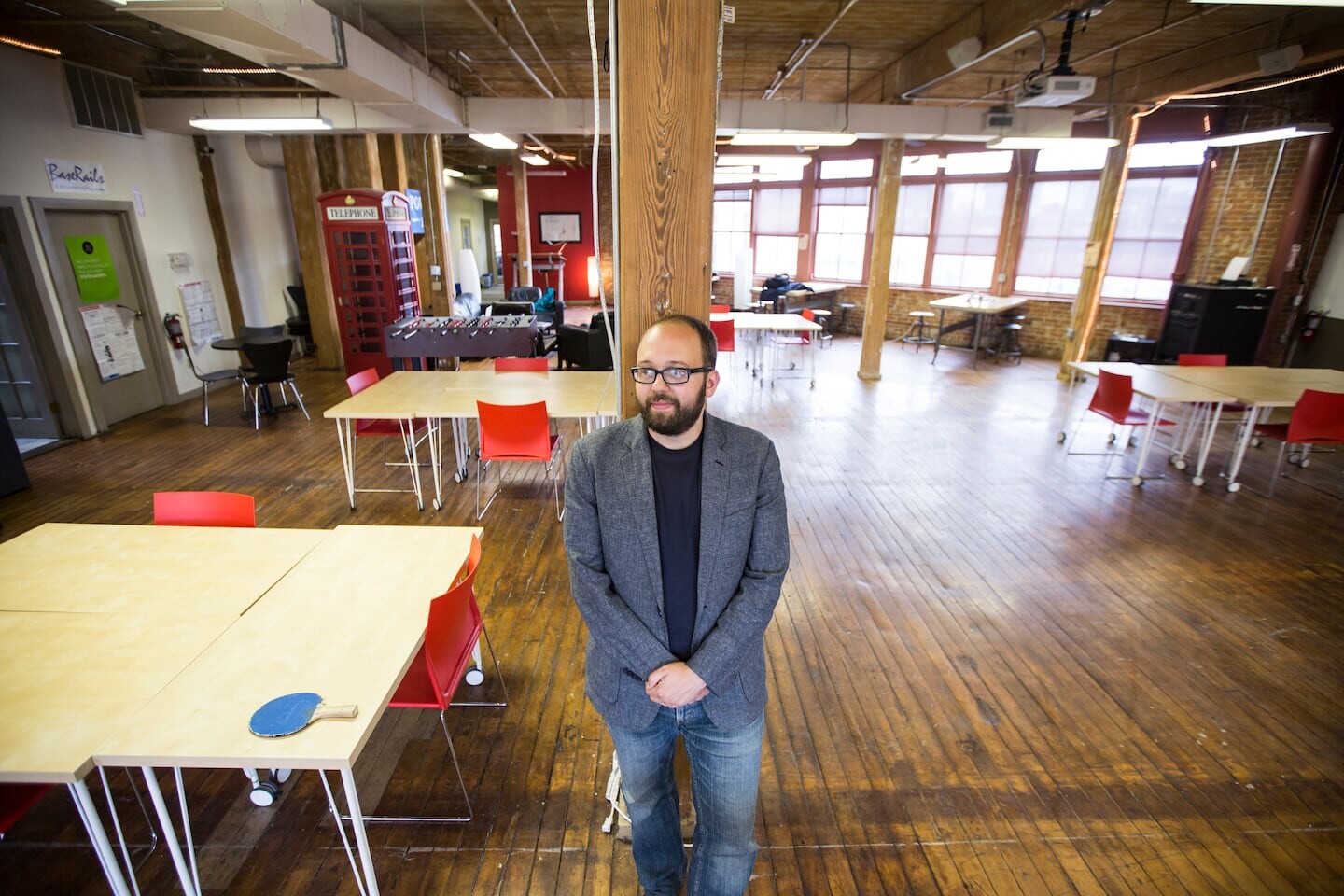
The choice gave the company room for a patient build. In 2014, Bittner announced a $1.4 million seed round and noted that users had already shared more than $1 billion in US-dollar expenses that year. The team was tiny. Its CTO was also the lead designer, and only two engineers were building a product that users often assumed came from a much larger shop.
Recognition arrived early and locally. Forbes placed Bittner on its inaugural 30 Under 30 roster for his role in the young company. Providence Business News included him in its 2017 40 Under Forty class. Neither honor altered the operating idea. Splitwise remained a consumer subscription business built around a recurring, slightly uncomfortable household task. Its ambition grew, but the unit of work stayed small enough to fit on a receipt.
Organic growth suited the product's social structure. One user invites the people with whom they share money. That loop only works if the free experience is useful enough that the invitation feels like help, not recruitment. When Splitwise raised a $20 million Series A led by Insight Partners in 2021, Bittner said the company had tens of millions of registered users. The paid Pro subscription supplied a business model without requiring the company to store funds or live on transaction fees.
The tact inside the tool
Money products often advertise control. Bittner's language has tended toward relief. He has described Splitwise's goal as removing the stress of shared money in important relationships. That difference explains many of the company's choices: clear balances, support for unequal splits, comments that keep context attached to a charge, and interfaces designed to make entering a bill feel smaller than the bill itself.
It also explains the humor. Early posts considered how much to charge a couch-crasher and whether a group vacation should be organized like capitalism or socialism. An iPhone release carried the internal animal name “Lazy Salmon.” A public profile says Bittner loves surveys and wombats. The whimsy keeps the arithmetic from behaving as if it were the most important thing in the room.
“Our goal for Splitwise is to remove the stress of sharing money in our most important relationships.”Jonathan Bittner, 2014
His public interests make the same mixture visible. In a 2017 Providence profile, Bittner chose an emoji beach ball as his portrait prop, then named two sober works of history and business on his reading list. He called himself an extreme extrovert and praised Providence as a creative, livable city with good food and people. His Rhode Island favorite was Del's Lemonade, preferably from a downtown cart or East Matunuck State Beach. On his own biography page, he gave a supporting role to Gus, the family cat, described with founder-level confidence as “very handsome.”
Closer to the payment, still outside the conversation
Splitwise began as the ledger beside payment systems. Over time it moved closer to the transfer itself through integrations and partnerships. In 2024, it worked with Tink, the Visa-owned open-banking platform, to offer Pay by Bank in the United Kingdom. In October 2025, the feature expanded to France, Germany and Austria. Bittner framed the appeal in terms that fit the older product: secure and direct.
The rails are more sophisticated now, but the social job is unchanged. A group still needs a common account of what happened. A couple still needs an interface that does not choose sides. A traveler still wants to record the museum tickets before someone forgets. Splitwise can move nearer to money without becoming the subject of every gathering.
There is a founder lesson here that has little to do with fintech. Bittner's early work treated the homemade workaround as a serious competitor, treated user opinion as data, and treated emotional friction as part of the engineering specification. The product did not need to make shared spending exciting. It needed to make it brief, legible and survivable.
Astrophysics asks how immense systems hold together. Splitwise asks a smaller version of the question: after the rental house, the groceries and the last round of drinks, what keeps a group in balance? Bittner's answer is software with the manners to remember everything and then become quiet.