At 22, Spencer Fry had sold his stake in a company, moved to New York, and acquired the means to make a few unnecessary decisions. One of them was a tan suit from Barneys. It cost $4,000. He later regretted it. The suit is a useful place to begin because, across Fry’s career, the question of what success should look like keeps returning, usually wearing something more respectable than a price tag.
There would be other things to acquire: customers, colleagues, investors, features, the procedures by which a company announces that it has become a proper company. There would also be occasions to reconsider the collection. By 2024, the founder and CEO of Podia was publicly questioning assumptions he had once held about growth. He had wanted a much larger business. He was learning to be more particular about what larger meant.
A gamer’s education
Fry grew up in Connecticut, with two parents who taught at Yale. Living on campus gave him access to fast internet while he was young enough to find that a very persuasive reason to stay indoors. He built computers and experimented with online businesses. The internet offered a striking possibility: a person could make something at home, put it in front of strangers, and get paid.
Gaming supplied a concrete problem. In Counter-Strike, communicating with teammates by typing was inconvenient when the rest of the match declined to pause for your sentence. TypeFrag, the voice communication business he co-founded during college, addressed that need. The people building it understood the problem because they played the game.
Fry started college at Case Western Reserve before transferring to Yale. Running a company alongside a demanding computer science curriculum proved difficult, and he switched to psychology. He graduated in 2006. He later credited social psychology with helping him understand employees and customers. His education in software businesses had acquired a useful companion: an interest in the people obliged to use them.

Remote work arrived early, too. TypeFrag’s first three employees were in England, Kansas, and Kentucky. Fry said he never met two of them in person. Work was judged by what people produced, with no office available to reward anyone for arriving early. Long before remote work became a subject for elaborate corporate declarations, it was how his small business operated.
The appeal of a business with one person in it
After TypeFrag came Carbonmade, the online portfolio service for artists and designers. Fry joined the partners who became his co-founders and handled the business side. The product gave creative people a place to display their work. For Fry, the attraction went beyond software: helping someone present a portfolio could help that person find work and build an independent life.
Uncover, an employee perks business, followed. He found selling to businesses less enjoyable than serving individuals. That preference matters in understanding Podia. His recurring customer was someone whose livelihood and personal work sat close together: a designer, a teacher, a person with expertise and the awkward task of turning it into income.
One early catalyst was a tutor friend whose work involved substantial travel around New York. Fry began exploring tools that could help him teach and run a business online. Another was closer to home. His father, English professor Paul Fry, reached students through Yale’s online courses. Spencer could see that teaching had an audience far beyond the room where it happened.
Podia began in 2014, initially under the name Coach. Early versions focused on tutors. The company later served people selling courses, downloads, and memberships. Fry started it without a co-founder, after three businesses built with partners. In a 2016 account of that choice, he described relying more on employees and giving them autonomy. Independence at the top still required trust throughout the team.
Gamers talking
Creatives showing
Teachers selling
Members connecting
Please hold. The founder is typing.
The practical version of helping people was considerably less glamorous than a founder biography. Fry talked to potential customers by phone, video, and in person. Later, he continued answering support chats. He recalled spending a US holiday on live chat from eight in the morning until six in the evening while the rest of the team was off.
Support put him beside the person encountering a confusing feature, a missing capability, or a reason to hesitate before buying. That made it useful product work. A customer explaining why something fails can supply information that a company’s own enthusiasm has somehow overlooked.
By 2022, Fry was spelling out what fair treatment of creators should involve: direct payments, reasonable fees, accessible support, portable data, and a platform that would still be around. These are rather domestic virtues for an industry fond of grand announcements. They are also consequential when a solo business depends on someone else’s software to collect money.
“Culture can never be set on autopilot.”
Spencer Fry, discussing a growing Podia team
The people inside the company required attention as well. After Podia doubled its headcount in 2019, Fry described the work of creating a handbook and improving onboarding. Growing from ten people toward twenty changed the culture’s demands. A larger team required more deliberate care, even when the founder liked the people already in it.
When the company starts dressing up, too
In his earlier thinking, a larger workforce had been evidence that a business mattered. He once presented a vision of Podia with more than a hundred employees. By April 2024, he wanted higher revenue per employee and a smaller organization. Communication, collaboration, and company upkeep consumed time he would rather spend serving customers.
“I want a small team, but a big profit,” he wrote. The sentence was plain enough to leave little room for the usual celebratory photograph of a newly crowded office.
That September, Fry described another uncomfortable realization. He and Len Markidan had decided to scrap a plan and refocus on paying customers. Podia had accumulated policies, performance reviews, and habits that made it slower. Fry included himself in the criticism. He had stepped away from daily operations because he thought that was what a growing company’s CEO should do. He wanted to know what was happening again.
His tenth-anniversary reflection continued in that vein, pairing five celebrations with five challenges. Podia remained profitable and growing. Yet a free plan had brought a great many people who required resources without paying. He regretted the diversion and described the return to a free trial. The birthday account made room for decisions he wished he had made differently.
The pleasure, and cost, of the delete key
Fry’s correction reached the product itself. In September 2024, he considered the difficulty of building a website tool, an email service, and an online store with one small team. Each area could occupy an entire company. Podia had spent years filling in capabilities; he wanted more attention on improving what already existed.
He called this product depth. It also involved subtraction. Podia removed a checkout embedding feature built when customers were more likely to keep an outside website. Fry acknowledged that the decision would affect a few hundred users. Simplification has a beneficiary and, sometimes, a customer left rearranging things. His account included both.
A smaller website, by design. Historical plan described by Fry.
Marketing received its own trim. In October, he described cutting a website of roughly 75 pages to fewer than 30, alongside simpler navigation. A small team trying everything could end up giving nothing enough attention. His preferred website explained what the product did, why it helped, and what it cost. The visitor had probably come with those questions rather than a burning desire to explore a menu.
A room people return to
By June 2026, Podia’s next chapter was taking shape around community. Courses, downloads, coaching, events, email, memberships, and conversations were brought into a more connected environment. Members could follow a shared feed and message each other. Courses lived within the community, placing questions closer to the lessons that prompted them.
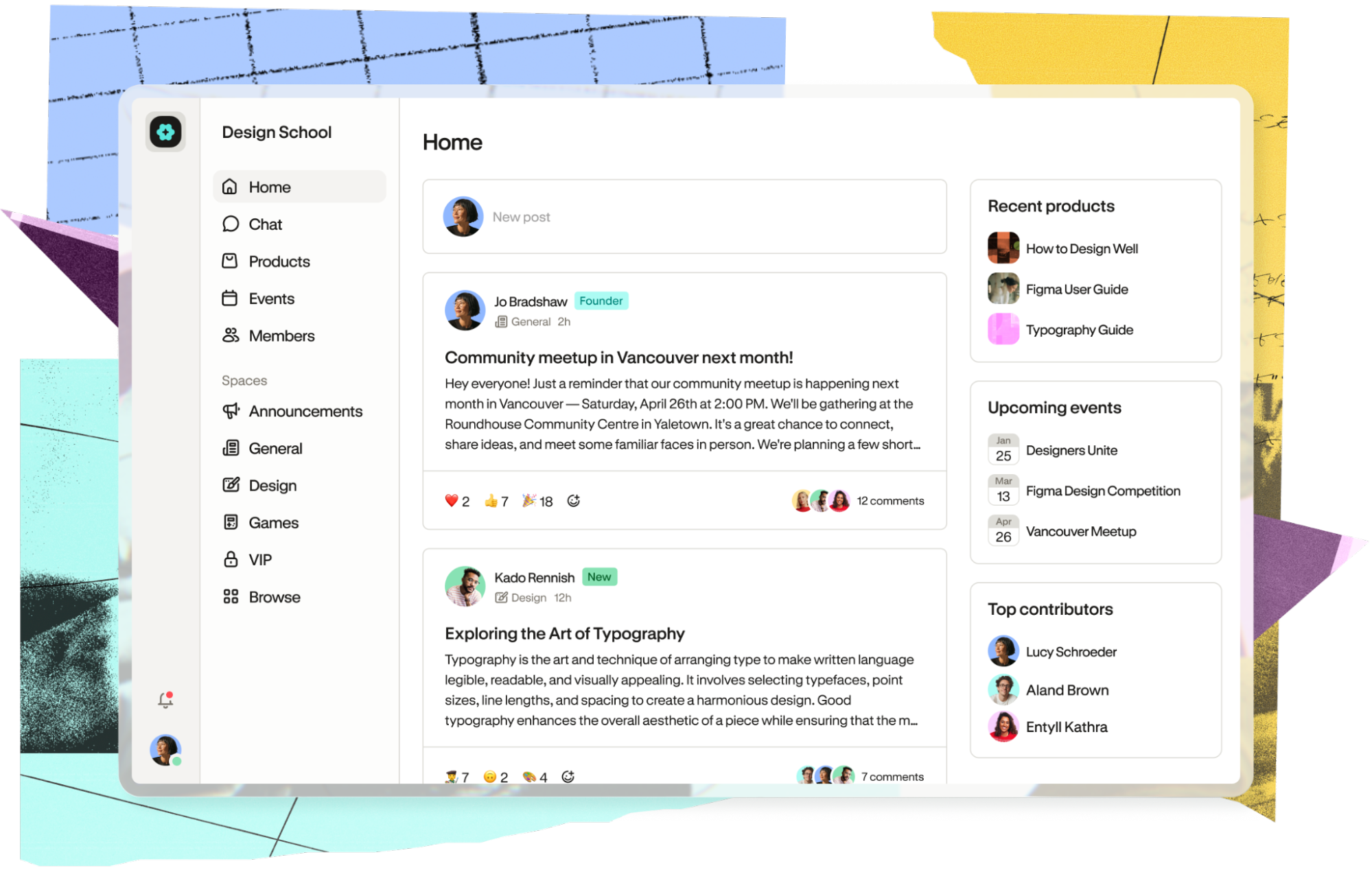
In his accompanying thinking about AI, Fry argued that increasingly abundant information would change what people valued. He was wary of spending years building features that major model companies might soon supply themselves. Relationships seemed a more promising place to invest. People return to teachers for judgment, conversation, and the company around the subject, as well as for information.
He described Slack and Discord as reference points for a place where creators and audiences could participate together. It was a fresh product direction for someone whose businesses had so often begun with particular people needing to communicate or show their work. Its success will depend on whether those people find enough reason to return.
The train home
Fry’s personal website provides a modest setting for all this reconsideration. He says he usually writes on the train home from New York to Connecticut; the bumpy ride puts him in the mood. His interests outside work have included cooking, squash, cycling, and travel. These days, his site emphasizes time with his wife, dog, and people he cares about.
He also uses Podia himself. In April 2024, he moved his website, blog, and newsletter onto the product. A founder who advocates fewer disconnected tools had given himself a daily opportunity to test the proposition.
The section that once displayed his startups and accomplishments now carries a deliberately deflating title: “Insert important-sounding headline here.” He explains that the old list matters less to him. Making Podia better matters more. There is still ambition in that choice, along with a preference for work he wants to keep doing. The suit has had its turn.
Keep the conversation going
Fry’s writing, interviews, and the product he is building.