Why every course app suddenly wants to be a community
Disciple, Podia, Thinkific, LearnWorlds, Kajabi and Open Social are all chasing the same tired-of-renting creator. Here is how the fight over who owns your audience actually breaks down.
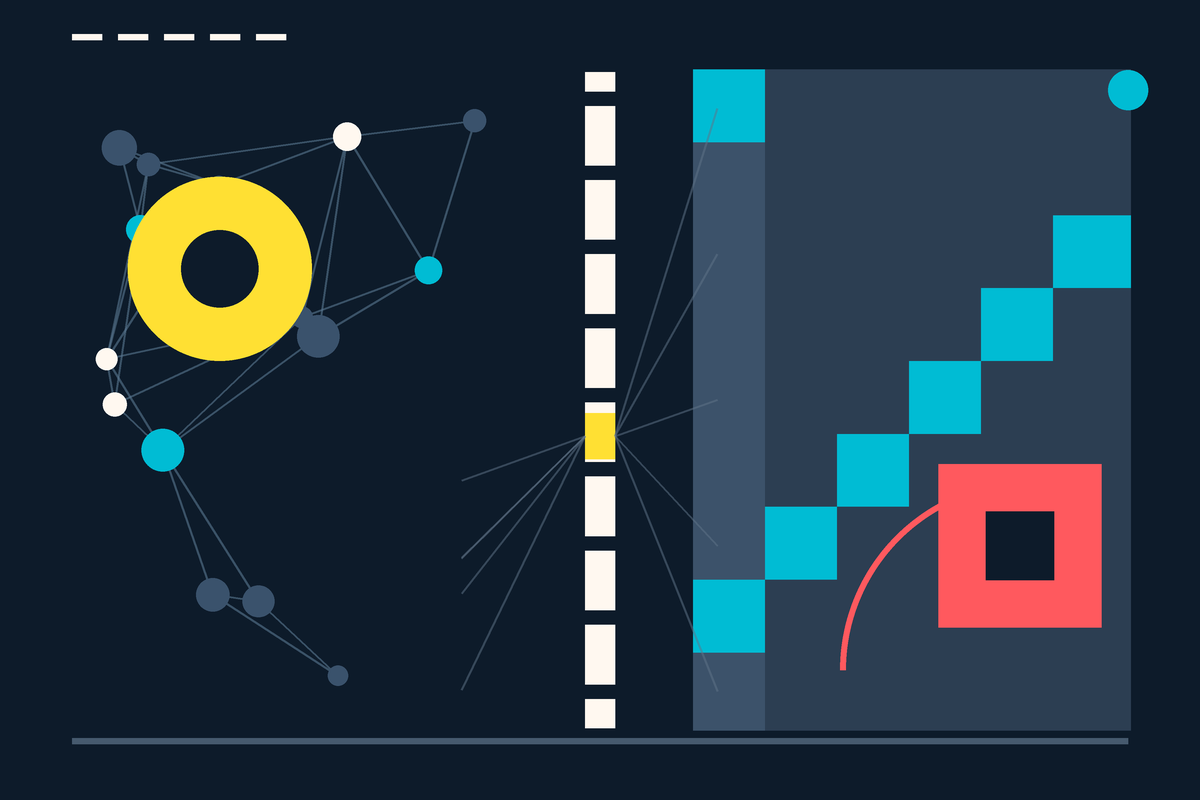
The creator's choice, drawn flat: an owned, open network of your own people on the left; a rented, governed grid of vendor modules on the right; and the contested conversation running straight down the middle.
For most of the last decade, a creator's audience was something they rented. You posted, an algorithm decided who saw it, and the day the rules changed your reach went with them. The people who followed you were never really yours. They belonged to the platform, and you were a tenant with no lease.
Six companies have built businesses around fixing that, and in 2026 they all started to look suspiciously alike. Disciple, Podia, Thinkific, LearnWorlds, Kajabi and Open Social came from different corners. Some started as course tools. Some started as community software. One is not a company at all. What they share now is a single pitch: stop renting your audience, and bring it home.
The convergence nobody announced
Two years ago you could sort this category with a ruler. On one side sat the course platforms - Thinkific, LearnWorlds, Kajabi - where the product was a curriculum, a checkout and a completion certificate. On the other sat the community tools, where the product was a feed and a group chat. That line is gone.
In June 2026, Podia rebuilt its entire product around community as the front door, demoting courses to something you sell inside the conversation rather than the reason people show up. Kajabi, long the marketing-heavy course incumbent, kept pushing deeper into community and live sessions. The course apps grew feeds. The community apps grew curricula. Everyone met in the middle, and the middle got loud.
The reason is boring and enormous: money. The creator economy was worth roughly $200 billion in 2025 and is growing north of 20% a year, on track to pass $800 billion by the early 2030s. The narrower online-community-software market is expected to roughly double, from about $3.5 billion in 2026 to $7.9 billion by 2033. When a market grows like that, every tool in the neighborhood decides it can be the whole toolbox.
Three answers to one question
Strip away the feature lists and every one of these platforms is answering the same question - who controls the relationship with your people - with one of three postures.
The branded app
Ownership as a feeling before it is a spec. Every Disciple community ships with its own mobile app - your name, your icon on the member's home screen. When someone opens it, they open your thing, not a shared network where you are one tab among thousands. Courses, feeds, live streams and events are bundled, and Disciple takes no cut of what you sell.
The all-in-one business
The crowded middle. Kajabi wraps courses, email, funnels, payments and community into one bill. Podia counters with a free tier and no transaction fees on paid plans. Thinkific goes deep on course structure and assessments for teams. LearnWorlds sells interactivity and learning analytics that climb with the price.
Sovereignty
The odd one out, and the most literal answer to the premise. Not a subscription - an open-source Drupal distribution you download and run yourself. Owning your audience here means owning the code, the data and the server. Its users include the United Nations, the World Bank Group, the European Commission, IATA, Greenpeace and the LEGO Foundation.
Kajabi, founded in 2010, is the premium incumbent, and its numbers explain the confidence: creators on the platform have collectively generated more than $6 billion. In January 2026 it ran its first serious pricing restructure in nearly a decade, raising prices across the board and adding features, including a connector that lets AI tools plug straight into a creator's account. Rivals treated the increase as an opening.
What you are actually buying
The feature comparisons in this category are a trap. Every platform now has courses, a feed, live video, a checkout and a members area, and every review site ranks them into a different order depending on who is paying for the review. The honest way to choose is to ignore the checklist and ask what each one is genuinely built around.
If the thing that matters most is that your community feels like yours - your brand on the phone, no shared network in sight - you are looking at a branded-app platform like Disciple. If it is running a business with the fewest moving parts, you are looking at an all-in-one like Kajabi or Podia, and the choice between them is mostly about how much you will pay to avoid transaction fees and marketing bolt-ons. If it is the teaching itself - assessments, completion, analytics - Thinkific and LearnWorlds earn their keep. And if it is that no vendor can ever raise your rent or read your data, Open Social is the only one on the list that removes the landlord entirely.
The uncomfortable part
There is a tension none of these companies love to say out loud. The thing a creator most wants - to truly own their audience - is the thing that makes them least dependent on any platform, including the one they just signed up for. Export the emails, own the app, run the server, and your provider becomes a utility you could switch off. So every platform in this category is selling ownership while quietly designing for stickiness: the bundled tools, the migration friction, the annual plan.
The best of them resolve the tension by being genuinely good enough that you stay by choice. The rest resolve it with lock-in. That is the real contest playing out under the feature announcements. Not who has the most modules, but who is confident enough in their product to hand the customer the keys. Kajabi's price hike was a bet that its bundle is too convenient to leave. Podia's community-first rebuild was a bet that being the front door beats being the back office. Disciple's branded app is a bet that emotion beats economics. Open Social's bet is the simplest of all: give it away, and let the institutions that cannot afford to be evicted come to you.
Where this goes
The category will keep converging until the feature lists are nearly indistinguishable, and then the only thing left to compete on will be trust - how much control a platform is willing to give up to earn a creator's business. That is a strange thing for software to compete on, and a healthy one. For years the creator economy ran on the opposite logic, where the platform held the audience hostage and the creator performed for access.
Six platforms betting the other direction is not a guarantee that creators win. But it is the first time the tools have been pointed at the person using them instead of against them. If you have spent a decade renting your audience, that shift is worth watching, and worth a slow read of the fine print before you sign anything annual.
Questions people ask
What do these six platforms have in common?
They all help creators, coaches and organizations build owned communities and sell courses or memberships, rather than renting an audience from a social network. In 2026 they converged, with course-first tools adding community and community-first tools adding courses.
Which is best for a branded mobile app?
Disciple is built app-first: every community ships with its own branded iOS and Android app, so members open your icon instead of a shared network.
Which is the cheapest way to start?
Podia offers a free tier (with a transaction fee) and removes fees on paid plans. Open Social is open-source and free to download, though you handle hosting and maintenance yourself.
Which is best for serious course depth and analytics?
Thinkific and LearnWorlds lead on course structure, assessments and learning analytics. Kajabi is stronger on marketing and all-in-one business tools.
Why did Kajabi raise its prices in 2026?
Kajabi ran its first major pricing restructure in nearly a decade in January 2026, raising prices across plans while adding features including an AI integration. Rivals used the increase to court price-sensitive creators.