The desks were doors. In the first weeks of Sparkpr, co-founders Donna Burke and Chris Hempel bought wooden doors at Home Depot, added legs and got to work inside an old locksmith shop. Before that, the office had been the back room of Hempel's house. It was 1999, office space was scarce, internet companies were multiplying and the two founders had just left the communications department at Netscape after AOL agreed to buy it.
That origin has aged better than most dot-com furniture. Sparkpr is still independent, still centered on technology and still selling a skill that software repeatedly promises to automate: making a difficult idea easy to understand without making it sound small. The San Francisco firm now describes itself as remote-first, with a team distributed across markets and time zones. Its public roster spans roughly 40 people to a 51-200 employee band, depending on the directory; the supplied company record estimates 64.
The company is not a press-release factory. It is a public relations and integrated marketing agency for organizations whose products often arrive before familiar language does. Artificial intelligence, quantum computing, cybersecurity, biotech, climate technology, enterprise software, fintech and blockchain all create the same communications headache: a founder can explain the machinery, but buyers, reporters and investors need to grasp the consequence.
The product is a repeatable sentence
Sparkpr's customers range from stealth and pre-funded startups to Fortune 1000 companies and venture firms. Its published client list is less a vertical than a history of technology markets: eBay, Flickr, NVIDIA, Skype, Visa and Verizon sit alongside newer assignments for SandboxAQ, Typeface, Stability AI, OnePlus and TDK Ventures. A consumer device launch and a post-quantum cybersecurity campaign appear unrelated until you look at what the agency is actually hired to change - what a particular audience believes is important.
A startup often has no category, little trust and one impatient news cycle. An established company may have the opposite problem: everybody knows the name, but the old story obscures the new product. Sparkpr sells the bridge between technical proof and public meaning. It develops messaging, prepares executives, maps journalists and influencers, organizes media tours and events, pursues coverage, and watches how the story travels.
The menu extends beyond conventional PR. The marketing side includes content strategy, organic social, community management, monitoring and listening, search and social advertising, programmatic display and automation. Creative services cover design, branding, websites, graphics and video. That breadth matters because a narrative can splinter when one firm writes the message, another buys the media and a third reports the analytics. Sparkpr's proposition is that the thread should remain visible from strategy to distribution.
The Brain joins the brainstorm
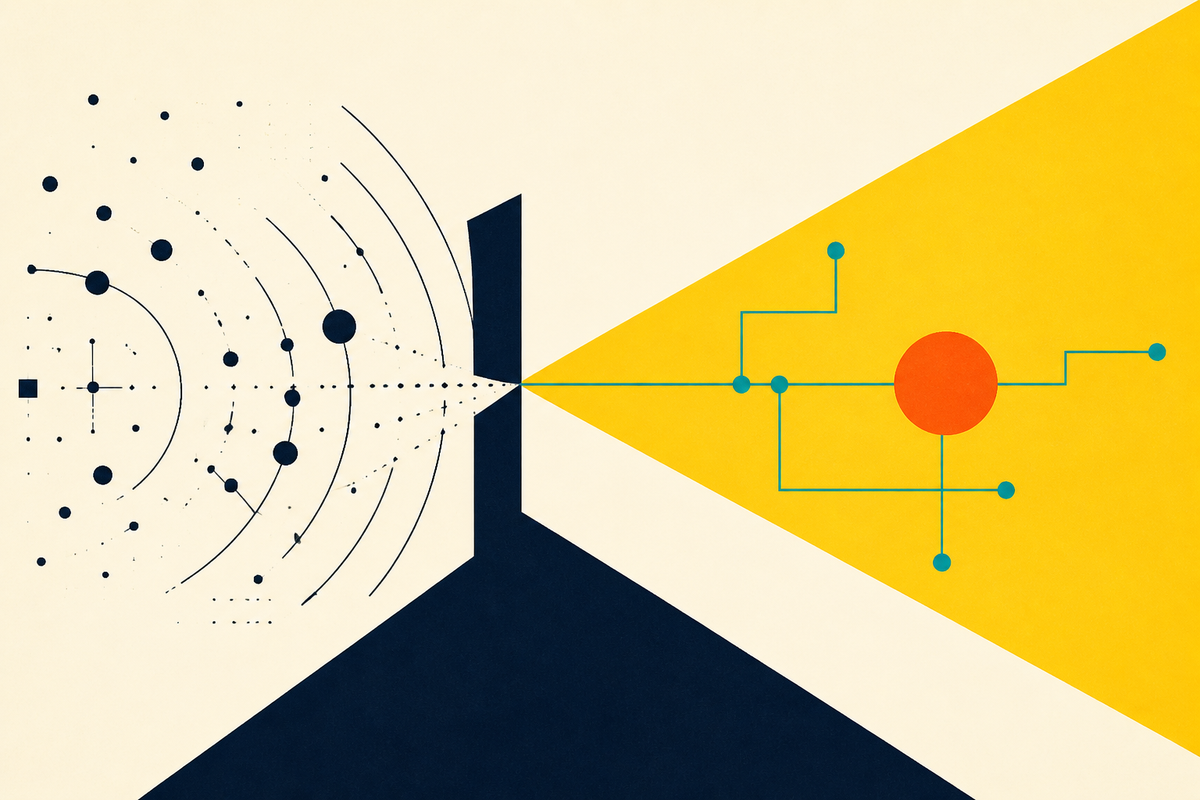
The agency's clearest attempt at differentiation is called The Brain, a proprietary AI-driven intelligence engine. Sparkpr says the system analyzes engagement data and journalist sentiment, identifies narratives before they peak, improves audience targeting and refines strategy as a campaign proceeds. The company traces the idea to its first AI client in 2013 and to an internal ambition nicknamed “Spark in a Box” - a way to program some portion of the bespoke attention teams give clients.
That phrase contains both the opportunity and the paradox. Public relations is full of patterns that machines can handle: which reporter covers a subject, whether sentiment is moving, what angle is oversupplied, which message produces engagement. But the decisive work is contextual. A reporter may be relevant on paper and wrong in practice. A provocative category claim can open a conversation or flatten credibility. The machine can narrow the field. A person still has to know why the story deserves to exist.
“They sharpened our ‘No LLM’ stance into a category-defining message.”Suman Kanuganti / Co-founder and CEO, Personal AI
Personal AI offers a telling example. The client's position pushed against the dominant large-language-model framing. Sparkpr did not smooth away the disagreement; it made the disagreement legible. This is where the firm separates itself from competitors selling generic volume. Its claim is not simply that AI makes agency work faster. It is that subject expertise, media relationships and software together can produce a more precise argument.
Campaigns leave fingerprints
The useful parts of Sparkpr's case studies are the specifics. For Typeface's $100 million Series B announcement, the agency coordinated embargoed outreach and executive interviews across AI, technology and venture media. Sparkpr reports coverage and syndication in 183 publications, plus an Insider mention that led to inbound interest from a Fortune 500 company that became a customer.
For The Giving Block, the problem was larger than announcing a product. The company needed the public to recognize “crypto philanthropy” as a category. Sparkpr tied educational material to year-end giving, tax planning and nonprofit use cases. From October 2021 through March 2022, the agency says the program generated more than 1,000 stories and secured speaking slots for the founders.
The assignments vary in method. OnePlus needed launch events, review outreach and creative media mixers for phones and earbuds. Stability AI needed a company launch followed by proactive messaging around open standards and innovation. SandboxAQ used a cybersecurity resource hub during National Cybersecurity Awareness Month; Sparkpr reports the campaign doubled impressions and sharply increased video views. Lucid needed an unfamiliar luxury electric car to reach both automotive enthusiasts and technologists.
Campaign numbers on this page are Sparkpr's own published results. They are useful as evidence of what the agency measures, not as a controlled comparison between clients.
Where Sparkpr fits
The communications market gives a buyer three obvious choices. A global network such as Edelman or Weber Shandwick offers scale and geographic reach. A specialist boutique offers senior attention and a narrow craft. An in-house team offers daily proximity to the product. Sparkpr occupies the middle: independent and technology-specialized, but broad enough to connect PR with paid, social and creative work.
Smaller delivery stack
Integrated delivery
Independent
Large account systems
Its direct alternatives include Method Communications, Mission North, Highwire, SutherlandGold, Bospar and Walker Sands. The practical differentiator is not a service that nobody else provides. Most competitors can pitch media, create content and run campaigns. Sparkpr's edge is the combination of a long technology memory, evidence across successive innovation cycles and an internal effort to make its intelligence more systematic.
The business model remains straightforward professional services. Clients hire teams for tailored programs and ongoing communications work; contract terms and pricing are private. The agency's supplied revenue estimate is $3.5 million, though that figure is not independently confirmed. It has disclosed no outside funding or valuation, which is unsurprising for an independent agency whose assets walk into video calls every morning.
For a buyer, the tradeoff is worth naming. An integrated agency can reduce coordination, but it also asks the client to place several kinds of work under one roof. The arrangement is most useful when communications, demand generation and executive visibility share a clear goal. A company seeking only a single press release or a detached media-buying function may not need the full system. Sparkpr is better matched to moments when the market must learn something: a category launch, a repositioning, a funding event, a product debut or a technical debate in which language can influence adoption.
The client still has work to do. Reporters need access to credible executives. Campaign teams need product evidence, customer examples and permission to make choices. Sparkpr can organize attention, but the most persuasive raw material has to come from the company itself. That boundary is easy to miss in an industry that often sells visibility as an outcome rather than a consequence of useful information.
A culture built to survive the cycle
When Sparkpr looked back at its first 20 years, Burke and former CEO Alan Soucy both returned to the people. The company described a flat organization where senior leaders invest in junior development, casual dress never mattered much and output counted more than appearances. Earlier perks included dogs in the office and work-from-home Fridays. The Friday experiment eventually became a remote-first operating model.
“I think about the people and the incredible human spirit, the innovation and entrepreneurship that we've seen.”Donna Burke / Co-founder
That continuity is the quiet achievement. Sparkpr has survived the dot-com collapse, the long migration from print to feeds, crypto's extremes and the arrival of generative AI. It has won a Forbes agency recognition, appeared repeatedly on the Inc. 5000 and received Inc. Power Partner honors in 2022 and 2024. Awards matter less than the fact that a firm born to explain the new internet still has new technology to explain.
The lesson available to customers is simple. Sparkpr can help when a product is hard to categorize, when an executive needs a public point of view, when a launch must reach several audiences at once or when scattered marketing work needs one narrative spine. It cannot manufacture substance. What it offers is a method for finding the human consequence inside technical complexity, distributing that idea through the right channels and checking whether anyone cared.
Twenty-seven years after the door desks, the tools have become more sophisticated. The assignment has barely changed: understand the machinery, find the sentence and help it travel.