The short version
- Spacelift runs and governs infrastructure changes across Terraform, OpenTofu, Terragrunt, Pulumi, CloudFormation, Kubernetes and Ansible.
- It is built for platform, DevOps and SRE teams that want developers to self-serve without handing over unchecked production access.
- The company says 948 organizations use it and more than 3 million deployments have passed through the platform.
- Its public ladder runs from a two-user free plan to a $20,000 Starter+ tier, then quote-based enterprise plans.
- The transferable idea: preserve the tools people know, centralize the risky execution, and encode judgment as reusable policy.
There is a particular kind of silence that falls over an engineering team when someone is about to change production. The code may be tidy. The plan may look harmless. Yet the person with the terminal still feels like a stagehand lowering a chandelier over a crowded theater. One bad command, one stale credential, one forgotten dependency, and the day acquires a plot.
Spacelift exists because cloud infrastructure became programmable before it became comfortably collaborative. Terraform and its peers let engineers describe servers, networks and databases as code. Git made those descriptions reviewable. But the last mile often remained artisanal: a Bash script, a laptop, an overworked platform engineer and a private mental list of things that must never happen.
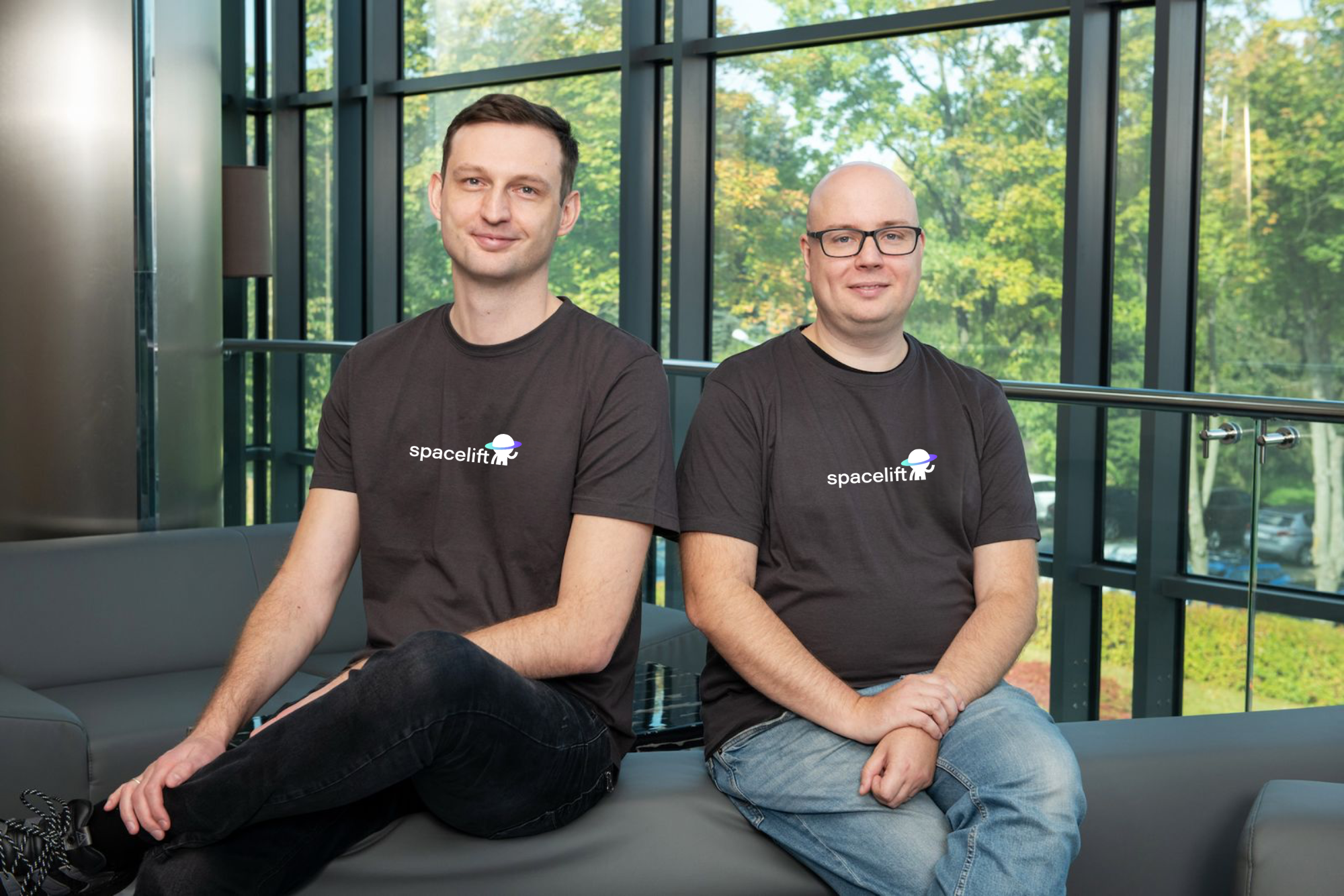
Marcin Wyszynski knew that world from production engineering at Google and Facebook, then from consulting for companies including Deliveroo and Tier Mobility. In 2020 he and Pawel Hytry formed Spacelift. Their thesis was not that infrastructure needed another language. It needed an operating room: one place to connect a repository, run a plan, check policy, gather approval, assume a short-lived cloud credential, apply the change and record exactly what happened.
“We built Spacelift around making it massively multiplayer.”Marcin Wyszynski, co-founder and CPO
The first thing to break was the handmade bridge
Early infrastructure automation is usually charming. A clever engineer writes a script. It saves an afternoon. Another script appears beside it. Soon the scripts know secrets, sequence deployments and compensate for one another’s odd habits. The company has built a bridge while crossing the river. Nobody wants to inspect the bolts.
Sqills, for example, found that automating Terraform with Bash was no longer practical as its cloud footprint and customer count grew. Crunchtime’s first specialist orchestration platform failed differently: GitHub pull-request builds became unreliable and support could not provide durable root causes. The decisive moment was not a dazzling new feature. Builds were, in an engineer’s phrase, “vanishing into the ether.” Reliability changed the buying decision.
One change, fewer private rituals
This is what Spacelift actually does. It does not replace the infrastructure languages. It coordinates them. A proposed change can trigger a preview; Open Policy Agent rules can block a forbidden configuration or demand another approval; private workers can execute inside a customer’s network; drift detection can notice when reality stops matching the code. The paid enterprise editions add SAML, audit trails, internal source control, self-hosting and air-gapped operation.
Permission is a productivity feature
The interesting customer result is not that a machine ran faster. It is that an organization rearranged who was allowed to do what. At 1Password, a small cloud platform team had become the human gateway for infrastructure work. That protected a security-sensitive business, but it also turned experts into what staff engineer Maxx Daymon called “remote hands gatekeeping AWS.”
With policies and team-owned spaces, 1Password let more engineers operate their own infrastructure while the platform team defined the boundaries. The company reports a tenfold reduction in review time and an increase from three or four deployments a day to an average of 60. Its chosen Spacelift package was reportedly between one-tenth and one-fifth the cost of the initial alternative.
Figma tells the same story with a different bottleneck. Provisioning an S3 bucket could require as many as six pull requests across coupled modules, applied in order over several days. Spacelift reduced that path to one pull request while giving hundreds of engineers visibility into where a rollout stood. The lesson is pleasingly unromantic: good orchestration removes waiting more often than it removes code.
The Switzerland strategy
Spacelift competes with HCP Terraform, env0, Scalr, Harness, Atlantis and the most stubborn rival of all: the internal pipeline that is technically free because nobody has calculated its payroll. Its useful difference is neutrality. A team can run Terraform and OpenTofu, add Pulumi or CloudFormation, connect Ansible and Kubernetes, then place common governance above the lot.
| Choice | Works well when | The bill arrives as |
|---|---|---|
| Homegrown CI | The setup is small and the team owns every moving part | Engineering time, tribal knowledge, incident risk |
| Single-tool platform | The organization is committed to one IaC ecosystem | Seats, resources or usage, plus switching friction |
| Spacelift | Tools, clouds, teams and controls have multiplied | Annual SaaS contract and another control plane to operate |
The model is enterprise SaaS. There is a free plan for two users and one public worker. Starter+ is listed at $20,000 a year; Business, Enterprise and Enterprise+ are quote-based. Paid tiers allow unlimited users, while packages expand the number of private workers and add governance, deployment and support features. That structure makes delegation economical for a broad internal audience, but it also establishes a plain threshold: a five-person team with one clean pipeline and little compliance pressure may be buying ceremony.
Now the astronaut has an AI copilot
Spacelift’s $51 million Series C in July 2025 funded a larger bet. Intent, launched that October, accepts natural-language infrastructure requests through the Model Context Protocol. Instead of asking an AI to produce a handsome page of HCL and hoping a human spots the trap, Intent can call OpenTofu providers directly while preserving plans, policies and audit history. In March 2026, Spacelift packaged that approach with an infrastructure-aware assistant as Spacelift Intelligence.
The company kept widening the circle. Templates let platform teams publish versioned, immutable building blocks that developers deploy through forms. Plugins bring scanners, cost estimators and secrets tools into a run. Flows, launched in September 2026 with more than 40 templates, moves beyond deployment into the unruly “Day 2” world of drift alerts, incident enrichment, certificate checks and environment requests.
This direction is ambitious and also logically consistent. If the original product made infrastructure multiplayer, the new product asks whether AI agents can join the game without borrowing a human’s badge. The same controls become more important, not less. An agent gets its own identity, approval gates and trail. The platform team still decides the field and the rules.
The product is the confidence to proceed
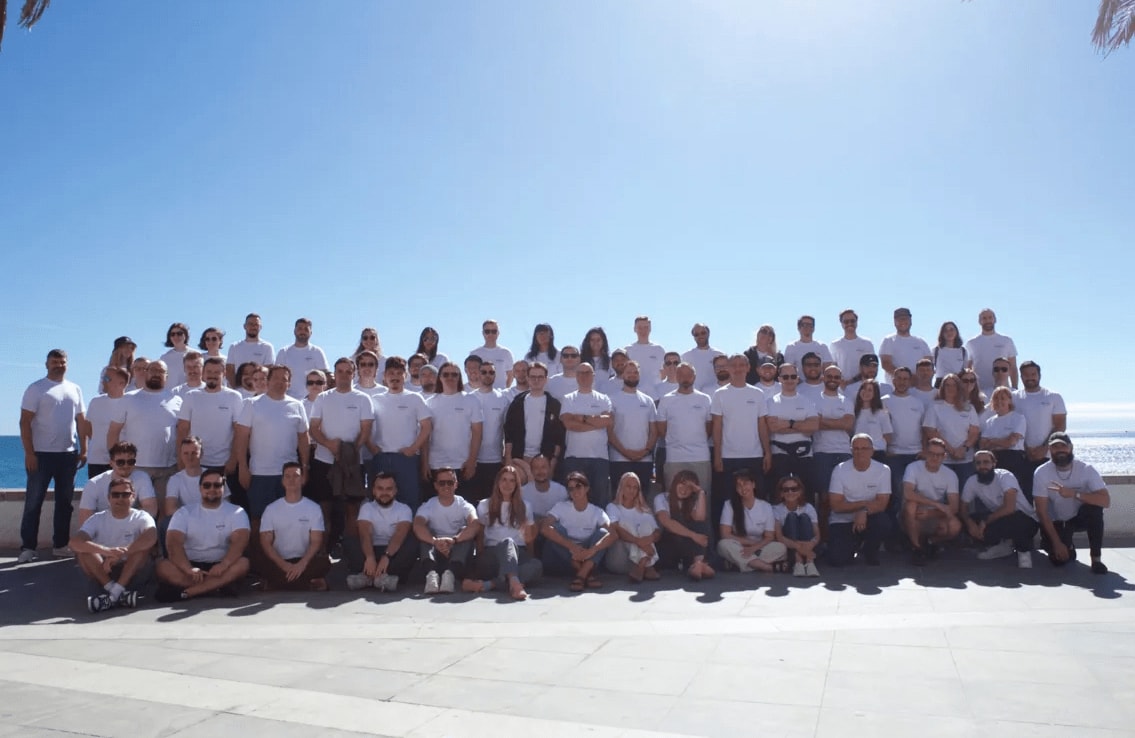
Spacelift says 948 companies use the platform and that more than 3 million deployments have passed through it. Its customer wall includes Figma, 1Password, Duolingo, Checkout.com, Redfin and Ping Identity. Those names matter less than the recurring before-and-after: local applies become visible runs; tickets become self-service; a few specialists stop touching every change.
There are conditions. Spacelift cannot rescue poor module design by itself. Policy code can become another thicket. A new control plane still needs ownership, onboarding and a sober migration. Teams that already have reliable, auditable workflows may gain little. And self-service only works when the paved road is genuinely easier than going around it.
But the company has identified something true about modern infrastructure. The frightening part is rarely the syntax. It is the uncertainty around the hand pressing the button: Do they have the right access? Did anyone review this? What else moves if it moves? Can we explain it tomorrow? Spacelift turns those anxious questions into a workflow. The button remains. More people can press it. The chandelier stays up.