Soumyadeb Mitra had already sold a startup when he ran into the problem that would occupy his next one. At 8x8, the cloud communications company that acquired MarianaIQ in 2018, he was working on machine learning. The ambitions sounded straightforward: score sales leads, anticipate which customers might leave, identify opportunities to sell more. Before any of that could happen, the customer data had to arrive in a usable form. There went the straightforward part.
The project required a customer data platform that could operate securely at enterprise scale. Mitra tried buying tools. He tried building them. The result, in his account, never fully met expectations. Here was an awkward discovery for someone hired to make intelligent things happen with data: a considerable part of the job was getting the data into the room.
RudderStack began in 2019 with that frustration. Its founder had been on the receiving end of the sales pitch, and then on the engineering team responsible for making the promise work. That double education helps explain his preoccupation with what happens underneath a product demonstration. The demo gets applause. The pipeline gets a support ticket.
A database education, before the startup pitch
Long before customer data platforms became his business, Mitra studied the mechanics of trustworthy information. At the Indian Institute of Technology Delhi, his student résumé listed operating systems, distributed systems and efficient algorithms among his academic interests. He was pursuing a dual degree in computer science and engineering. The résumé also recorded third place in the Delhi Regional Mathematical Olympiad and eleventh place in the GATE computer science examination.
His doctoral work at the University of Illinois Urbana-Champaign examined the management of compliance records. The phrase sounds destined for a filing cabinet, but the questions were practical. How do you preserve electronic records so that they can be trusted? How do you search them efficiently? Keeping a document safe is of limited comfort if the index makes it disappear.
Working with researchers including his adviser, Marianne Winslett, Mitra investigated storage and search systems. A paper he co-authored with Winslett and IBM researcher Windsor Hsu won the VLDB 2006 best paper award. His dissertation, Trustworthy and Cost Effective Management of Compliance Records, received an honorable mention in the 2010 ACM SIGMOD Jim Gray Doctoral Dissertation Award.
Those early research questions offer a useful way into his later work. Both bodies of work return to an unglamorous question: can the machinery beneath the information be relied upon? In databases, that question earns a technical answer. In a company, it eventually acquires a budget.
Mariana’s lesson: the customer has more than one department
At MarianaIQ, where he was co-founder and chief technology officer, Mitra worked on AI-driven marketing automation. The vision included using customer information to recommend a next action, such as an email or a call. The team built lead scoring and recommendation capabilities. This was already the territory of decisions made with data, years before generative AI became a routine addition to a product announcement.
One constraint stayed with him. Marketing teams, the people buying the system, held only part of the information about a customer. A business also learned about that person through product usage, sales conversations and support. A department could own its software without owning the whole customer relationship. An ambitious model was therefore liable to be working from an incomplete guest list.
The acquisition by 8x8 brought him into a larger organization and another view of the same difficulty. As senior director of machine learning, he worked on customer data initiatives from inside the enterprise. By the time he left to build RudderStack, he had encountered the problem both as a vendor and as the person trying to assemble the system.
The warehouse gets the keys
RudderStack’s answer was to organize customer data infrastructure around the company’s own warehouse. The platform would collect events, transform information and route it to the systems that needed it. Engineering teams would have tools for building on the data, while marketing and other business teams could use the results.
Mitra’s argument was architectural. A company that wants to query its customer information, train models or create an application needs access to the underlying data. If everything sits behind another vendor’s restricted interface, the engineer’s room to maneuver shrinks. A warehouse gives the business a place to combine information and decide how to use it.
In a 2023 conversation about warehouse-native architecture, he gave another example: looking at a product funnel alongside Salesforce information. A team might want to distinguish enterprise customers, completed deals or accounts where it faced a particular competitor. Product behavior alone would leave those questions unanswered. Combining it with sales information made the analysis more useful, but could also make the connecting pipelines fragile. It was a recognizable business request with a surprisingly involved technical bill. His case for the warehouse depended on these ordinary questions being easier to ask across departmental boundaries.
Consider a support interaction he described while explaining the product. A customer sends a message. Software analyzes its sentiment. If the message indicates a particularly unhappy customer, the system sends an alert to another tool. A seemingly modest workflow needs collection, processing and delivery to cooperate. Each handoff offers an opportunity for the computer to become very literal at the wrong moment.
and business tools
and build customer profiles
and machine learning
The developer emphasis also shaped how RudderStack approached data quality. With different teams emitting hundreds of events, someone needs to check names, properties and required fields. Mitra argued for incorporating those checks into engineering workflows. Asking a person to visit a dashboard and inspect every questionable event is a fine way to create a new full-time occupation.
A public prototype, then a funding round
The early project was called Rudder. Mitra and the team made its repository public, and Hacker News became a place to introduce it to developers. That choice put the product in front of people who could interrogate its design as well as its price. For infrastructure software, a technically awkward question can be a useful form of interest.
In June 2021, he looked back at the Show HN post announcing paid plans roughly a year earlier. RudderStack had raised a $21 million Series A led by Kleiner Perkins. The reflection kept returning to completed work: more integrations, transformations, a managed service and the ability to send enriched warehouse data back into business applications.
The next announced round arrived in February 2022: $56 million led by Insight Partners, with participation from Kleiner Perkins and S28 Capital. RudderStack had been co-founded with Shvet Jain, the S28 partner who served as executive chairman. Praveen Akkiraju of Insight joined the board. By then, the company’s customers included Allbirds, Wealthfront and Crate & Barrel.
Those milestones made the engineering thesis easier to see as a business. They also expanded the founder’s job. A pipeline can have a defined interface. A growing company presents sales, product, recruiting and operations questions with considerably less considerate documentation.
The engineer reads the other manuals
Mitra has described reading as part of learning to be a chief executive. Books, articles and blogs helped him work through areas outside engineering, including sales, marketing, support and product. His recommended books included Eric Ries’s The Lean Startup, Rob Fitzpatrick’s The Mom Test and Ben Horowitz’s The Hard Thing About Hard Things.
His account of earlier startup mistakes was blunt: he had worked on ideas with small or nonexistent markets and should have recognized the problem sooner. “The market always wins,” he said. Asked how he would spend a hypothetical $1,000 to start again, he put customer validation first. Talk to potential buyers. The instruction is inexpensive; acting on an unwelcome answer can be harder.
“The market always wins.”
Soumyadeb Mitra
Hiring was another difficulty he singled out. Building a team, and maintaining its standard as the business grew, demanded attention of its own. These admissions give his public founder persona a practical quality: a technically trained executive explaining which parts of the job still require study.
AI arrives. The data still has to arrive first.
In March 2024, Mitra argued that companies buying AI tools still needed to attend to data quality, completeness and accessibility. Separate personalization products could each build a model from a different slice of customer information. The outcome could be duplicated effort and disjointed experiences. His proposed starting point remained the warehouse or data lake.
By March 2026, his writing had moved into how agents should operate infrastructure. He favored reviewable configuration and command-line tools for changes, with humans approving what would be applied. For investigating system state, he described a role for the Model Context Protocol. The distinction reveals his priorities: make changes inspectable and keep diagnosis connected to what the system is actually doing.
His October 20, 2026 essay returned to customer conversations. Among the recurring problems were incomplete conversion signals, bot-generated events, drifting event definitions, consent enforcement and fragmented identities. His concern extended beyond inaccurate reporting: downstream algorithms and agents could act on those mistakes. The faulty record was acquiring an assistant.
Seen across his career, the continuity is striking. Mitra has worked on trustworthy records, marketing models, enterprise machine learning and customer data pipelines. The vocabulary has changed, and the applications have multiplied. The stubborn question remains how to get useful information to the place where a decision happens. His next chapter will be judged where the earlier ones began: by whether the machinery actually works.
Read, watch, follow
- RudderStack · LinkedIn · X · Medium
- Mitra’s founding reflection, June 2021
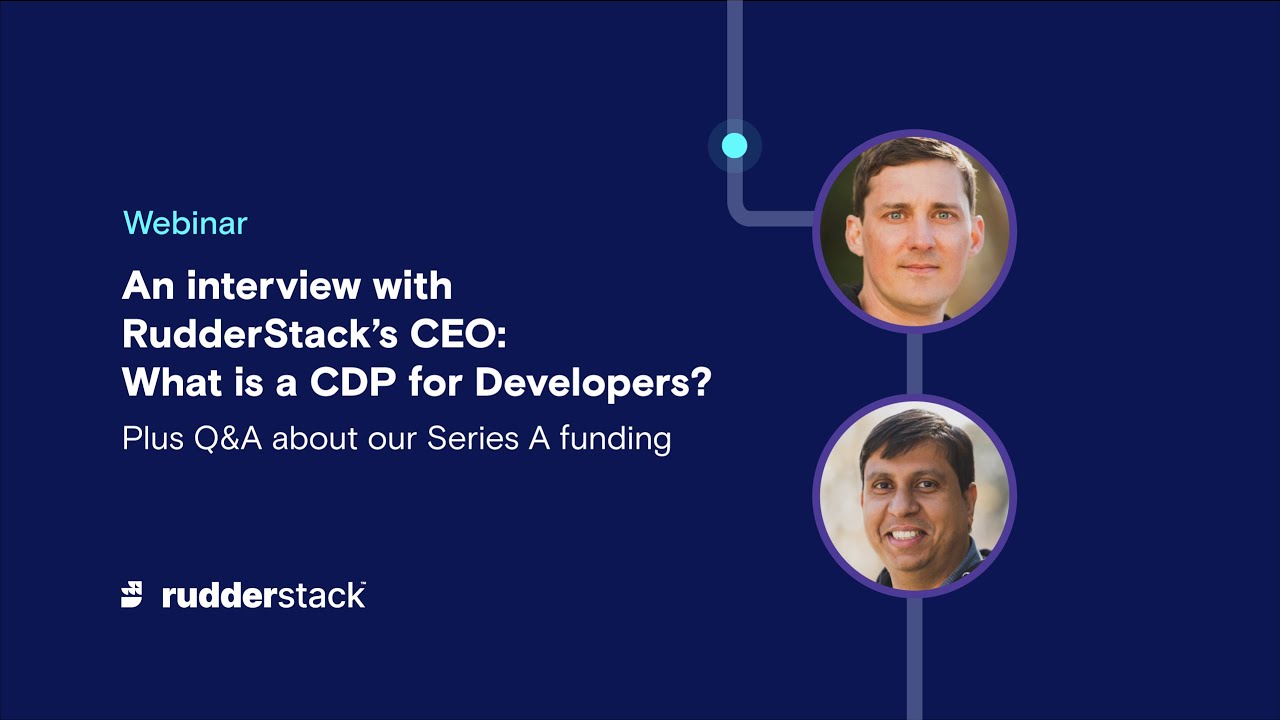
- Watch: What is a CDP for Developers?
- Listen: The Analytics Edge interview, October 2023
- The founder interview: markets, hiring and reading
- ACM SIGMOD’s dissertation award listing · Illinois research award archive
- The February 2022 funding announcement
- Building the Data Foundation for AI, March 2024
- CLI or MCP or both?, March 2026
- Five data problems, October 2026