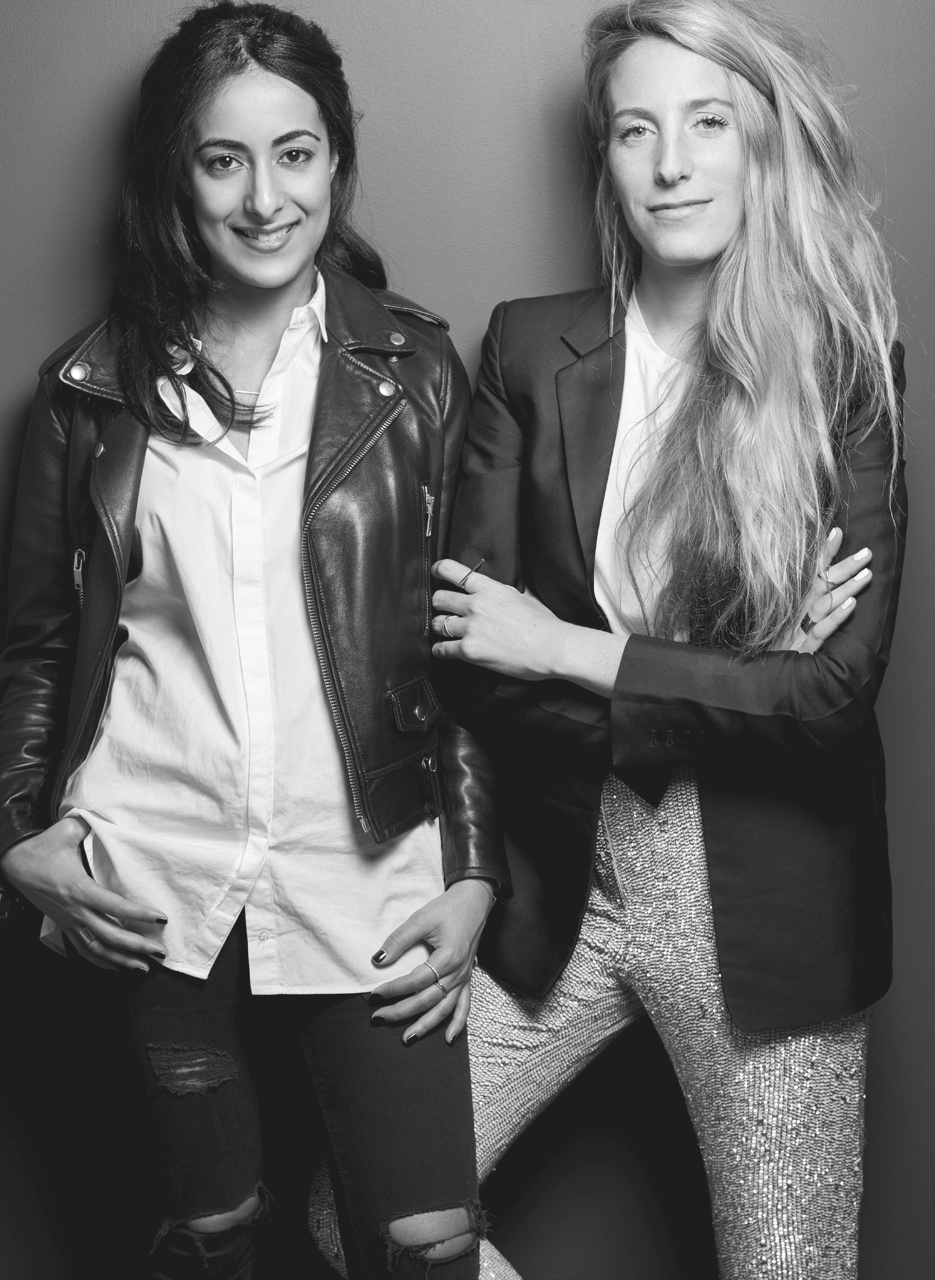
Sophie Kahn had paid for a ring. The ring had repaid her by leaving a green mark. Over brunch at Café Gitane in New York’s Nolita neighborhood, she and her friend Bouchra Ezzahraoui began examining the transaction. Both had corporate careers. Both liked fashion. Yet buying jewelry seemed to require an awkward choice between an expensive piece of fine jewelry and a cheaper substitute with disappointing manners.
Many brunch complaints expire with the coffee. This one became Aurate. The company would sell contemporary fine jewelry directly to customers, with Kahn designing the pieces and Ezzahraoui bringing her experience in finance. They wanted women to buy gold for themselves, at prices they could understand, without waiting for somebody else to arrive with a velvet box.
That last part matters. A ring can commemorate an engagement, of course. It can also commemorate a promotion, a decision, or the pleasant discovery that you like a ring. Kahn was building a business around a customer whose permission to purchase was already in her own hands.
The numbers person who liked clothes
Kahn grew up in the Netherlands, largely in Laren and Amsterdam. She studied economics at the University of Amsterdam and earned a master’s in finance at Princeton, where she met Ezzahraoui. Their friendship began in the quantitative world of graduate finance, a useful place to discover whether somebody can tolerate both uncertainty and your company.
Her early career followed a recognizable route: Boston Consulting Group in New York, then Marc Jacobs, where she worked in retail marketing and strategy. The sequence brought her closer to fashion without requiring her to surrender the analytical habits she had spent years acquiring. She had once assumed that fashion and numbers demanded separate careers. Aurate eventually let her put them on the same desk.
There is a small pleasure in how readily she owns the numerical side of herself. Asked what people might miss at first glance, she pointed to her ability with math. Jewelry was a way to combine a visual decision with a commercial one. A beautiful design still needed a customer; a promising business still needed something worth wearing.
A boss with an unusual retention policy
At Marc Jacobs, Kahn worked for Mathilde Cazenave. Their relationship grew from formal reporting lines into a friendship and mentorship. Cazenave recognized an employee who wanted to implement changes faster than a large organization could accommodate. Her response was unusually generous: she encouraged Kahn to put some of that energy into a project of her own.
Kahn started making samples. Cazenave became her first customer. It is a lovely reversal of the usual story about a founder sneaking away from a corporate job. Here, the manager helped open the door. Kahn later said she would have been uncomfortable pursuing the business without her boss’s knowledge.
The early arrangement still demanded time. Kahn continued at Marc Jacobs while Ezzahraoui worked at Goldman Sachs. Aurate occupied the hours around those jobs. They took jewelry-design classes at Parsons and began finding out whether their own frustration belonged to a wider group of women. The idea had to survive conversations, samples and purchases before it could support two full-time founders.
Five days to find out
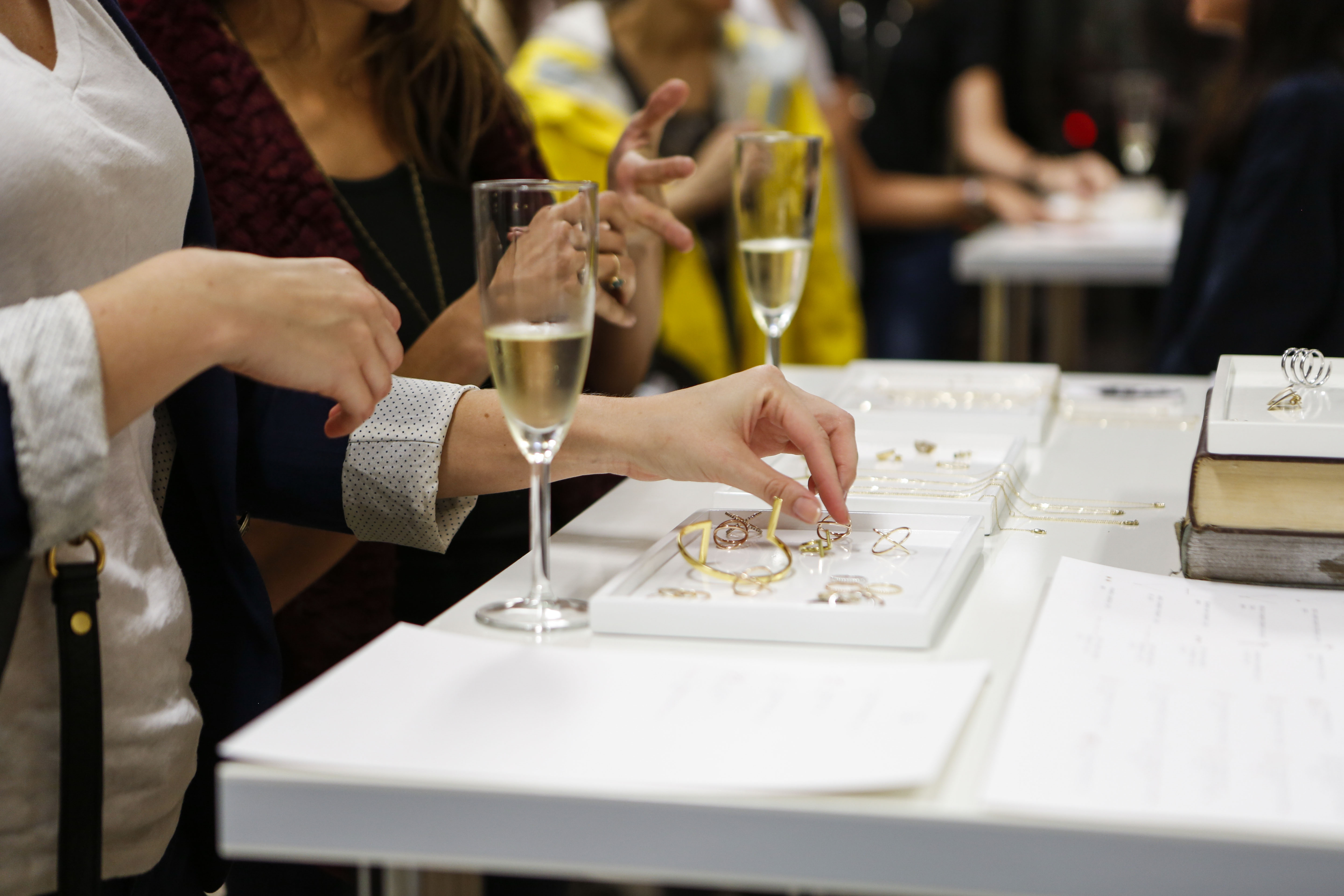
Aurate soft-launched in 2015 and moved into a fuller launch in 2017. In between came the unglamorous work of testing. During one early experiment, the founders rented a SoHo space for five days. Kahn recalled a daily rent of about $1,000 and roughly $10,000 in their bank account. Putting the jewelry in front of strangers would produce an answer more useful than another encouraging conversation among friends.
She remembered French shoppers coming in, responding enthusiastically and buying pieces. Their reaction helped convince her that the business had an audience beyond its founders. The temporary shop made the proposition tangible: people could touch the jewelry, try it on and decide whether the price made sense.
Other early scenes were rather less composed than a jewelry advertisement. Kahn recalled the first photoshoot as a day spent rushing around SoHo with a van and a model, with paparazzi following the model. What stayed with her was the satisfaction of seeing a previously imaginary brand become visible. There was finally something to photograph.
The customer gets a pencil
The quantitative training reappeared in an unexpected place: the design process. Kahn described using customer conversations and purchase information to decide what to make. Aurate’s direct relationship with buyers meant the company could hear preferences without having every message pass through a department-store buyer.
The Curate home try-on service extended that conversation. Customers could receive a selection of pieces, keep what they wanted and return the rest. For Kahn, the useful part included learning why something came back. A shopper leaving a website tells you little. A shopper explaining why a necklace failed tells you where to begin the next version.
She organized the jewelry around dependable everyday pieces and more experimental collections with a story. In one account, she called the everyday pieces the jeans and T-shirts of jewelry
. The analogy makes room for a modest ambition that can be surprisingly difficult to deliver: an object somebody reaches for repeatedly, without conducting a special occasion first.
Her practical definition of design left space for revision. Aurate’s own account describes pieces being adjusted after launch in response to feedback. A collection could have a recognizable point of view while still being corrected by the people paying for it. The customer had a place in the studio.
“I design everything”
Sophie Kahn, describing her Aurate role in 2022
A grandmother’s ring, with no spreadsheet attached
The ring at brunch supplies the business origin. Another ring explains something more personal. Kahn inherited an opal ring from her grandmother and said she wore it daily. It became the starting point for Aurate’s Opal Collection, a tribute expressed through a material she could carry into new designs.
“I’m hoping to pay tribute to my grandmother,” she said. The appeal of jewelry, in her telling, included its capacity to move between generations. Here was an object whose significance had accumulated through a relationship. Designing around it let her make something commercial without losing the family connection that made her care about it.
That distinction helps explain the collections built around stories. Essentials could earn their place through repeated wear. Other pieces could begin with a memory, a person or a symbol. Her grandmother’s ring gave her a reason to return to a particular stone, even when the original piece was already doing its job perfectly well.
Learning to share the spotlight
In 2020, Kerry Washington joined Aurate as an investor and collaborator. The Lioness Collection drew on the Egyptian goddess Sekhmet and used linked chains and a lion motif to explore women’s collective strength. Washington participated in developing the collection with Kahn and Ezzahraoui, bringing a public voice and her own design ideas to the work.
The following year brought the Birth of Mother Collection, which took inspiration from Botticelli’s The Birth of Venus and the ocean. Its shells, pearls and organic forms gave the collaborators a different visual vocabulary. These projects offered Kahn room to work beyond an everyday gold staple while keeping a specific idea at the center.
Aurate also worked with Halston in 2021 on a 12-piece collection. The arrangement paired an established fashion name with a younger jewelry business. Kahn saw such partnerships as a way to introduce Aurate to new customers. The creative work and the customer-acquisition problem were, once again, sitting at the same desk.
Company funding rounds, not personal wealth or company valuation.
The route changes. The shopper stays.
Aurate raised a $13 million Series A in 2019, following its earlier seed financing. Growth gave Kahn a larger version of the same problem: how to make jewelry available to more women while understanding what those women wanted. Physical shops offered one answer. Later, retail partners offered another.
By August 2023, Kahn was Aurate’s sole CEO. The company introduced Audrey by Aurate for Macy’s and Laure by Aurate for Helzberg Diamonds. The announced rollout covered 167 Macy’s stores and 30 Helzberg locations. Each retailer received a distinct collection suited to its customers, rather than an identical selection dropped into different surroundings.
For a business built around selling directly, wholesale required a change in method. Kahn explained the economics plainly: filling hundreds of stores with real gold and diamonds takes substantial money. Working with established retailers offered access to shoppers who preferred to try jewelry in person, with less of the commitment involved in operating Aurate’s own stores.
Store counts announced in August 2023.
Room for the next version
Kahn’s career has since taken another turn. Her public professional profile now lists Equinox, and she has discussed work on its 2026 brand campaign. The move adds another consumer brand to a career already spanning consulting, fashion and a company she helped build. Aurate remains the part of that career where she made the product as well as the business.
For all the discussion of growth, her descriptions of herself are quite ordinary. In 2019, she called herself optimistic and empathetic, and said she valued being loyal to friends. A later conversation with Alexandra Cole focused on the relationships she deliberately made time to maintain. The founder who depended on a friend and a generous boss had reasons to take those connections seriously.
Her early advice to herself was to find the confidence to try the work she wanted to do. That advice had already acquired some practical details: make samples, tell your boss, put the pieces in a shop, watch what people buy. The woman buying her own ring was also learning to choose her own work. Both purchases required a judgment about what was worth keeping.