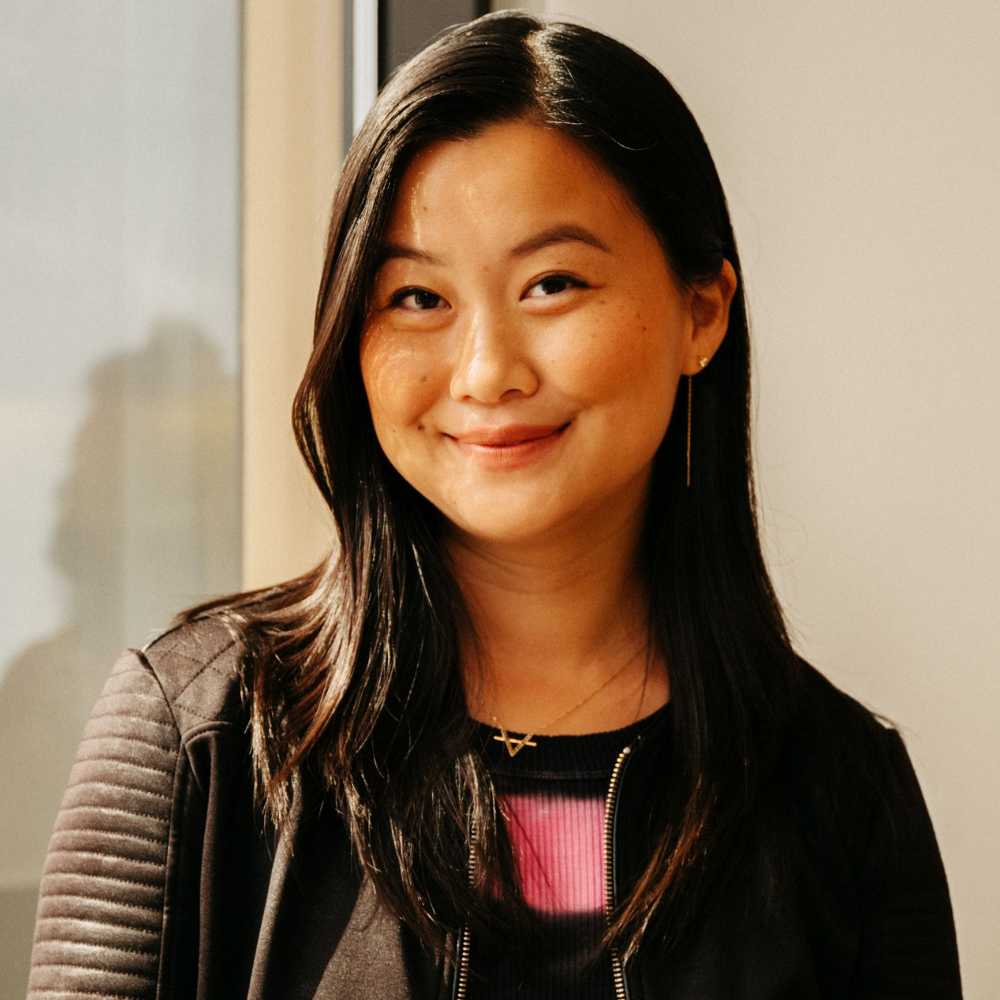
SONYA HUANG SEQUOIA CAPITAL PARTNER $1.5B+ IN AI APPLICATION BETS OPENAI • HUGGING FACE • LANGCHAIN • GLEAN • MERCURY • GONG • HARVEY PRINCETON SUMMA CUM LAUDE TRAINING DATA PODCAST AI ASCENT CONFERENCE AGE OF ABUNDANCE THESIS $10 TRILLION AI OPPORTUNITY @SONYATWEETYBIRD SONYA HUANG SEQUOIA CAPITAL PARTNER $1.5B+ IN AI APPLICATION BETS OPENAI • HUGGING FACE • LANGCHAIN • GLEAN • MERCURY • GONG • HARVEY PRINCETON SUMMA CUM LAUDE TRAINING DATA PODCAST AI ASCENT CONFERENCE AGE OF ABUNDANCE THESIS $10 TRILLION AI OPPORTUNITY @SONYATWEETYBIRD
Sonya Huang, Partner at Sequoia Capital
SEQUOIA CAPITAL
Venture Capital • Artificial Intelligence • Partner

Sonya
Huang

The Application Layer Architect

"The application layer is where value finally comes together." - Said it before the rest of Silicon Valley agreed. Bet $1.5 billion on it anyway.

$1.5B+ AI Application Bets
7+ Unicorn Portfolio Cos
2018 Sequoia Start
$10T AI Opportunity Mapped
AI ASCENT 2026 Sonya Huang declares the AGI era has arrived - 99.9% of cognitive work will be done by machines - and maps the $10 trillion services opportunity

The Investor Who Bet Against Infrastructure

When ChatGPT launched in November 2022, most of Silicon Valley raced to fund the picks and shovels - compute, chips, foundation models, the infrastructure layer. Sonya Huang ran the other direction. She had spent four years watching enterprise software companies struggle to turn AI features into durable value, and she had a theory: the infrastructure would commoditize, and the money would move up the stack. So while the rest of the market fought over GPU allocation, she bet Sequoia's capital on the applications. OpenAI. Hugging Face. LangChain. Glean. Mercury. Harvey. Gong.

The thesis has a name now - "the application layer" - and it sounds obvious in 2026. It was not obvious in 2022. It required believing that foundation models would get good enough, fast enough, that applications riding on top of them would compound faster than the models themselves. It required betting on founders who were navigating a moving target: the platform could make them obsolete overnight if OpenAI added a feature. Huang's answer to that: proprietary data workflow integration vertical expertise network effects. Four moats. The ones that survive model improvements.

"If you're building something that only exists because of a deficiency in OpenAI today, we try not to back that."

- Sonya Huang, Sequoia Capital

Before she became the face of Sequoia's AI thesis, Huang was a Princeton economics student who spent a semester training computer vision neural networks on brain scans and astrophysics data - for fun, essentially, as part of her senior thesis. This was 2013 or 2014. The compute wasn't there. The data wasn't there. The algorithms weren't sophisticated enough. She filed it away and went to Goldman Sachs.

At Goldman, her colleagues gave her a nickname: Slothya. The spirit animal she'd claimed as her own. She loved the irony of it: the slowest mammal on earth, moving through the financial world's fastest machine. From Goldman she moved to TPG Capital in private equity, where she learned to read business transformations at scale - how technology adoption drives enterprise value, how competitive moats form and dissolve. Then Sequoia called in 2018, looking to build out a growth investing practice focused on enterprise software and data infrastructure. She had trained neural nets in college. She understood financial models. She could see the whole board. She said yes.

What Sequoia got was unusual: a partner who had spent years at the White House (she interned for economist Alan Krueger on the Council of Economic Advisers when she was a Princeton freshman, after Krueger was appointed by Obama - she bumped into the President in the hallway), in investment banking, in private equity, and who had done actual machine learning research. Not one of those things. All of them. The 21mm lens, she calls it - the wide-angle view that takes in more than the scene most investors frame for themselves.

"Just because something hasn't worked before doesn't mean it won't this time around."

- Sonya Huang

Her public work runs alongside her deal work. In February 2023, she co-published "Generative AI's Act Two" - a framework arguing that applications, not models, would capture the bulk of generative AI's economic value. Then she launched AI Ascent, Sequoia's annual gathering of AI leaders that has become one of the industry's most closely watched conferences. In January 2024 came the Training Data podcast, where she interviews the builders: OpenAI's team, Anthropic's researchers, the founders of companies reshaping every vertical. These are not vanity projects. They are intelligence operations - a systematic way of staying closer to the frontier than any investor has a right to be.

The data point she keeps returning to: ChatGPT's daily-active-to-monthly-active user ratio. In early 2023 it was below 20%. By May 2025 it had climbed to nearly 50% - approaching Reddit and Instagram levels of habitual engagement. That number, more than any funding round or valuation, tells the story of where AI is going. "AI applications aren't experimental anymore," she said at AI Ascent 2025. "They're habit-forming."

At AI Ascent 2026 she went further. Standing alongside fellow Sequoia partners Pat Grady and Konstantine Buhler, she laid out a framework projecting that 99.9% of cognitive work will eventually be performed by machines - and identified roughly $10 trillion in services revenue that software has never been able to touch. The number sounds like a stretch. It sounded like a stretch when Sequoia started deploying $1.5 billion into AI application companies too. The applications portfolio keeps appreciating.

Off the stage, she is the person who takes a 30-minute nap every day after work - "it's made me so much happier and more productive," she has said without irony. She golfs. She reads Murakami and Joan Didion and Econometrica in the same sitting. She thinks in pictures more than words. The visual thinking shows up in her work: her frameworks are always diagrams before they are arguments, stages before they are theses. Act One. Act Two. Act Three. Each one a panel in a longer story she's been drafting since she first trained a neural net on a brain scan and wondered what would happen when the compute finally caught up.


The Application Layer Portfolio

Sequoia deployed ~$150M into foundation models - and over $1.5B into application layer companies. These are the companies Sonya Huang bet on.

OpenAI
Foundation Model
The most consequential AI company of the decade. Sequoia's early bet in the era before ChatGPT.
Hugging Face
Open-Source AI
The GitHub of machine learning - open-source model hub and developer platform for the AI era.
LangChain
AI Dev Framework
The glue that connects LLMs to production. Huang co-led Series B; board member.
Glean
Enterprise AI Search
Enterprise AI search across every company tool. Series D co-lead.
$7.2B valuation
Mercury
AI Fintech
Banking built for startups. Huang led the Series C at $3.5B valuation.
$3.5B valuation
Gong
Revenue Intelligence
AI-powered revenue intelligence. Huang is a board member.
$7.25B valuation
Harvey
Legal AI
AI for legal work - one of the first vertically-specialized AI applications to reach scale.
Fireworks AI
Inference Optimization
Fast, cost-efficient LLM inference for production AI applications.
Streamlit
Data App Framework
Python-first framework for building data applications. Co-led investment; acquired by Snowflake.
dbt Labs
Data Transformation
The analytics engineering standard. Infrastructure serving AI application developers.
Hex
Data Science
Collaborative data science platform for analytics teams.
Tecton
Feature Store
ML feature store - operational ML infrastructure for production AI.

Generative AI in Three Acts

Huang's framework for how generative AI value has evolved - introduced at AI Ascent 2025. We are now in Act Three.

I
Act One
2022 - 2023
Novelty Applications
Lightweight experiments. ChatGPT's launch moment. Consumer fascination. DAU/MAU ratios below 20%. The world was impressed but not yet hooked.
II
Act Two
2023 - 2024
Reasoning + Multimodal
Reasoning models. Multimodal interfaces. The first enterprise deployments at scale. Horizontal apps like Cursor and Perplexity reaching millions of daily users.
III
Act Three - NOW
2025 - Beyond
Vertical Agents
AI agents that operate autonomously within specific domains. DAU/MAU approaching 50%. Applications habit-forming at Instagram-level engagement. The $10T services opportunity.

Huang's Four Moats

What separates AI applications that survive model improvements from ones that get swallowed by them. These are the four defensibility mechanisms she looks for.

🗄️
Proprietary Data
Company-specific knowledge graphs, transaction histories, and domain datasets that no foundation model can replicate.
🔗
Workflow Integration
Deep embeddings in existing processes that take 18-24 months to rip out - even if a better model appears tomorrow.
🎯
Vertical Expertise
Domain-specific fine-tuning, compliance knowledge, and regulatory expertise that horizontal models can't match.
🕸️
Network Effects
Developer communities, benchmarking data, and multi-sided platforms where each new user makes the product stronger.

Things Sonya Huang Has Actually Said

"The application layer is where value finally comes together."

"We're entering the Age of Abundance - where AI makes once-scarce labor available everywhere at near-zero cost."

"AI applications aren't experimental anymore. They're habit-forming."

"The most compelling founders can explain why their company exists in the first few minutes."

"Just because something hasn't worked before doesn't mean it won't this time around."

"I remind myself every day to stay bright-eyed and bushy-tailed - to fight as hard as I can to maintain a youthful spirit."


The Sloth Who Moves Fast

🦥
Her nickname at Goldman Sachs was "Slothya" because her spirit animal is the sloth. She now manages one of VC's most active AI portfolios.
🏛️
As a Princeton freshman, she took an advanced economics class so impressive that her professor - later appointed to Obama's Council of Economic Advisers - recruited her as a White House intern. She bumped into the President in the hallway.
🧠
She trained computer vision neural networks on brain scans and astrophysics data for her undergraduate thesis in 2013 - before "AI investing" existed as a category.
She started playing golf in eighth grade - an unusual preparation for a career in venture capital, though the patience required may be the same.
😴
She takes a 30-minute nap every day after work. Credits it with making her significantly happier and more productive. Silicon Valley should take notes.
📐
She is a visual thinker who describes her investing lens as a 21mm camera - wide angle, taking in more context than most conventional views allow.
📚
Her reading list: Haruki Murakami, Joan Didion, Junot Díaz for fiction. Dalí and Alexander McQueen books for art. And Econometrica, a technical academic economics journal, for fun.
🐦
Her Twitter handle is @sonyatweetybird. Her AI commentary regularly goes viral. The bird emoji in her display name was there before it was a brand strategy.

Sonya Huang on Video


Follow Sonya Huang

Her AI commentary, investment insights, and the occasional very funny tweet about Silicon Valley.

URL copied to clipboard