Forty-five seconds is an awkward thing to brag about. It barely gives you time to find your glasses. Yet in a SolidCAM customer account, that sliver of time helped persuade a machine shop to buy more software. The part had taken 12 minutes to manufacture. After a revised cutting program, it took 11 minutes and 15 seconds. Nobody had invented a new part. The shop had found a better way to make the old one.
- SolidCAM programs CNC machines inside familiar CAD software.
- Its iMachining technology targets the route and cutting conditions, not simply spindle speed.
- The useful buying test is your own part, on your own machine, measured across the whole job.
AR-EL, the shop in that account, ran large batches. SolidCAM says its representatives replaced one roughing operation, tried a cut, refined the program and tried again. The reported 70% saving belonged to that operation; the whole-part saving was roughly 7%. AR-EL subsequently added iMachining and upgraded its Mill-Turn configuration. The sales pitch acquired a denominator, and the denominator acquired a purchase order.
Illustrative arithmetic using the reported per-part saving. This is potential machine time recovered, not a reported batch result or a cash-profit figure.
A drawing cannot tell a cutter what to do
SolidCAM sells computer-aided manufacturing software. CAD describes the object you want. CAM works out how a CNC machine should make it: where the tool travels, which operations come first and what cutting conditions to use. A postprocessor translates those instructions into code for the particular machine and controller. Between the tidy model and the finished component sits a formidable amount of practical knowledge.
The company’s customers include job shops and manufacturers serving aerospace, automotive, medical devices, electronics, industrial equipment and oil and gas. Its U.S. site reports more than 22,000 manufacturers worldwide. That is a company-reported adoption figure, rather than a count of individual programmers or software seats. The common customer need is less glamorous than the industries sound: get a usable program onto a real machine, and make acceptable parts economically.
Its range stretches from 2.5D milling and high-speed 3D machining to simultaneous five-axis work, turning and probing. Someone making straightforward pockets needs a different configuration from someone programming a complex multi-spindle lathe. SolidCAM’s breadth lets a shop select capabilities around its equipment. The expertise it sells combines software development with application engineering: geometry, machining strategy, machine behavior and the code that joins them.
The company that moved into someone else’s window
SolidCAM’s distinctive workflow choice is to run inside SOLIDWORKS, Solid Edge and Autodesk Inventor. A programmer can define, calculate and verify machining without leaving the CAD environment. Its geometry remains associated with the design model, allowing changes to initiate updates to the machining operations. That matters when a part revision arrives after the manufacturing plan has already been built.
Imagine a pocket that gets deeper. The benefit of integration is that the manufacturing work remains connected to the revised geometry. SolidCAM also uses the assembly environment to show fixtures, tooling and vises in simulation. The software keeps more of the working context together, rather than asking the programmer to reconstruct it after a file transfer.
“The tight integration with SOLIDWORKS makes my design-to-production life cycle easy and fast.”Kramer Designs Corporation, in a SolidCAM-published testimonial
Alternatives include Mastercam, CAMWorks, hyperMILL, ESPRIT and Autodesk Fusion. This is an established CAM market, and integration alone does not settle the purchasing decision. The useful comparison is the complete route from your CAD data to a verified program on your equipment. A beautiful interface earns little affection when the delivered code still needs a troublesome amount of work.
Faster is a route, as well as a speed
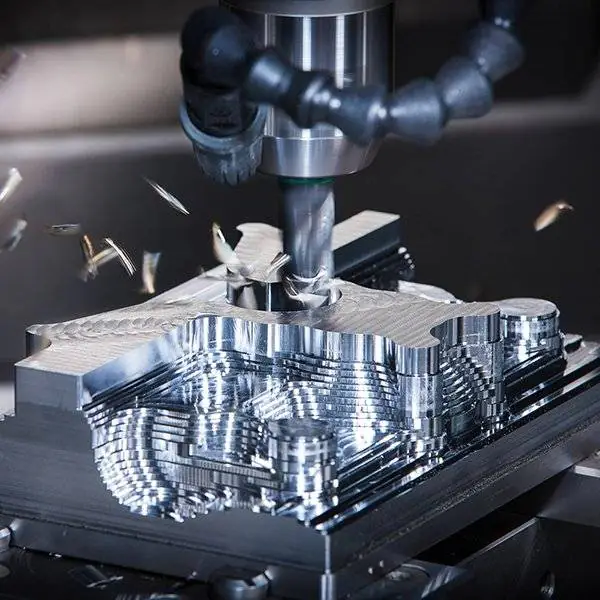
Introduced in 2011, iMachining is SolidCAM’s patented milling technology. It combines a toolpath generator with a Technology Wizard that calculates cutting conditions using material, tool and machine information. Its morphing spiral paths adapt to the feature being machined. Variable engagement and feed adjustment aim to control cutting load while removing material efficiently.
The operator can select among eight machining levels to accommodate real setup conditions. Fixture rigidity and tool stability still matter. The argument is that productive cutting comes from coordinating the path and the conditions, with fewer unnecessary movements. SolidCAM advertises large time and tool-life improvements; an individual shop earns its own result through the combination of part, machine, tools and setup.
That is why another customer account is revealing. Golan Industries, an Israel Aerospace Industries plant, already used SolidCAM. According to the vendor, an experienced programmer had resisted adding iMachining. A joint trial on an Aluminum 7075 part, using a HERMLE machine and Iscar tools, brought reported cutting time from 120 minutes to 80. Stable cutting without vibration also helped convince the factory technologist. The plant bought modules for two seats.
Reported cutting time fell by one-third. Vendor case study; results depend on the application.
The change of mind was grounded in a demonstration. An expert who had good reasons to trust an existing process was shown something observable. Speed mattered, but so did how the machine behaved while achieving it. For a software company selling into a shop full of expensive physical consequences, a live cut is a particularly eloquent form of prose.
Two computers, one room, a very early conversation
Founder and CEO Dr. Emil Somekh describes a start far removed from a polished funding announcement. Two computers and a printer cost $15,000. His father, Ezra, financed the purchase after a conversation at the pharmacy early in the morning. In 1984, Somekh developed educational CAD software in his apartment while working at Israel Aircraft Industries and teaching at Bar-Ilan University.
The first demonstration lacked dimensioning and annotation, he recalls. The ORT education network nevertheless valued its 3D capability and extended the deadline. Here was a customer willing to tolerate an incomplete product because it already solved an important problem. The origin is instructive: deliver the capability the buyer can actually use, then finish the work around it.
The quote is only the start of the calculation
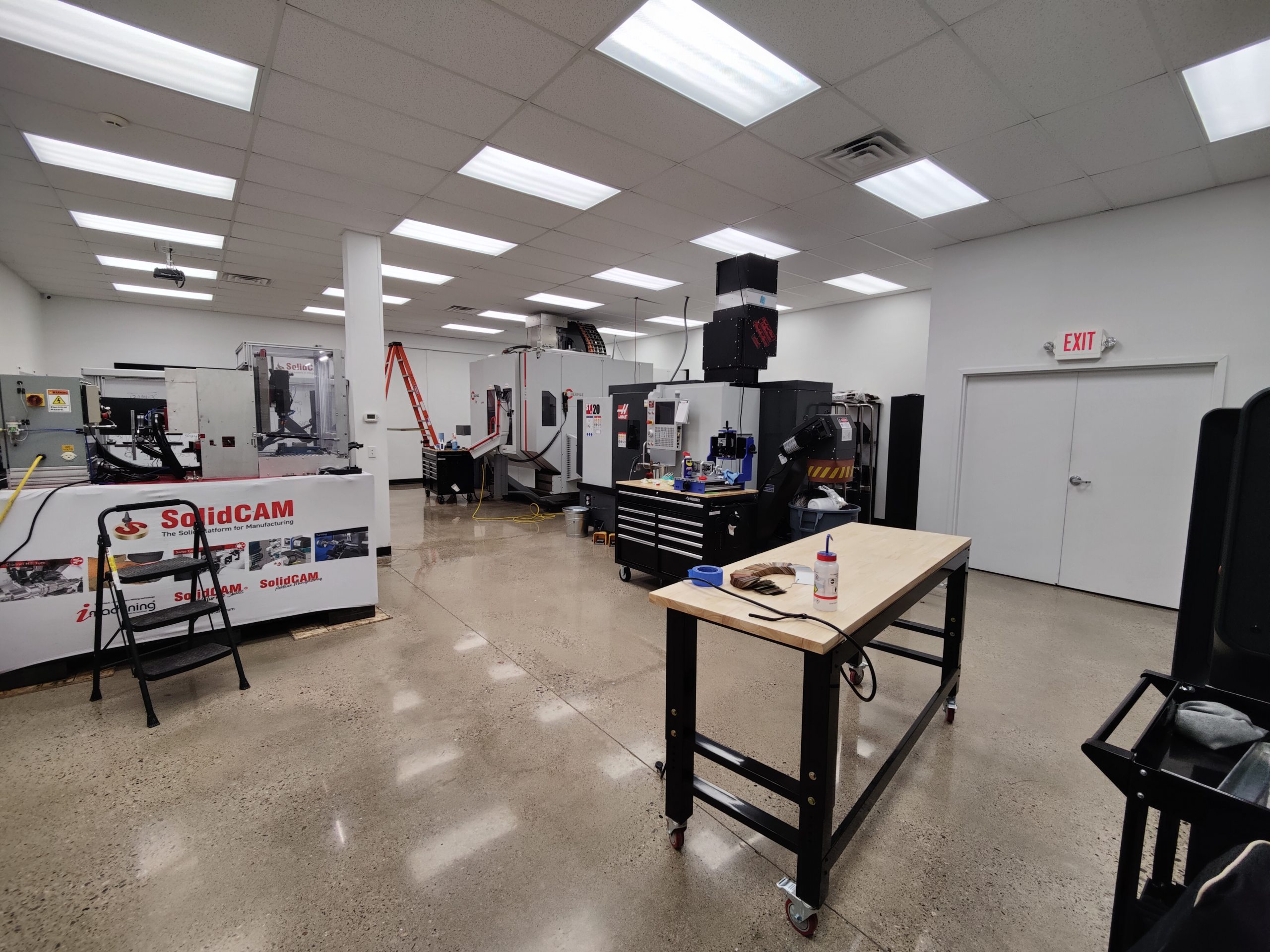
SolidCAM’s commercial pricing is customized by machining requirements, modules, license type and support package. It offers a 30-day trial. That makes the purchase a configuration exercise as well as a price negotiation. A shop should evaluate the required host CAD, suitable workstation, machine-specific postprocessor, training and implementation alongside the modules themselves.
Its support documentation recommends 32 GB of RAM at minimum, with 64 GB recommended, and a dedicated professional graphics setup. Host CAD compatibility also governs Windows support. These are practical constraints on a product embedded in another engineering application. A buyer should check the complete supported combination rather than assume that any spare office laptop is a programming station.
For complex Mill-Turn and Swiss equipment, SolidCAM supplies multi-channel synchronization and simulation. Multiple turrets and spindles must coordinate their operations. SolidShop extends the offering further into production, combining G-code editing and simulation with data management, machine communication, monitoring and ERP/MES integration. A program needs to reach the machine in the right revision; productivity includes that journey.
The next minute belongs to the programmer
In July 2025, SolidCAM announced a multi-year partnership with TITANS of CNC, connecting its software with free machining education and tutorials. Technology centers, application support and training are visible parts of its operating approach. They help a shop turn purchased capabilities into repeatable work, while making the software familiar to future users.
In February 2026, SolidCAM showcased its CloudNC CAM Assist integration; CloudNC announced early access for SolidCAM later that month. The partner describes assistance for 3-axis and 3+2-axis programming, with users retaining control over decisions. That addresses the time spent preparing a program. iMachining addresses what happens during the cut. Keeping those two clocks separate makes the promise easier to judge.
The lesson a reader can copy is straightforward: choose a representative repeat part, record the current full cycle, then run the alternative with a comparable setup. Check part quality, tooling consumption and programmer effort. Apply the measured saving to realistic production volume. If loading, inspection or another operation dominates the job, quicker roughing will have a limited effect. Recovered machine hours become financially useful when there is work to fill them.
SolidCAM’s appeal is strongest where its CAD workflow and machining capabilities match the shop’s actual needs. AR-EL’s modest saving supplies a fine final test for any ambitious software pitch: count the seconds, identify exactly where they came from, and see how often you can collect them.