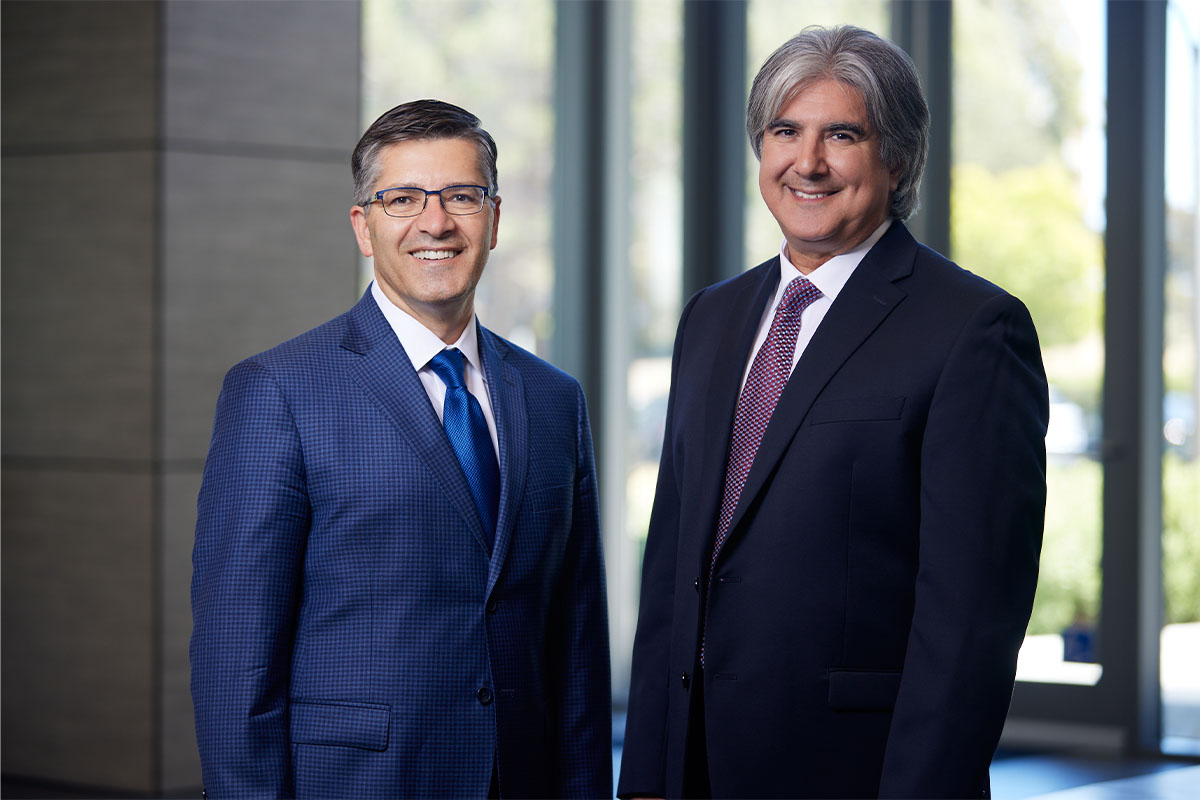
A heart muscle cell and a cancer cell can face the same sort of unpleasant invitation: little oxygen, few nutrients, and no assurance that conditions will improve. One struggles to survive. The other may have learned to prosper. For Yerem Yeghiazarians and Kurosh Ameri, that difference became a research question with commercial consequences. Soley Therapeutics, the company they founded, has raised $200 million in a single financing round to investigate what happens inside that difference.
- Start with living cells: observe responses to drugs across time and dose.
- Read the pattern: use imaging, automation and AI to investigate mechanisms.
- Build medicines: advance internally discovered candidates, beginning with cancer.
- Earn the next claim: laboratory evidence must still translate into patients.
The temptation is to file Soley under “AI drug discovery” and move on. That label tells us which technological party it attends. It tells us less about its scientific manners. Soley’s distinctive proposition is that a cell’s changing response contains information a single measurement can miss. To find a useful medicine, it wants to observe the conversation before deciding which participant deserves the credit.
A cardiologist walks into a cancer question
Yeghiazarians brought cardiology and stem-cell research. Ameri brought cancer biology and work on oxygen deprivation. Soley’s history dates their UCSF collaboration to 2010; the company arrived in 2020. The interval matters. This was a scientific relationship with years of experiments behind it before it acquired a corporate address.
In an April 2026 interview, Yeghiazarians explained the connection through the harsh environments of heart attacks and tumors. The founders wanted to understand why some cells succumb while others adapt. Survival sounds admirable until the survivor is malignant. The desired outcome depends rather heavily on whose cell it is.
That observation supplied a reason to broaden the unit of investigation. A disease can involve interacting networks, changing conditions and different cell states. A chosen molecular target may be useful, yet still offer an incomplete account of what the whole cell does next. Soley makes that next event part of the measurement.
The experiment has a middle
Many assays provide an endpoint: a signal at a selected moment, a molecular measurement, or a count of surviving cells. Those results are useful. They can also collapse different journeys into the same destination. Two compounds that eventually kill a cell need not have arrived there by the same route. For a drug developer, the route can contain clues about mechanism, selectivity and unwanted effects.
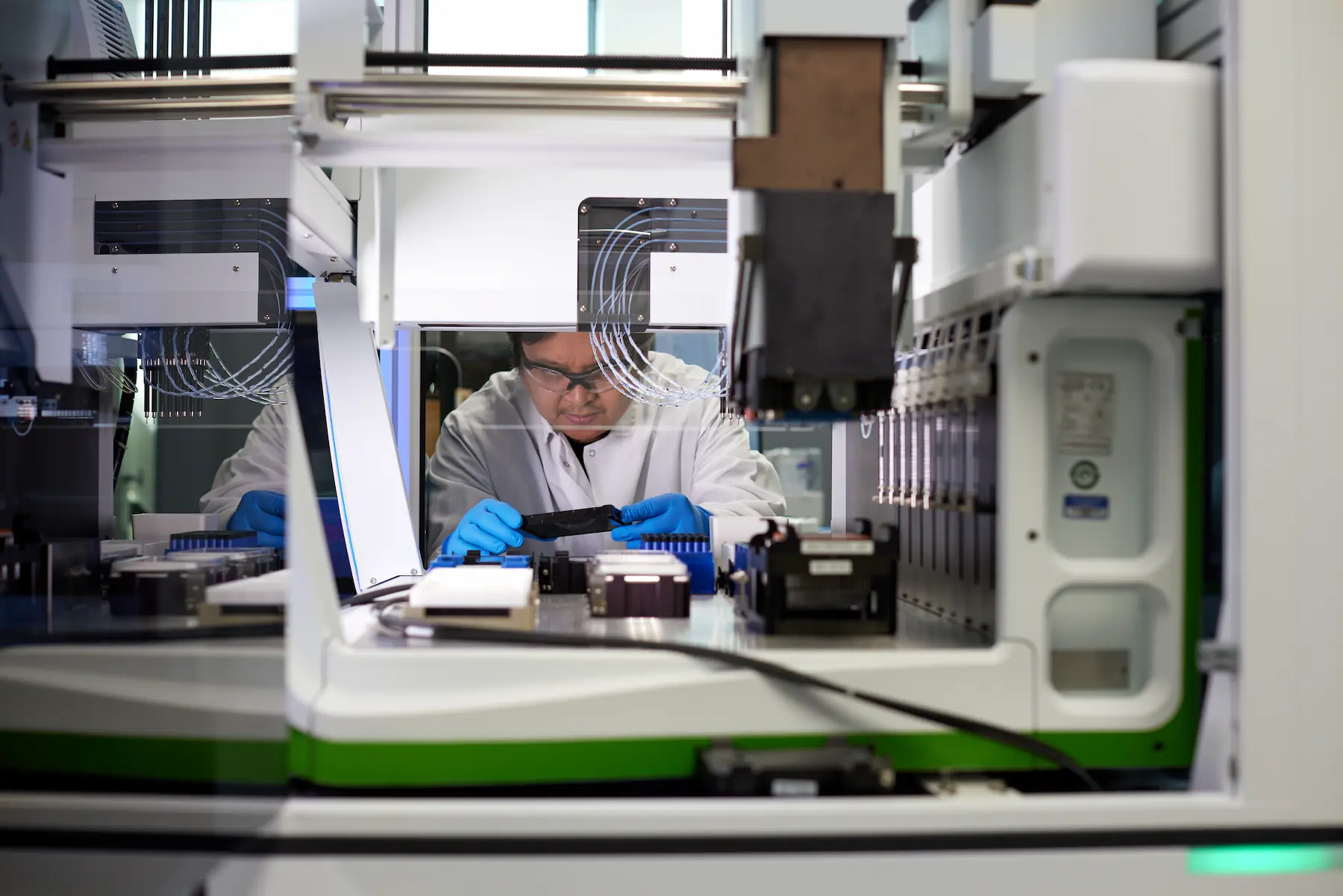
Soley exposes human cells to compounds, records changing responses and converts image features into structured information. Its SoleyMap signatures compact those observations so researchers and models can compare molecules and conditions. The company describes a process that begins with a desirable cellular response, then investigates targets and mechanisms. The order of discovery is the point.
- 01ExposeHuman cells meet compounds.
- 02ObserveRecord changes across time and dose.
- 03InterpretCompare signatures; investigate mechanism.
- 04DevelopTest candidates and disease fit.
This also explains the machinery around the idea. Soley’s platform page reports capacity to screen more than 100,000 compounds per week. Automation handles repeatable laboratory work; computer vision extracts features; other models support chemistry and quality control. The number describes screening capacity, not a weekly production line of finished drugs.
In 2025, Soley announced an Oracle collaboration to expand the computation behind its platform, using cloud infrastructure and NVIDIA technology. The collaboration described processing biological data at petabyte scale. A living-cell experiment may be modest in physical size and extravagant in the amount of information it produces.
The first obstacle is seeing clearly
The technical problem is less glamorous than a robot discovering a cure. Live brightfield images have low contrast, and experimental batches can introduce variations that a model mistakes for biology. If the algorithm becomes an expert in the peculiarities of Tuesday’s plate, it has learned the wrong lesson.
A January 2026 Scientific Reports paper describes Soley’s Live Cell Dynamics approach. The researchers trained with 189 compounds and evaluated an 81-compound holdout spanning ten mechanisms of action. They incorporated sampling across batches and images from different focal planes, then tested the contribution of those choices. The validation used one cell line, an important boundary on what the experiment establishes.
“What if cells could tell us the medicines they need?”Soley Therapeutics’ founding question
The paper supports a method for extracting information from live images across doses and timepoints. It does not establish that every candidate derived from that information will become a successful treatment. The useful lesson is more precise: preserve the sequence of events, and work to prevent technical noise from impersonating a biological discovery.
A cancer compound gives the theory a name
In April 2026, Soley announced preclinical findings for STX-6398, an investigational oral small molecule that modulates CKAP2-associated pathways. CKAP2 is an intrinsically disordered protein the company describes as historically difficult to drug. The candidate supplies something more concrete than a platform diagram: a molecule, a proposed biological connection and experiments readers can examine.
Across a panel of 300 tumor cell lines, Soley reported that sensitivity correlated with CKAP2 protein abundance. It also reported anti-tumor activity in animal models, including lung and colon cancer. These observations support further investigation and a potential biomarker strategy. They remain preclinical findings; activity in a model is a reason to continue testing.
A broad experiment, with a clinical question still ahead.
The wider pipeline begins with oncology, where the intended intervention is to push cancer cells toward death while avoiding broad toxicity. Outside cancer, Soley explores stress reversal: helping dysfunctional cells recover healthier behavior. Its public pipeline includes neurodegenerative disease, obesity and metabolic disease, and hair regeneration. Those ambitions share a measurement philosophy, though they will need disease-specific evidence.
$200 million buys the next set of questions
On January 7, 2026, Soley announced its Series C. Surveyor Capital was the primary investor, joined by HRTG Partners, RWN Management and others. Existing backers included the Doug Leone Family Fund, Breyer Capital and GordonMD Global Investments. The financing supports development work and clinical trials for two internally discovered oncology assets, non-oncology candidates and further platform expansion.
The announcement targeted a 2026 investigational new drug filing for the lead acute myeloid leukemia program and preparation of a second asset for solid tumors. These were development plans, not completed clinical outcomes. The $200 million is capital raised. It is not an itemized bill for building the platform or the cost of discovering one compound.
Soley’s business is therefore best understood through proprietary therapeutic assets. Its scientists use the platform to create its own pipeline. Pharmaceutical partners are a prospective commercial audience, and patients are the intended eventual beneficiaries. Someone reading this today can investigate the science, follow the programs or explore collaboration; the public proposition is research and development rather than a medicine ready to purchase.
The June 2026 appointment of Berthil Clasen as chief business officer makes that commercial direction clearer. A former Lilly executive, he was hired to lead strategy, business development and partnerships. His arrival suggests the company is preparing to connect its scientific programs with external development opportunities. It does not, by itself, constitute a licensing deal.
What travels beyond Soley’s laboratory
Soley sits among technology-enabled discovery companies such as Recursion and insitro. Recursion combines cellular phenomics with other biological and chemical data; insitro integrates human and cellular information with machine learning. Soley’s stated emphasis is dynamic cellular stress sensing. These descriptions help distinguish approaches without settling which will deliver better medicines.
For another research team, the practical idea to borrow is the discipline of observation. Measure more than a final yes or no. Vary dose and time. Control for experimental artifacts. Ask whether a desired effect is selective or simply destructive. Soley’s stated culture puts testable hypotheses and collaboration across biology, engineering and computation at the center of that work.
The approach depends on the model capturing disease-relevant biology and on its measurements surviving changes in experimental conditions. A cell line cannot reproduce every feature of a patient, and a signature cannot replace clinical evidence. The demanding part of Soley’s story is now the passage from an informative cellular response to a safe, useful treatment. Its founders learned to ask cells better questions. The next answers will have to travel considerably farther than a microscope slide.