A parcel can be moving perfectly well while its owner thinks it has disappeared. The warehouse knows where it is. The database knows where it is. The person refreshing a tracking screen sees a code that might as well be a crossword clue. Somewhere, a support telephone rings. Software Orca’s account of its Tech Transit project begins with precisely this kind of misunderstanding.
- Custom mobile apps, web platforms and business software, built for clients.
- The interesting work happens where customer habits collide with existing systems.
- Published Dallas app estimates start at $25,000; ongoing operations need their own budget.
The company says customers were calling because delivery updates used internal technical language. Its response was to watch people struggle, then rebuild the experience around readable updates, notifications and a map. React Native handled the mobile application; Node.js handled API requests. Connecting to the existing logistics system was part of the job. The delivery network could stay complicated. The tracking screen needed to make sense.
The first thing to fix was the explanation
In Software Orca’s telling, Tech Transit took about three months and roughly five wireframe iterations. The reported result was a 60% reduction in support tickets in the first month. Treat that as the company’s project account, rather than a forecast for every app. Still, the underlying idea travels well: before adding another feature, find the point at which someone reaches for the telephone.
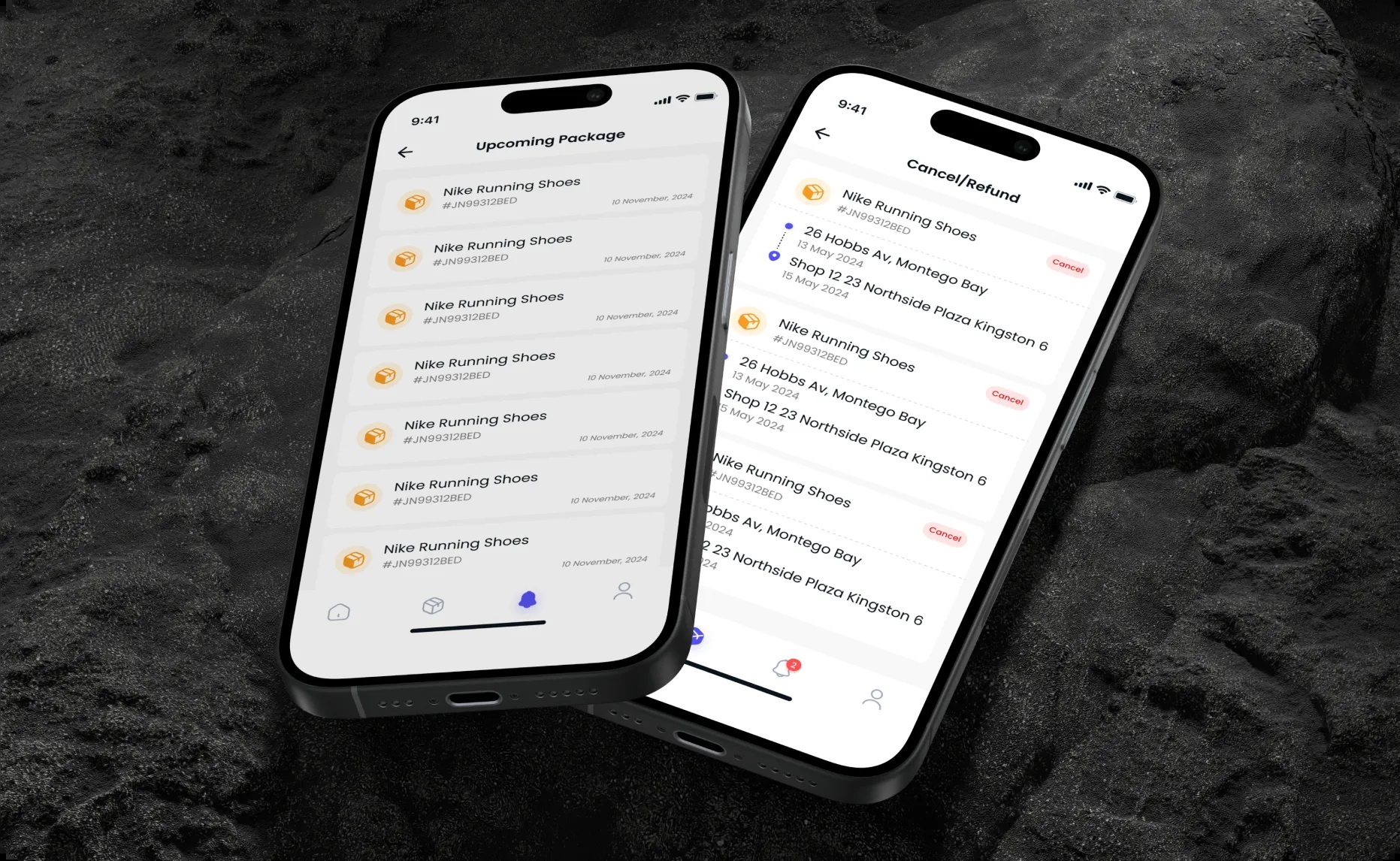
This is a useful way into a business whose service menu otherwise looks familiar. Plenty of development firms offer apps, automation and AI. A specific misunderstanding tells you more than a long list of technologies. It gives the developer a problem to solve and the customer something concrete to judge.
A software workshop, with customers attached
Software Orca identifies 2016 as its starting year and Muzammil Rawjani as a co-founder. Based in Dallas, it develops software for startups, smaller businesses and enterprises. Its own description emphasizes research, interface planning, development and continuing support. Clients bring an idea, an operational bottleneck or an existing application that needs attention.
The work spans iOS and Android applications, web apps, custom internal systems, minimum viable products, AI integrations and modernization. A buyer might need a customer-facing service; another might need a dashboard that stops employees moving information between disconnected tools. The commercial model is commissioned development, with project and dedicated-team engagements advertised, plus maintenance. Businesses can hire the company to build SaaS products, too.
The meaningful comparison is with another development agency, an internal engineering hire or an existing software package. My reading: Software Orca makes the strongest case when a workflow deserves its own software and the buyer needs help defining it. A standard shop or booking flow may already have an adequate packaged answer. Custom development earns its budget when the differences matter.
“They did not just build features”
Robert Crist · real estate client review
The adopters did not follow the script
PawConnect, the company’s pet-adoption case study, offers a less tidy lesson. Software Orca says interviews with adopters and shelter staff informed the design, but beta testing still exposed navigation problems. Photo uploads and search also needed attention. The team changed the interface before launch.
The reported build used React Native, Node.js, MongoDB and AWS image storage, reaching launch after six months. More revealing is the retrospective: adopters behaved differently from the early research, while shelter workers had routines the team had missed. Software Orca says building in flexibility earlier could have saved weeks of refactoring. Interviews helped. Watching the actual product in use changed the plan.
Put the first awkward user session before the expensive commitment.
A property view is not a property sale
KeyNova, Software Orca’s real estate project, brings together property search, virtual tours and market information. Its case study describes headaches that anyone who has searched for a home will recognize: photographs that load slowly, location inaccuracies, missing listing details and filters that classify properties differently from the people using them.
The company reported roughly 40% more property views, while explicitly saying it was still assessing whether those views produced more purchases. That distinction deserves to survive the marketing department. Browsing is measurable. Buying is a different event. A reader commissioning software can copy that discipline: choose the business outcome first, then decide which product measures genuinely indicate progress toward it.
The price of making it yours
Software Orca’s Dallas mobile-development page publishes estimated budgets of $25,000-$45,000 for a simple MVP, $45,000-$90,000 for a mid-complexity app and $90,000-$150,000 or more for an enterprise build. These are planning ranges tied to scope, rather than bills for the projects above. The same page describes a discovery sprint before a fixed-scope estimate.
Clutch lists a $10,000 minimum engagement and a $25-$49 hourly range. Those are different measures from an all-in app budget. Its real estate client review describes CRM integration, less manual entry and design revisions that ran longer than planned. The practical buying lesson is to pin down deliverables, integrations and acceptance criteria before comparing totals.
Launch also starts another bill. Software Orca’s October 2026 SaaS guide includes hosting, APIs, payments, monitoring, security, maintenance and support among ongoing costs. It argues for deciding tenancy and data isolation early. For a subscription business, these choices sit underneath every customer account. Leaving them until later can turn a promising prototype into an expensive renovation.
Keep the complexity behind the counter
Rawjani’s Forbes Business Council profile describes a leadership philosophy built around teams, transparent communication and continuous learning. His 2026 writing includes an argument for protecting codebases from unnecessary complexity. That makes a fitting test for this company’s offer: does the proposed work make a daily task easier, and can the team show how?
The limits follow from the examples. Clear screens cannot repair missing property data. Early interviews cannot replace testing with working shelter staff. A small build budget cannot carry an unlimited maintenance obligation. Bring a real workflow, people willing to test it and room to revise. The useful thing to copy is the habit of looking closely before committing to what gets built.