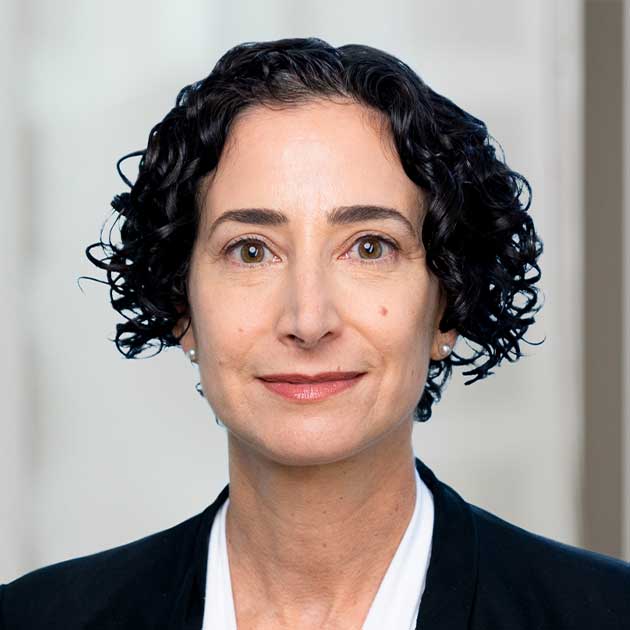
From Bench to Boardroom
Most people choose a lane. Sofia Touami, Ph.D., chose the whole road. In a biotech world that tends to slot scientists into labs and businesspeople into boardrooms, she stepped across that line and made the crossing look routine. By the time she arrived at Lycia Therapeutics as Chief Business Officer in July 2023, she had already closed some of the most consequential partnerships in the modern protein degradation space - working from a foundation that started not with an MBA but with years of synthesizing molecules at two of America's great research institutions.
The scientific education came first. An undergraduate chemistry degree from Washington University in St. Louis, then a Ph.D. in Organic Chemistry from Stanford University, followed by postdoctoral research at The Scripps Research Institute - one of the world's most respected centers for basic biomedical science. By the time she emerged from that training, Touami understood, at a molecular level, what it actually means to design and manipulate the biological machinery that drugs are meant to interrupt.
That fluency proved to be her edge. Business development in biotech is, at its core, a translation problem: turning complex science into terms that corporate counterparts can price, partner on, and build around. Touami could speak both languages without an interpreter. Her tenure at NGM Biopharmaceuticals as Senior Director of Business Development and Alliance Management sharpened the dealmaking instincts. Then at Frontier Medicines, she stepped into the VP role and engineered a transaction that still gets mentioned in conversations about marquee early-stage biotech deals.
"We're thrilled to announce the completion of a $106.6 million Series C financing to progress our lead LYTAC extracellular protein degraders toward the clinic for autoimmune and inflammatory diseases."- Sofia Touami, CBO, Lycia Therapeutics (May 2024)
The Frontier-AbbVie collaboration, announced in December 2020, was a $55 million upfront deal with potential milestone payments exceeding $1 billion - structured around Frontier's chemoproteomics platform targeting E3 ligases and other difficult-to-drug proteins. As VP of Business Development, Touami was a central architect of that agreement. It was the kind of transaction that validates a platform, funds years of science, and puts a company's name on the map. She then moved to Hexagon Bio as CBO before Lycia came calling.
Lycia Therapeutics is not a conventional opportunity. Founded in 2020 out of Versant Ventures' Inception Sciences engine and launched with an initial $50 million, the company is built around lysosomal targeting chimeras - LYTACs - a class of molecules first described in a 2020 Nature paper by Carolyn Bertozzi, who two years later received the Nobel Prize in Chemistry for founding the field of bioorthogonal chemistry. Bertozzi serves as Lycia's Scientific Advisory Board Chair. The science is not incremental. LYTACs do something that most drugs cannot: they grab extracellular and transmembrane proteins - the 40% of the proteome that sits outside the cell or on its surface, largely inaccessible to intracellular degraders like PROTACs - and route them into lysosomes for destruction.
The target diseases are autoimmune and inflammatory disorders. The mechanism is radical: instead of inhibiting the activity of a pathogenic protein, you eliminate it entirely. No protein, no signal, no disease. For conditions driven by circulating autoantibodies or rogue cell-surface receptors, that distinction could be clinical.
Into this environment, Touami brings a business architecture mindset that the company needs as it prepares for clinical translation. In May 2024, Lycia closed an oversubscribed Series C of $106.6 million, led by Venrock Healthcare Capital Partners, with new money from Janus Henderson Investors, Marshall Wace, and Franklin Templeton joining existing backers that include Eli Lilly, Redmile Group, and RTW Investments. The round - Lycia's largest to date - was designed to carry lead LYTAC programs into clinical trials. The total capital raised since founding now sits at $226.6 million.
There is also a partnership with Eli Lilly to discover and develop novel LYTAC degraders - a collaboration that positions Lycia's platform against one of the world's largest biopharma R&D engines. The shape of that deal, and whatever partnerships follow, will flow substantially through Touami's office.
What makes Touami's profile genuinely unusual is not just the combination of scientific training and dealmaking ability - there are others who span that line. It is that she has made the transition twice, across two distinct protein degradation modalities: intracellular (Frontier's E3 approach) and now extracellular (Lycia's LYTACs). That breadth means she has a comparative view of the entire targeted protein degradation landscape that very few people in the industry possess.
Lycia operates from a 36-person team in South San Francisco - the compressed geography of 400 East Jamie Court, where biotech density means your next partner is often five minutes away and your competition is across the street. As CBO, Touami is responsible for the company's external face: the strategic partnerships, the business development pipeline, the corporate operations that translate scientific milestones into investor-ready narratives. It is a job that rewards exactly the bilingual fluency she spent a decade building.
Protein degradation is one of the hottest sectors in drug development. The question is which degradation modalities, targeting which disease mechanisms, with which companies. Lycia is betting on the extracellular proteome. Sofia Touami is betting on Lycia.