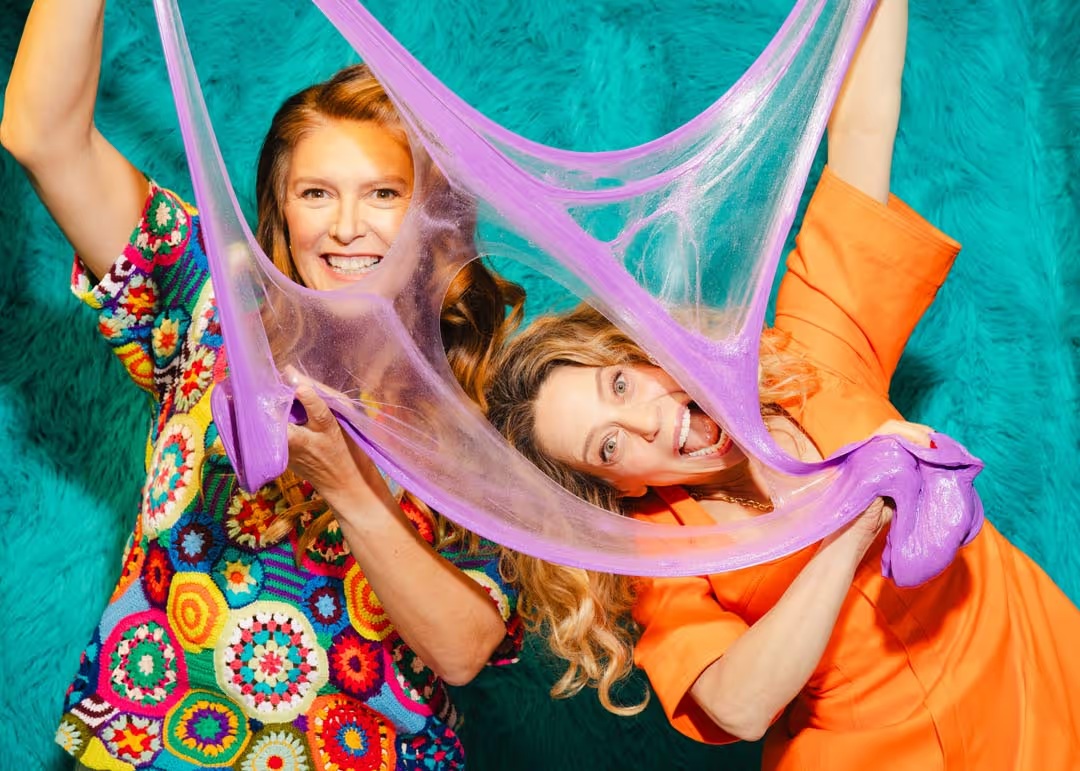
In 2018, Karen Robinovitz sat down with a friend’s ten-year-old daughter and some slime. Four hours passed. That was the surprise. Robinovitz had been grieving; her husband had died, and she had lost a cousin in the Parkland school shooting. For an afternoon, a substance associated with children occupied her attention. An idea began with the discovery that her attention could still be occupied.
She introduced her friend Sara Schiller to it. Schiller’s family had also endured upheaval, including her husband’s disabling strokes. The women started playing together. Eventually, they asked a question with commercial consequences: what if the thing worth selling was the place where this happened?
THE STORY IN THREE SQUEEZES
- Ticketed slime experiences turn a small household object into a shared outing.
- The first build-out cost $600,000; the founders held another $400,000 for rent.
- Parties, custom slime and smaller MiniMoos extend the business beyond the original room.
A room where the rules soften
Sloomoo Institute opened in SoHo in October 2019. It was supposed to be a six-month pop-up. The founders told Inc. that 3,000 people came on opening day. The temporary experiment had attracted a crowd before anyone had much opportunity to call it temporary.
The proposition is delightfully impolite. Visitors manipulate slime in sculptural vats, explore textures and scents, and make a custom jar at the DIY bar. At New York’s Lake Sloomoo, they can walk through 300 gallons of the stuff. There is an optional upgrade to have slime rain down on them. Protective ponchos supply the dignity that the activity removes.
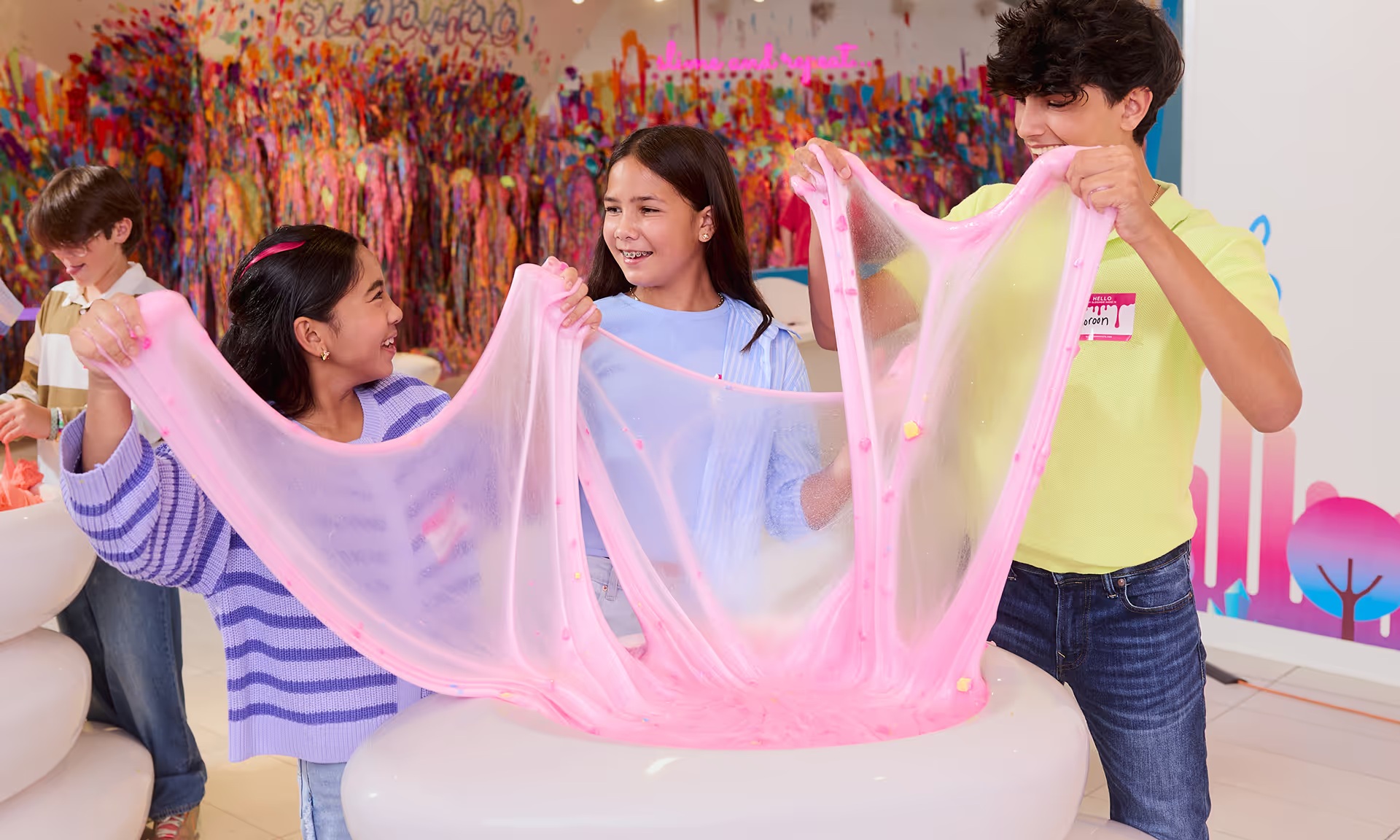
This is an attraction for families, friends and adults willing to participate. School visits add an introduction to polymers and material properties. Birthday groups buy a celebration; corporate teams buy a different kind of gathering. What unites those customers is a task everyone can attempt without first becoming good at it.
The sensible money behind the nonsense
Robinovitz brought experience in influencer representation and marketing. Schiller brought business management and hospitality. On The Kara Goldin Show, Schiller described their skills as a Venn diagram. One knew how to attract attention; the other understood what to do when the attention arrived.
According to their January 2025 CNBC account, reproduced by Headtopics, they raised $1 million from a private investor. They allocated $600,000 to refurbishing the first space and reserved $400,000 for rent. That division deserves attention. A playful concept still had a landlord.
THE FIRST $1 MILLION · FOUNDER-REPORTED
$600,000Build the experience
$400,000Keep for rent
They recruited people from the slime-making community and invited influencers on construction tours. The marketing offered a glimpse of an activity rather than an abstract brand promise. Parents and slime enthusiasts could picture the visit while the room was still being built.
Then the room closed
The pandemic stopped physical operations only months after launch. The first serious interruption was brutally specific: people could no longer gather around the vats. An admission-led company had lost access to its principal product.
The response was to move the activity into people’s homes. Sloomoo hosted virtual classes, shipped materials and taught corporate groups. Inside Retail reported a session for 600 Google executives. A jar and an instructor could travel where a public attraction could not.
“We were moving, moving, moving”Karen Robinovitz, on the pace before the shutdown, Inside Retail
Robinovitz told that publication the closure gave them time to think about business strategy. The founders’ 2022 funding interview records a $5.8 million Series A led by Nicole Shanahan, with Raptor Group and Randi Zuckerberg participating. The ambition had moved beyond a pop-up.
The souvenir is part of the machinery
By 2023, Sloomoo was generating approximately $30 million in annual revenue, according to Inc.’s April 2024 reporting. Tickets supplied roughly 80 percent in that account. Slime and merchandise supplied the rest. Those historical figures help explain the company: the visit carries the business, and retail gives the visit something to carry home.
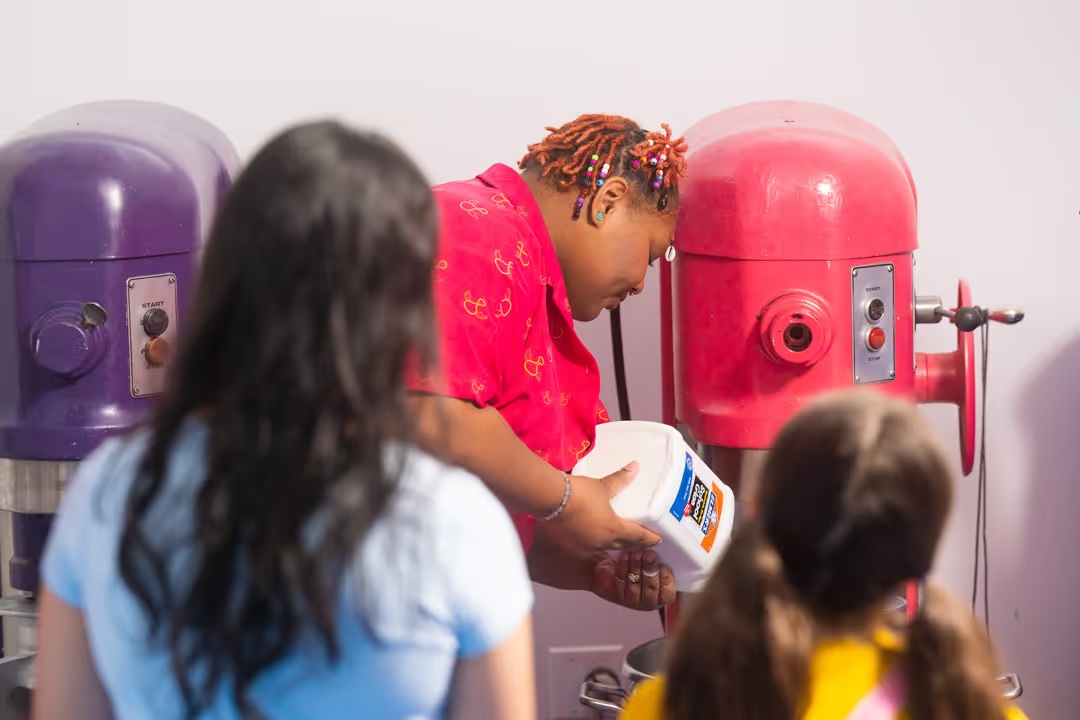
The DIY bar makes that connection unusually tangible. New York lists eight textures, 60 scents, 40 colors and 120 charms. Guests leave with something they chose. A souvenir becomes a record of decisions, however questionable the combination of fragrance and color may be.
That distinguishes it within the crowded market for family outings. Immersive art venues, children’s museums and indoor playgrounds compete for the same afternoon. Sloomoo concentrates on a material visitors change with their hands. An at-home slime seller competes for the jar; Sloomoo also competes for the occasion.
Joy needs a quieter setting sometimes
Inclusion has operational details. Sloomoo describes hiring a neurodiverse workforce. Its Institute sensory-friendly hours reduce capacity, remove loud music and pause noisier activities. Headphones are available. The quieter setting matters because a sensory attraction can overwhelm the very person it hopes to welcome.
The company also commissioned artists from Exceptional Minds to design limited-edition charms in 2025. Participation extended into the objects guests could select. A cheerful room becomes more persuasive when its choices include who gets to help make it.
The practical distinction is between access and participation. A group can enter a colorful building and still leave someone out of the activity. Changing volume, pacing and the number of people in the room changes who can comfortably join in. For another operator, that is a useful detail to copy: put the accommodation into the schedule, then make it easy for guests to recognize and book.
The next room is smaller
MiniMoos opened in Boston and at King of Prussia outside Philadelphia in November 2025. These smaller experiences bring play and retail into a compact format. Charlotte followed with a full Institute in July 2026; the current official Tysons page also confirms an opening in the Washington area.
The transferable idea is to design the setting around a familiar pleasure. But the conditions matter: enough customers to sustain a lease, staff to guide them, and maintenance that keeps the experience inviting. Sloomoo’s own expansion notes even mention air conditioning because slime melts in heat. Permission to make a mess requires someone to remain very organized.