Walk into most electronics stores and the good stuff is behind glass. The phone you want is tethered to a plinth. The headphones are in a box you can’t open. A staffer with a lanyard hovers, waiting to ring you up. tm:rw - three floors and 20,000 square feet in the old Times Square McDonald’s - was built by people who decided that whole arrangement was the problem, not the product.
The name is pronounced “tomorrow” and stylized like the readout on a digital clock. Inside, there are racing simulators, a two-story hologram, AR glasses that translate speech across 127 languages, a wellness zone, a café with a gelato machine, and, on a given afternoon, a cotton candy machine spinning sugar next to a $2,000 gadget. You can spend an hour there and leave with nothing but sticky fingers. That is not a bug. According to the people who run it, that is the entire business.
tm:rw is not about selling gadgets. It’s about advertising innovation.
That sentence is worth reading twice, because it reframes what the store actually is. tm:rw doesn’t primarily want your money at the register. It wants your attention on the products - and it charges the brands for that attention. In practice it is a retail floor that behaves like a media channel. The store is the ad. The foot traffic of 42nd Street is the reach. The demo is the campaign.
From a glass box in Selfridges to a store of their own
tm:rw didn’t come from nowhere. Its co-founders, Nathalie Bernce (CEO) and Jacov Nachtailer (COO), spent close to a decade running Smartech Retail Group, which operates tech concessions inside some of Europe’s most demanding department stores - Selfridges in London, KaDeWe in Berlin, Rinascente in Rome. That is where the founding observation was made.
We walked into Selfridges and saw that retail wasn’t really delivering tech. Tech products were locked in boxes behind glass.
The Times Square flagship, which opened in July 2025, is the group’s first freestanding store - not a concession inside someone else’s building, but the whole building. It sits on the first three floors of the Candler Building, a 1913 landmark, on a corner that once held one of the largest McDonald’s in New York. The legal entity behind it is Smartech USA Inc.
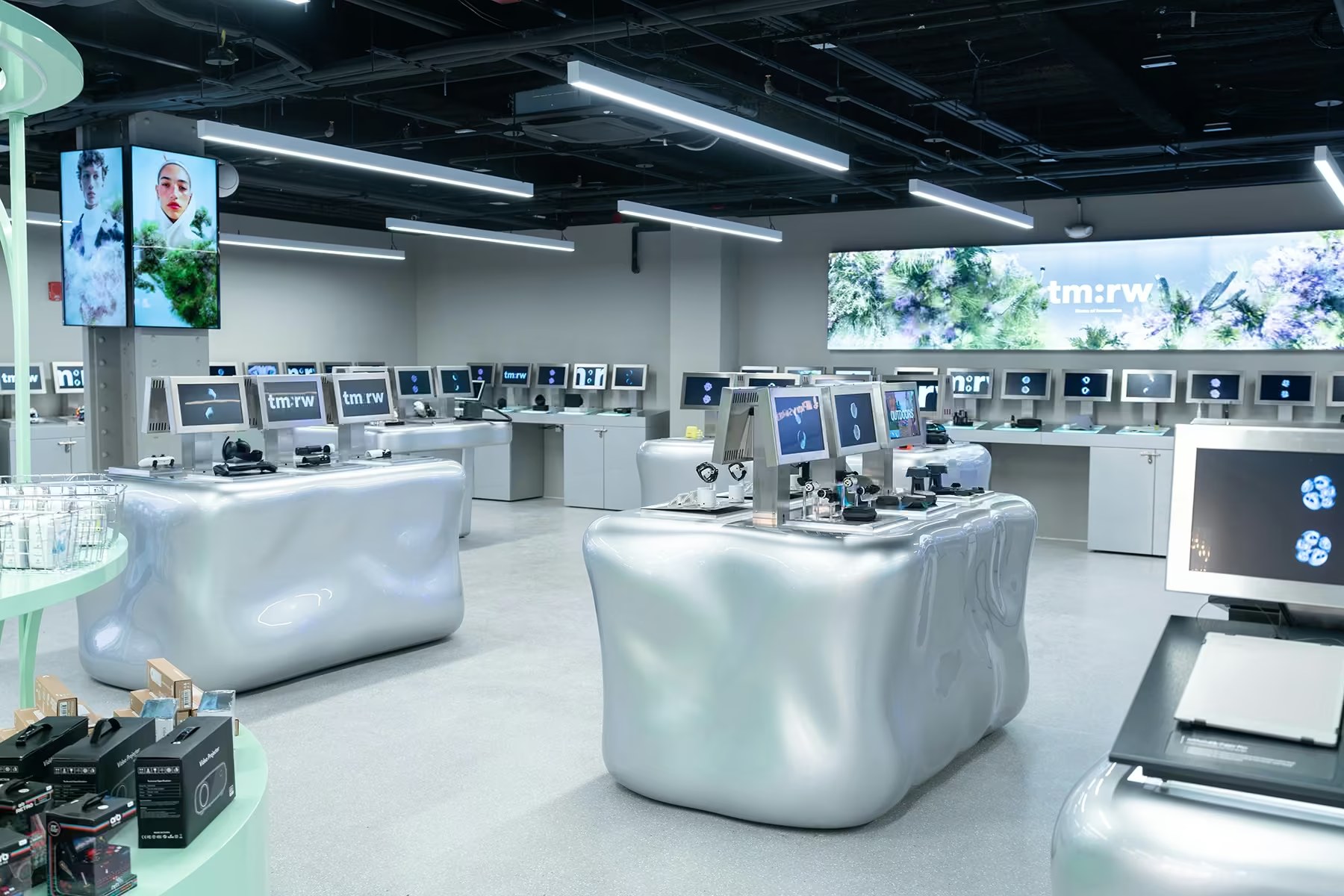
What you actually do in there
The floor is broken into concept zones that rotate, so the store you visit in spring is not the store you visit in winter. Each zone stages a category as an experience rather than a shelf.
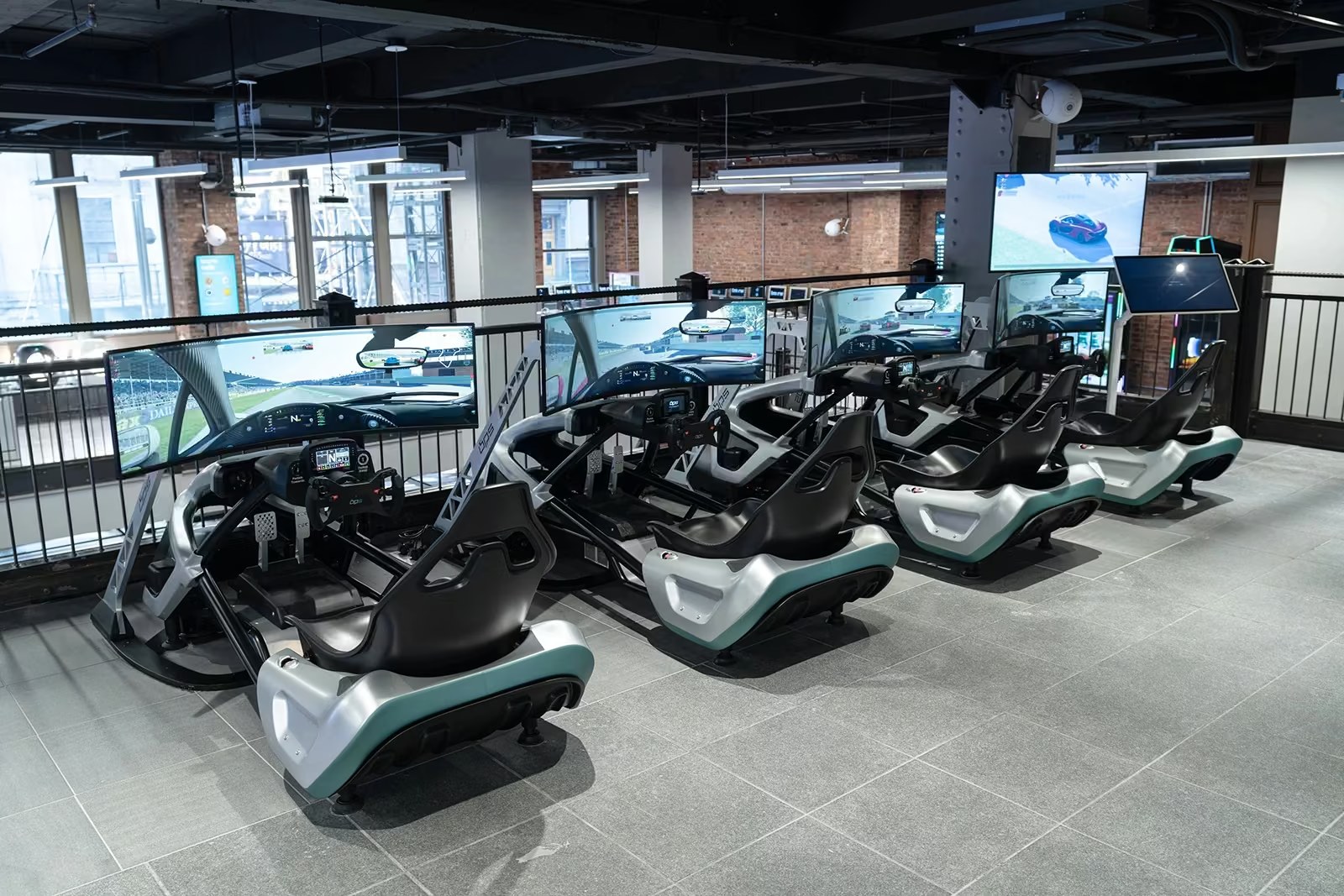
The catalogue of things you can touch reads less like an electronics store and more like a very well-funded arcade: racing rigs, VR games that get swapped seasonally, robots, red-light face masks, flight simulators, tattoo printers, massage tables, a gelato machine. The store director likes to describe the effect on a customer, and the line captures the pitch better than any brochure.
We’ve had customers walk in wearing a three-piece suit, and leave sweaty, holding cotton candy.
How it makes money
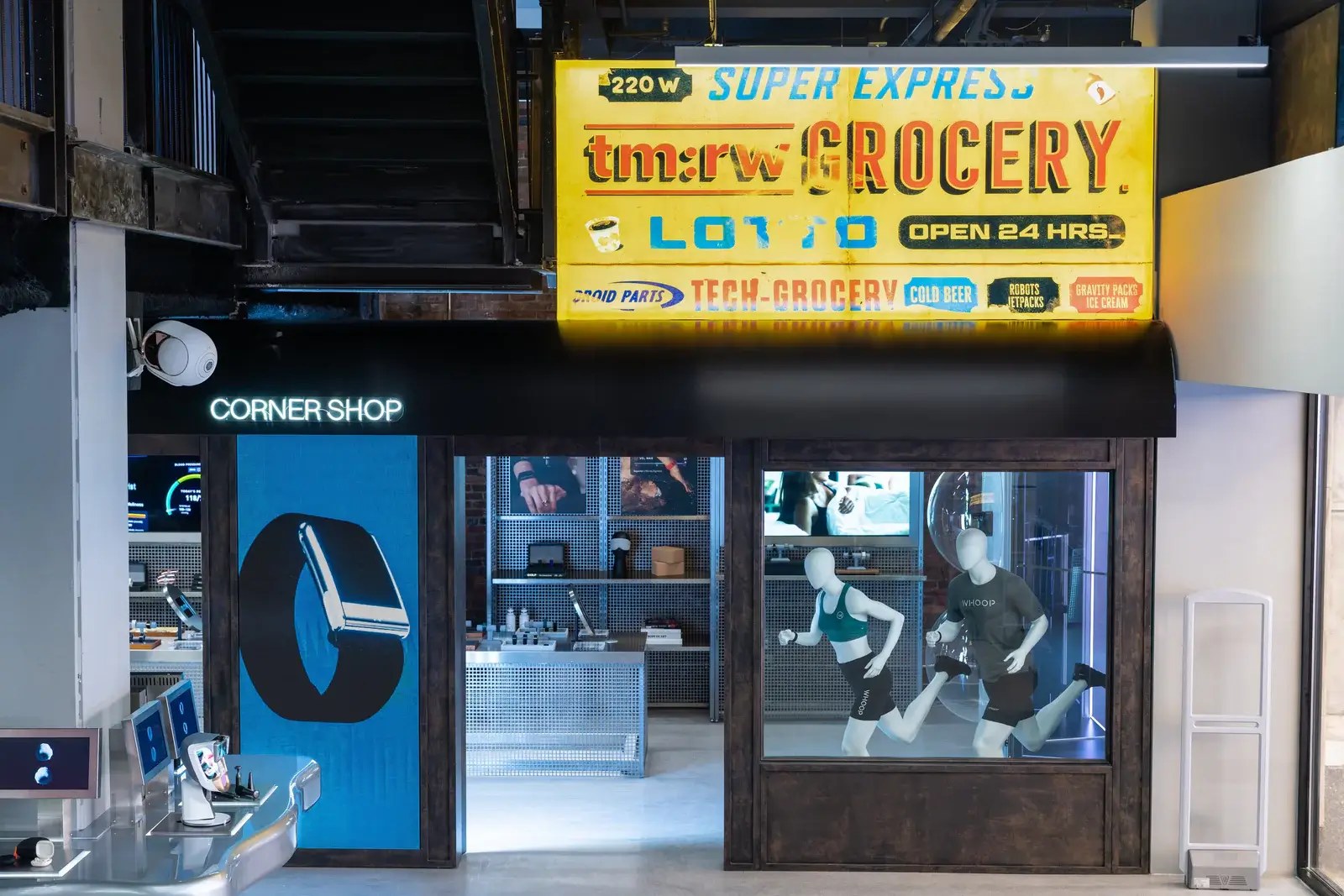
This is the part that separates tm:rw from a themed showroom. There are two revenue engines running at once. The first is straightforward retail: products sell in-store and through a Shopify storefront, with inventory procured different ways depending on the partner - some goods are bought wholesale, others carried on consignment, which keeps the risk shared. The second engine is the interesting one: brands pay to be there. They pay to stage a demo, to occupy a zone, to take over The Corner Shop for a few weeks. What they buy is exposure and, implicitly, a read on how real people react to a product before it scales.
tm:rw’s two revenue engines
Relative emphasis, not disclosed figures. The store functions as a launchpad: a place brands rent to advertise innovation, layered on top of a conventional store.
For a startup, tm:rw is a way to put a product in front of Times Square without signing a mall lease. For a giant, it is a live test bed. The store has a capacity of roughly 150 brands and 600 to 800 SKUs at a time, which means the lineup is curated and finite - scarcity is part of the offer to partners.
The customer base splits neatly in two, and both matter to the model. On one side are the people walking 42nd Street - tourists, families, gadget obsessives, teenagers who came for the racing rigs. On the other are the 120-plus brands, from names most shoppers have never heard of to Amazon, PlayStation, Anker and WHOOP. The consumers supply the attention; the brands pay for it. A team of about 30, many of them veterans of the group’s department-store concessions and one hire from the luxury world of Louboutin, keeps the two sides in balance.
Then Shaq walked in
The clearest evidence that the model does something to people is its most famous customer. Shaquille O’Neal - who has made more than 50 investments across tech, food and fitness - was brought in by a friend and did not behave like a browser.
I was introduced to it by a friend, and I went crazy. I spent about $10,000. Went to the one in London, they had different products, spent another 10.
He didn’t stop at being a customer. O’Neal came on as an equity partner, investor and global ambassador - a role that, per the company, includes shaping expansion, brand strategy and live experiences rather than lending a signature. His own framing of why is the kind of line a founder frames on the wall.
When I saw what tm:rw was building, I knew I wanted in. This isn’t just about tech, tm:rw is building something completely different. It is not just a store, it is an experience.
A festival, a livestream, and a first holiday season
In its first six months, tm:rw did the two things a new retail brand does when it wants to prove the concept scales: it threw a party and it recruited platforms. In November 2025 it ran tm:rworld, a three-day festival of talks, demos and gifting presented by Amazon. For the holidays it lined up two heavyweight partners: Amazon’s “Gift Lab” curated marketplace inside The Corner Shop (featuring Anker, WHOOP, HoverAIR, PlayStation and others), and a TikTok “Holiday House” livestream on Cyber Monday hosted by the creator IShowSpeed.
This holiday season, we’re doubling down on creating real connection with shoppers by making experience, authenticity, and value the core of our gifting approach.
Where it sits in the market
tm:rw is competing on a few fronts at once, which is part of why it is hard to categorize. Against traditional electronics chains, its edge is that nothing is locked away. Against the “retail-as-a-service” showroom concepts that rent shelf space to brands, its edge is spectacle and a Times Square address. Against the flagship brand-experience stores that already line 42nd Street, its edge is breadth - it is not one brand’s world but a rotating cast of 120.
The open question is the one every experiential retailer eventually faces: whether time-in-store reliably converts into durable revenue, and whether “fun” is defensible once the novelty of a new Times Square attraction wears off. tm:rw’s answer is that it isn’t betting on the register alone - if the brands are paying for attention, a customer who leaves with cotton candy and no purchase has still delivered the product tm:rw sold.
The short historyBernce sums up the ambition in a sentence that is smaller and more honest than most retail mission statements: the store was “built to bring life and excitement to what the world is creating.” Whether that turns out to be a durable business or a very good idea for a moment, tm:rw has already done the hard part of any retail experiment - it got people to stay.