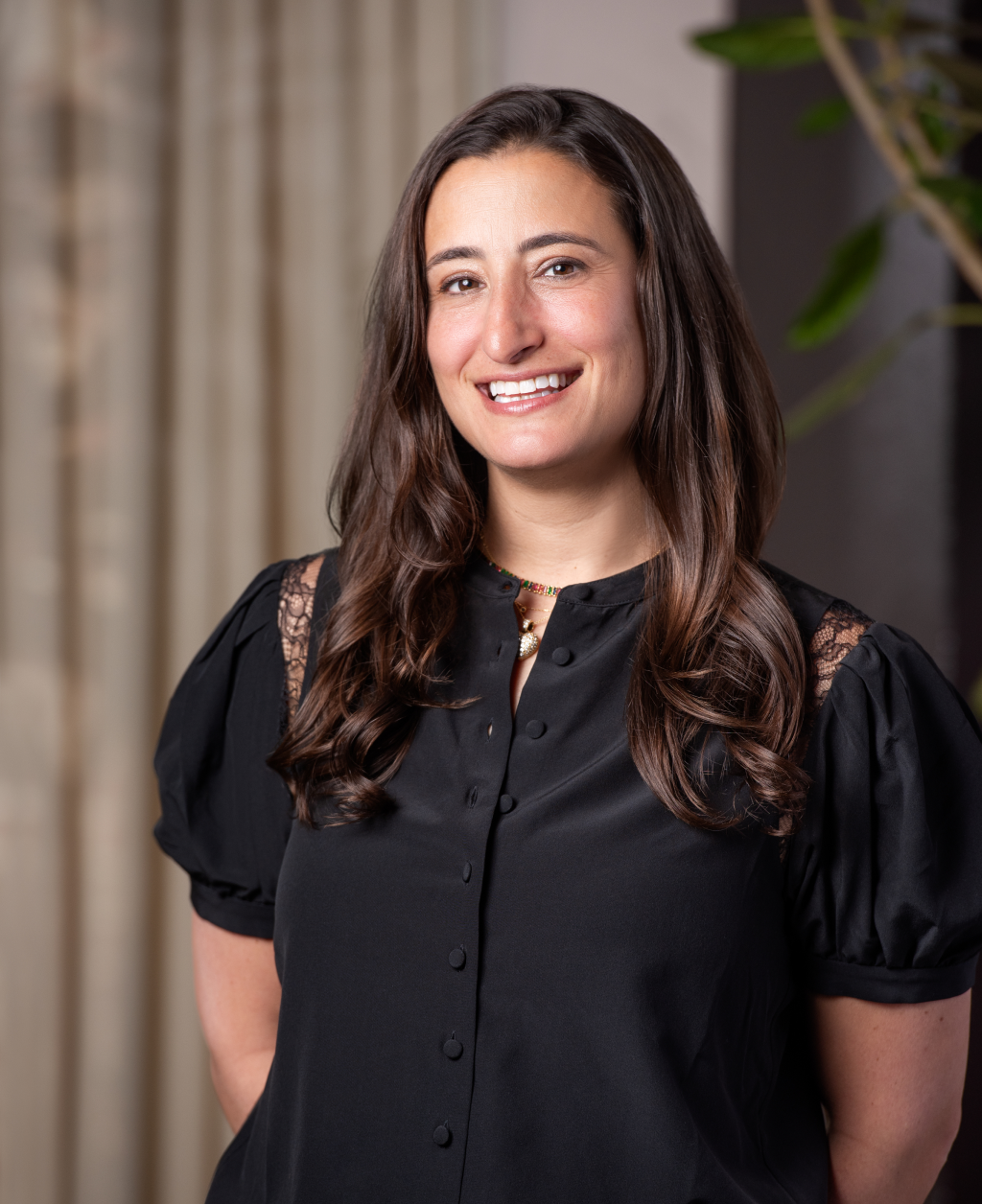
The Woman Who Invented
Subscription Commerce
At 16, Hayley Barna was writing papers in IBM's research lab in Yorktown, New York. She wasn't a summer intern with a lanyard. She was a bona fide employee, publishing in an international science journal and competing as a finalist in the Intel Science Talent Search - the so-called "junior Nobel" of American science competitions. Nobody told her she was too young. She just showed up and did the work.
That instinct - to find the gap in the room and walk through it - has defined every chapter of her career since. It is what brought her to Harvard, then to Bain, then to Hong Kong with Christie's, then back to Harvard Business School where she met Katia Beauchamp and co-founded Birchbox in 2010. It is what carried her through five years as Co-CEO of a company she scaled from a dorm room idea to more than a million monthly subscribers. And it is what landed her at First Round Capital in 2016, where she became the firm's first female partner.
"Don't forget to sell the dream. Start with how the world is going to be different five years from now because your business exists, and then back it up with the really detailed, awesome plans."- Hayley Barna
The Tomboy Who Built a Beauty Empire
Here is the detail that surprises people: Hayley Barna describes herself as a tomboy. She was not a beauty enthusiast. She was not the target demographic. She was the person looking at an industry from the outside, noticing that hundreds of dollars of cosmetics sat unused in medicine cabinets across America because women could not try before they bought. Birchbox was not a company built by an insider who loved the category. It was built by an outsider who saw the problem clearly because she had lived it.
"Birchbox in two sentences: A $10/month box of beauty samples. What it actually was: the invention of an entire retail category that every industry from pet food to wine to meal kits would eventually copy."
The subscription commerce boom Birchbox ignited has been so thoroughly absorbed into modern retail that it is easy to forget someone had to start it. In 2010, the idea of paying monthly for curated samples of products you might buy later was not obvious. It took conviction, and it took customer empathy - the ability to imagine a customer's whole experience, not just the transaction. Barna had both. By the time she left day-to-day operations in 2015, Birchbox had raised over $70 million in venture capital, employed more than 200 people, and shipped boxes to subscribers across multiple countries.
From Operator to Investor
When First Round Capital - which had been an early backer of Birchbox - brought Barna aboard in 2016, the firm was not just adding a partner. It was adding a specific kind of intelligence: the kind that knows what it feels like to be a founder in a crisis, to make a hire that changes the company's culture, to discover product-market fit by living it rather than modeling it. She was promoted to General Partner in late 2017, becoming the first woman to hold that title in First Round's history.
Her investing thesis is not complicated. She looks for founders who are solving problems that most investors haven't noticed because they haven't experienced them. She gravitates toward healthcare, consumer technology, commerce, and the kinds of companies that build for customers who have historically been underserved by default Silicon Valley assumptions about what a user looks like. Alma, the mental health care platform. Thirty Madison, redefining chronic condition treatment. Studs, piercing studios that treat the experience like it matters. Live Tinted, a beauty brand built around skin tones the mainstream industry long ignored.
"What I've leaned into is understanding that my unique experience and my gender enable me to make investments that my partners wouldn't have made if I was not part of the team."- Hayley Barna, PitchBook
The Case Against Consensus
In venture capital, consensus is comfortable. It is also frequently wrong. Barna has built her edge around the places where conventional wisdom misses things - where the problem is real and urgent but the founding team doesn't look like what investors expect, or the category feels too niche, or the timing seems off. She has seen enough company-building to know that the founders worth backing are usually the ones who already understand why everyone else said no.
She is a founding member of All Raise, the nonprofit dedicated to increasing the representation of women among VC funders and funded founders. The argument is not about charity. It is about math. "Innovation through startups is shaping the future of this country and this world," she has said. "There should be no monopoly on the ability to set that direction. No one gender or one race should control the flow of capital." That is not an ideological statement. It is a statement about how good investing actually works.
The Zig-Zagger's Advantage
Barna's mother once told her she was "a zig-zagger rather than a straight-line kind of person." She has turned that observation into an operating philosophy. IBM research lab to Harvard economics to Bain consulting to Christie's Hong Kong to Harvard Business School to beauty subscription commerce to venture capital - these are not detours. They are chapters in a portfolio of experiences that very few investors can match.
The scientist who became a strategist who became a founder who became a General Partner brings something rare to a term sheet: she has been on the other side of it. She knows what it costs a founder to raise a round, what it means to hire employee number 50, what it takes to get from zero subscribers to a million. When she asks hard questions in a partner meeting, she is not asking them because she read a framework. She is asking them because she knows the answers change everything.
"She was seed-funded by the firm that eventually hired her. In venture capital, that is not an awkward detail. That is the whole story."
She serves on the board of the Society for Science as Treasurer of the Board of Trustees - a full-circle return to the institution whose competitions she entered as a teenager in New Jersey. She sits on the board at RAB Lighting, Madison Reed, and Collective Retreats. She shows up at NYC Tech Awards to introduce Hall of Fame inductees. She glamping. Her fridge, by her own account, is a disaster.
She is, in short, a person - which is not as obvious a thing to say about a venture capitalist as it might seem. The best investors remember what it is to build. Hayley Barna has never had to remember. She never stopped.