At Barrios Technology, an aerospace engineering company known for its work with NASA, figuring out available storage space on spacecraft once took more than 20 hours of manual work. People copied information into Excel workbooks. Different people pulled data at different times. The resulting discrepancies were thoroughly terrestrial.
Barrios adopted Sisense to bring integration, modeling, and visualization into one system. In a January 2025 account published by Sisense, the task had become an automated daily update taking seconds. More than 100 internal dashboards served over 300 monthly active users. Board meetings reportedly became half as long.
The interesting part is the copying. Every handoff gave yesterday’s number another chance to pass for today’s. Sisense sells a way to shorten that journey. Its argument starts with a small question: why should finding an answer require leaving the place where you need it?
- Sisense embeds analytics inside other companies’ products.
- The useful test: fewer reporting requests, less copying, faster answers.
- Implementation, permissions, and data definitions still need an owner.
01A chart should feel at home
Sisense provides business intelligence software: tools to connect data, define relationships and calculations, and turn results into interactive charts. Its particular emphasis is embedded analytics. A software company can put those capabilities inside its own application, under its own brand, for its own customers.
That makes the buyer different from the person clicking the chart. Product managers, engineers, and data teams choose the infrastructure; their customers use the finished experience. Sisense’s public customer examples span Air Canada, Nasdaq, sales software, fundraising, and clinical research. The common requirement is analysis delivered in context.
- 01 / ConnectBring the data together
- 02 / DefineAgree what the numbers mean
- 03 / EmbedPut answers inside the app
The platform combines Fusion Embed, Sisense Cloud, and Compose SDK. Developers can use packaged dashboards or assemble queries, filters, and visualizations in application code. React, Angular, Vue, and TypeScript support make this a product-building proposition as much as a reporting purchase.
The market position sits between the warehouse and the application. Snowflake can store and process the data; Sisense’s certified connector gives teams a route from that warehouse into customer-facing analysis. The buying decision is therefore about how much of the analytics layer a team wants to maintain. A product with unusual interactions may benefit from modular components. A team that already has a satisfactory reporting workflow may have less reason to take on a new platform and its integration work.
02The useful thing to buy
The company began in Israel in 2004. Its 2010 Series A announcement described five years of technology development and more than 80 customers already buying its Prism product. This was a business intelligence company with a shipping product before its first institutional round.
In 2019, Sisense combined with Periscope Data, joining its analytics application capabilities with tools used by cloud data professionals. The announcement put combined annual recurring revenue above $100 million. A January 2020 financing brought more than $100 million from investors led by Insight, at a valuation above $1 billion. Those are historical milestones.

The build-or-buy question also appears inside customers’ products. Hive’s Eric Typaldos described hitting customization limits with prebuilt widgets. His team switched to Compose SDK, moving its attention toward data models. Buying an analytics engine still leaves a team responsible for the experience it wants to create.
03The bill, and the bottleneck
At sales enablement company Bigtincan, engineers had become a reporting service. Requests consumed time that could have gone into the product. Sisense’s March 2025 account describes a four-month deployment, a 90% reduction in analytics support escalations, and two engineers freed from manual reporting, with estimated annual time savings of $240,000.
fewer analytics support escalations
months to payback
The Sisense-commissioned Nucleus Research study makes the purchase more concrete. It lists $432,449 in pre-start costs, including software, personnel, and training. Software is the largest expense. The study reports 215% annual ROI and 6.2-month payback; these belong to one implementation, not a promise for the next buyer.
Bigtincan evaluated Amazon QuickSight, described in the study as cheaper, before choosing Sisense for its features, flexibility, and implementation help. Two engineers and a product manager handled deployment. An early-access release preceded wider adoption. That sequence is worth copying: test the workflow with a limited audience, then expand.
Sisense sells subscriptions, with self-serve and enterprise offerings. Enterprise options include deployment flexibility, white-labeling, and support. A useful budget must include integration, data preparation, training, and administration alongside the subscription. The visible chart is only one item on the invoice.
“it made sense to bring in the experts.”
Scott Olson / VP of Engineering, Bigtincan
04Now the interface is a question
Sisense introduced its Intelligence suite in May 2025, bringing natural-language assistance and AI-generated explanations into analytics. By January 2026, it was promoting an assistant for creating analytics assets and Model Context Protocol support for connecting external AI tools to governed data models.
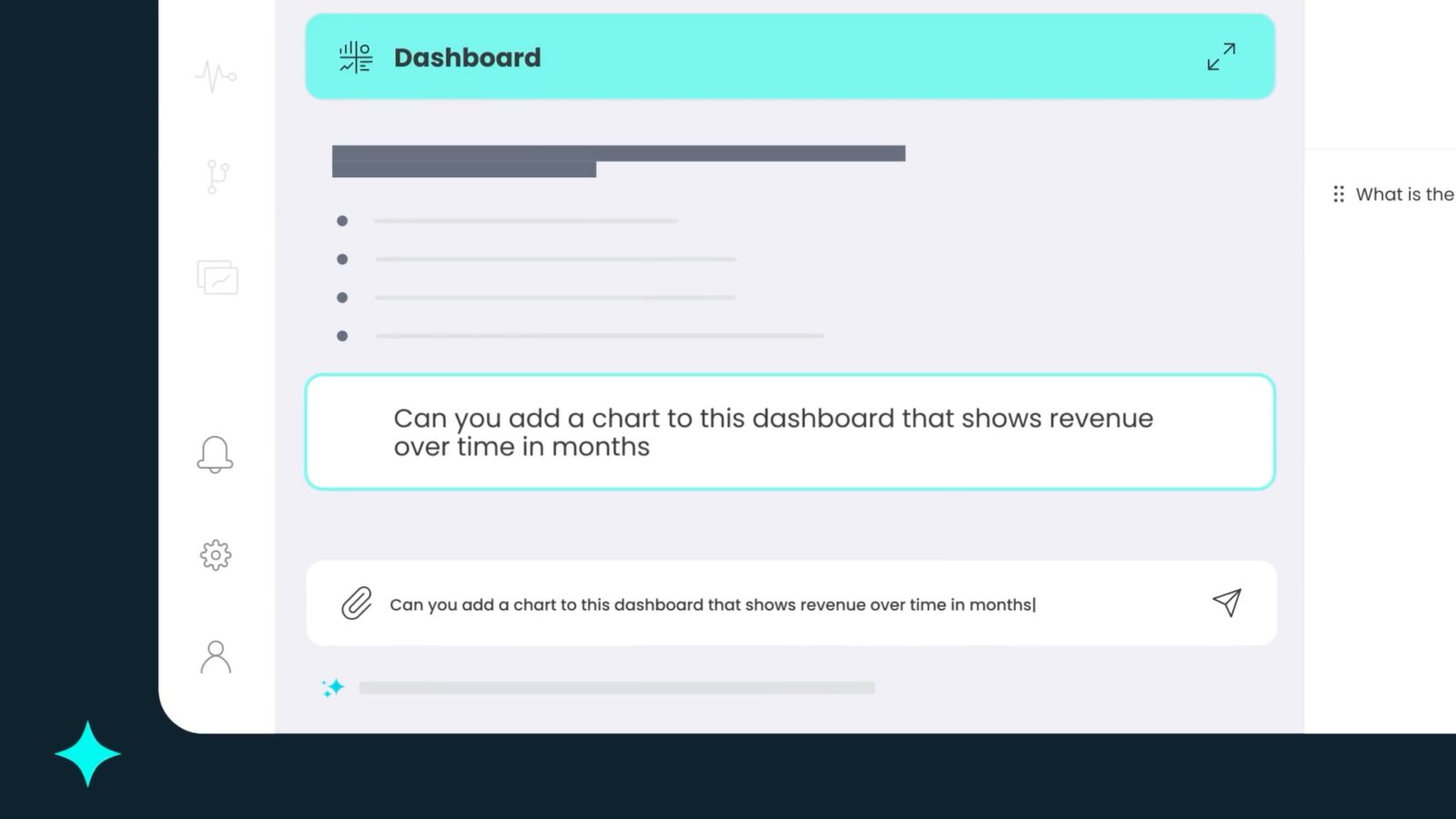
The distinction matters. A language model needs more than access to a table; it needs business definitions and permission boundaries. Sisense offers managed and bring-your-own model options. The ambition is to let someone ask a question in a familiar interface while the analytics platform supplies the authorized data and context.
In October 2026, the company described its next step as verification against known-good analytics. It scheduled that capability for November. The proposal is sensible: reuse the organization’s validated work to check new answers. A scheduled feature, however, is still a scheduled feature.
05Trust travels through the connectors
Connecting systems also concentrates responsibility. After an April 2024 security incident, CISA urged Sisense customers to reset potentially exposed credentials and secrets. Sisense said its investigation identified incremental configuration backups belonging to certain Fusion Managed Cloud customers; it said on-premises Fusion and Periscope information was unaffected.
The company reported rotating credentials, adding monitoring, and tightening firewall access. In April 2026, it announced ISO/IEC 42001 certification for AI management. Certification addresses management processes; buyers still need to examine their deployment, access rules, and operational controls.
There are product boundaries, too. Sisense’s Compose SDK documentation says custom dashboard scripts and most add-ons do not transfer directly into that environment. An existing dashboard can therefore require redevelopment. Teams with a small reporting need and little engineering capacity should weigh that work carefully.
The transferable lesson is specific. Find the report that keeps dragging engineers away from their work. Agree on its definitions. Put the answer where customers make the decision. Measure whether requests disappear. Barrios started with inconsistent workbooks; Bigtincan started with a queue. Both make a better starting point than another dashboard nobody asked for.