Queen of Shitty Robots · Founder, Yetch Studio
She started by building a robot that couldn't brush teeth without drawing blood. She ended up with a product line in the MoMA Design Store. This is not a redemption arc. This was always the plan.
The toothbrush helmet is still the reference point. Not because it worked - it absolutely did not - but because Simone Giertz posted it on YouTube in August 2015, and the robot smearing toothpaste across her face in a cheerful arc of mechanical failure somehow said something true about creativity that years of motivational content had not managed to convey. You learn nothing from succeeding on the first try. You learn everything from watching a robot malfunction directly into your mouth.
Simone Luna Louise Söderlund Giertz was born on November 1, 1990, in Stockholm, Sweden. Her mother is a television host specializing in reality TV. Her father is a television producer. She is the youngest of three children, and a direct descendant of Lars Magnus Ericsson, the man who founded the Ericsson telecommunications company. Whatever inherited instinct for building systems she carries, she routes it differently.
She dropped out of physics at KTH Royal Institute of Technology after one year - not because she wasn't capable, but because the gap between what she wanted to make and what she was being taught to understand felt too wide. She studied advertising at Hyper Island, the Stockholm trade school, in 2013. An internship at Punch Through Design in San Francisco introduced her to Arduino microcontrollers. She was, in the most literal sense, self-taught.
The YouTube channel she created in 2013 didn't find its voice immediately. The first viral robot video came in 2015, and it came wearing a helmet. She called herself the "Queen of Shitty Robots" - not as a self-deprecating apology, but as a declared position. The robots were deliberately, philosophically, comically bad. A breakfast machine that flung food. A lipstick robot that applied lipstick mostly to her chin. A hair-cutting drone that achieved results that could best be described as "aggressive." The point was never the output. The point was what happened when you stopped needing the output to be good.
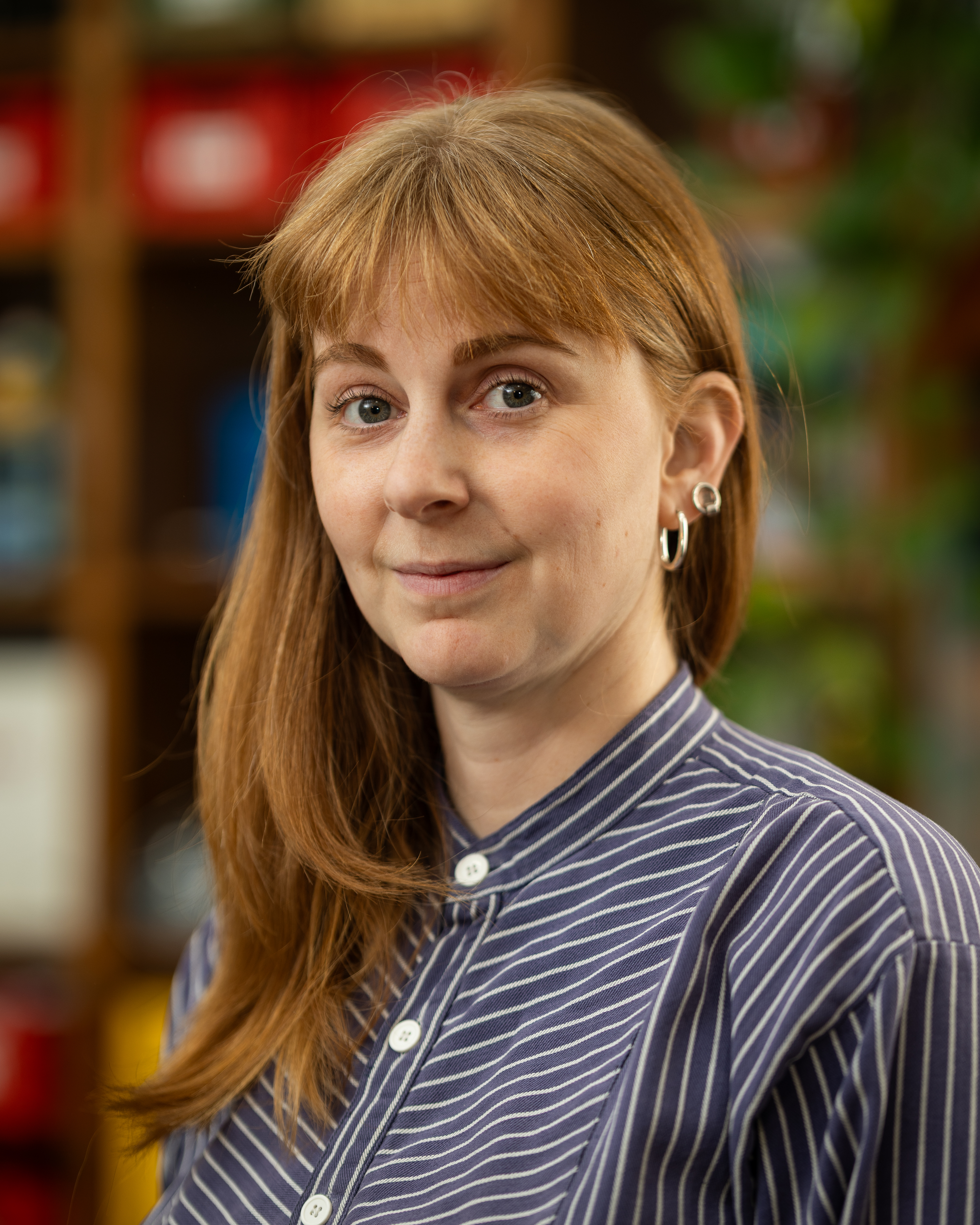
I'm a recovering self-deprecator. It's such a defense mechanism on the internet - the way you survive being an online creator is beating everyone to the joke.
- Simone GiertzBy 2016, she had joined Adam Savage's Tested.com project, moved to San Francisco, and appeared on The Late Show with Stephen Colbert. In 2017, Google sponsored an astronaut training video series. The "shitty robots" were working - in the specific sense that they were generating attention, revenue, and a growing community of people who found something liberating in watching someone make things that didn't work.
In April 2018, Giertz was diagnosed with a benign brain tumor - a meningioma she named "Brian." She had surgery in May 2018. She documented this publicly, with the same straight-faced honesty she brought to everything else. The tumor, the surgery, the recovery - all of it on camera, all of it processed in real time with her audience. She delivered a TED Talk the same year: "Why You Should Make Useless Things," which became one of the more-watched talks from that cohort. Her argument: that making something without any pressure to succeed is the fastest path to creative freedom.
In 2019, after completing radiation therapy, she unveiled Truckla - a Tesla Model 3 she and collaborators had converted into a functioning pickup truck. The video documenting the build ran 31 minutes. It received 8 million views in 10 days. This was before Tesla announced the Cybertruck. The media coverage was extensive. The Wired cover that December showed her standing next to the truck, looking unsurprised that this had happened.
That same year, she launched the Every Day Calendar on Kickstarter. It is a habit-tracking wall calendar with a front panel made from printed circuit board, 24-carat gold-plated touch pads, and a sustainable bamboo frame. It is, deliberately, not internet-connected. The campaign raised $593,352 - more than eleven times the original goal. The calendar was subsequently stocked by the MoMA Design Store. The Queen of Shitty Robots had made something with genuine craft. Nobody was surprised. Everyone was delighted.
In 2022, she launched Yetch Studio as a standalone product design company. The name comes from the way her last name, Giertz, is actually pronounced. The shop expanded to include the Coat Hinger, the Incomplete White Puzzle, and other objects that sit in the specific register of useful-but-strange that Giertz has always inhabited. Each product carries that particular sensibility: it solves something real, but with a particular quality of attention that most product design misses.
In 2026, she launched the Laundry Chair on Kickstarter. The concept is a solid hardwood accent chair with a circular clothing rail mounted on a ball-bearing swivel - specifically designed for the pile of clothes that are too worn for the drawer but too clean for the laundry basket. The campaign raised $966,883 from 997 backers against a $50,000 goal, before the campaign had even closed. Delivery is estimated for November 2026.
Solid hardwood, 100% cotton corduroy upholstery, ball-bearing swivel rail. For the garments that are not clean enough for the closet and not dirty enough for the hamper. Every home already has this chair. Now it's intentional.
The true beauty of making useless things is this acknowledgment that you don't always know what the best answer is. It turns off that voice in your head that tells you that you know exactly how the world works.
TED Talk, 2018I believe enthusiasm is a more potent fuel than duty.
Lex Fridman Podcast #372Being good at something is overrated.
InterviewI describe myself as crude and wholesome - I can be very crude, but I also try really hard to be a good person.
Lex Fridman Podcast #372Simone Giertz is a direct descendant of Lars Magnus Ericsson, who founded the Ericsson telecommunications company. The man who helped wire the world's phone networks has a great-great-granddaughter building robots that don't work on purpose.
A device she built that gives you a quarter, pats you on the shoulder, and says "Proud of you." Created as a long-running joke with her friend Daniel Beauchamp. It remains on her workshop wall. This is, depending on your mood, either a joke or the most useful machine she has ever made.
At TED 2018, Giertz wore a homemade "human solar system" contraption on her body while speaking - specifically built to conceal the fact that her hands were trembling while holding a water glass on stage. She hid the anxiety with an invention. Of course she did.
While working in journalism, Giertz was removed from an interview with a Swedish MMA fighter after asking a question that had been blacklisted - specifically about the fighter's violent criminal past. The robot-building career followed shortly after.
In April 2018, Giertz was diagnosed with a benign meningioma. She named it Brian. She documented the diagnosis, surgery, and recovery publicly. The experience of having to redefine what "good" looked like during recovery - being gentler, less performative - changed how she approached her own standards and those of people around her.
Giertz adopted Scraps - a West Highland White Terrier with three legs - in 2019 or 2020. In 2024, she built Scraps a motorized Lego Technic skateboard, because of course she did. The video has been viewed by people who needed to see a three-legged dog on a tiny Lego skateboard, which is most people.