Sheldon Adelson was twelve when he borrowed $200 from an uncle to buy the right to sell newspapers on a Boston street corner. It was a small transaction with a useful distinction: he was buying access to the customers, as well as something to sell them. Decades later, the buildings would be considerably larger. The question of where people gathered would remain remarkably familiar.
Born in Boston on August 4, 1933, he grew up in Dorchester, the son of Arthur and Sarah Adelson. His father drove a taxi. Money was scarce. At sixteen, Sheldon was operating candy vending machines. He attended City College of New York without graduating and served in the US Army. The polished biography of a corporate founder usually hurries past this sort of beginning. Adelson's early career offers good reasons to linger.
He sold toiletries and advertising, tried windshield de-icers, brokered mortgages and developed property. There were tour packages, too. His eventual business would bring together several of these apparently disconnected experiences: arranging travel, finding space, financing construction and getting people through the door. The casino came relatively late. By then, he had spent years learning how many other purchases could accompany a journey.
The computer business, without the computer
In 1979, Adelson and his partners launched COMDEX, a trade show for the computer industry. He was forty-six. The personal computer was opening up a commercial world that needed somewhere to meet. Manufacturers wanted dealers; dealers wanted products; everybody needed hotel rooms. Adelson could sell the gathering without inventing the machines on display. An entrepreneur could participate in the computer boom by being very good at floor space.
COMDEX grew into a fixture of the technology calendar. The attraction was cumulative: more exhibitors meant more reasons to attend, and more visitors meant more reasons to exhibit. A successful show produced its own gravitational pull. For Adelson, it also exposed a practical problem. A convention organizer depending on somebody else's facilities could find the timetable, the available space and the terms of business outside his control.
He explained his entry into casinos through precisely that problem. He wanted a convention center and a neighboring hotel whose rooms and meeting facilities worked together. Buying the Sands gave him land and accommodation in one transaction. The company that became Las Vegas Sands traces its predecessor to April 1988. In 1995, the COMDEX business was sold to SoftBank. By then, the trade-show organizer had acquired a much more permanent interest in the address.
trade show02Fill the
hotel rooms03Give guests
reasons to stay
A schematic of the convention-centered resort idea.
A honeymoon with building plans
The old Sands had an excellent past. Frank Sinatra and the Rat Pack belonged to its mythology. Adelson had other uses for the site. In 1996, the hotel was demolished to make room for The Venetian, which opened in May 1999. Las Vegas is unusually comfortable with the idea that yesterday's landmark might be tomorrow's construction schedule. Even by local standards, this was an emphatic edit.
Venice entered the plans through his marriage to Miriam in 1991 and their honeymoon in the Italian city. The resulting resort transported canals and Venetian architectural references into Nevada. The romantic souvenir required rather more luggage than usual. Behind the scenery sat a commercial proposition that was less whimsical: convention visitors during the working week, leisure visitors at the weekend, and plenty to buy between checking in and checking out.
Adelson was confident enough to explain that proposition before the doors opened. In early 1999, he took reporters around the construction site and defended ambitious room-rate projections. He also faced a confrontation with the Culinary Union. The Venetian's arrival was accompanied by argument over labor and money as well as anticipation of its architecture. The gondolas could provide atmosphere; they could hardly settle those disputes.
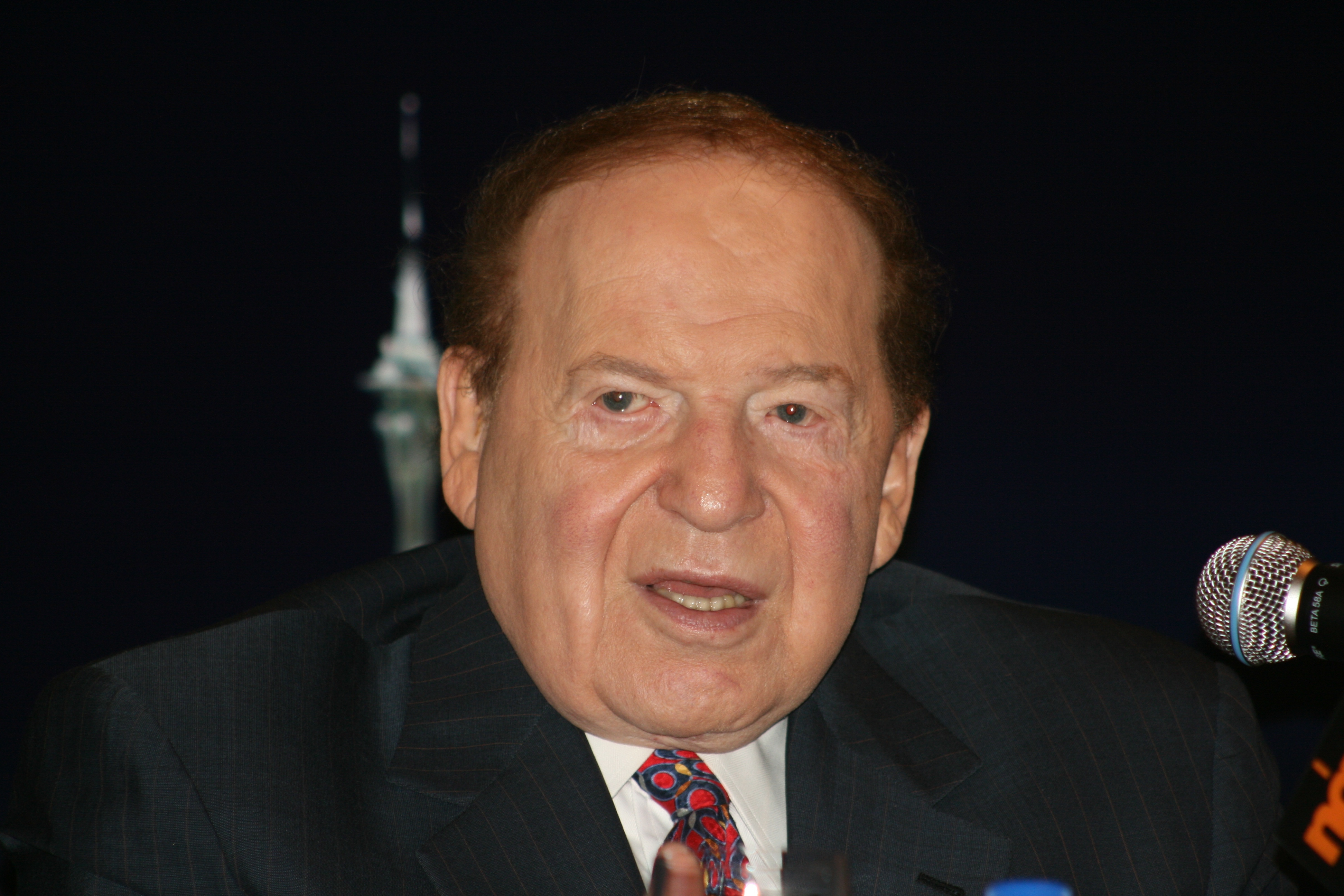

The Strip acquires a passport
The expansion into Asia gave the resort idea a different scale and setting. Sands Macao opened in May 2004. The Venetian Macao followed in August 2007 on Cotai, the reclaimed area between Taipa and Coloane. Adelson promoted an entire cluster of resorts there, borrowing the Strip's logic of proximity. A visitor arriving for one destination might find several others close enough to become part of the same trip.
Marina Bay Sands began opening in Singapore in April 2010. Its three towers and elevated SkyPark gave the company a silhouette quite unlike the Venetian replicas. The underlying combination remained recognizable: accommodation, meetings, shops, restaurants, entertainment and gaming. The buildings could look different because the customers were being offered a related set of reasons to stay. His business was becoming international without depending on one architectural costume.
None of this made expansion painless. The financial crisis put Sands under severe pressure as large projects consumed capital. Construction ambitions and the availability of money had stopped moving at the same speed. Adelson helped support the company with family funds, while refinancing and the listing of Sands China contributed to its recovery. The episode belongs beside the openings. Large commitments magnified the consequences when conditions changed.
He could still find a joke in the arithmetic of wealth. Asked about his reversal in fortune, he said: “So I lost $25 billion. I started out with zero.” The line had the timing of a shrug. Behind it lay a business with creditors, employees and unfinished work, none of whom could pay their bills with timing alone.
- 1999The Venetian
Las Vegas · May - 2007The Venetian Macao
Macau · August - 2010Marina Bay Sands
Singapore · April
A donor who expected an argument
Adelson's political spending made him familiar to people who had never visited one of his properties. He and Miriam backed Republican candidates and committees, including efforts supporting Newt Gingrich, Mitt Romney and Donald Trump. Their donations made Las Vegas an important stop for politicians seeking support. A resort could accommodate a conference; its owner could become another reason to make the trip.
His commitments were specific. Support for Israel occupied a central place in his public life, and he backed Benjamin Netanyahu. He also opposed online gambling, a position that brought him into disagreement with parts of his own industry. In interviews, he defended his judgment with the confidence of somebody accustomed to making consequential decisions. Agreement was plainly welcome. The absence of it was seldom enough to end his interest.
The sums matter because they measure access as well as conviction. By January 2021, Sheldon and Miriam had given more than $525 million to federal campaigns and committees since the 2010 election cycle. Supporters saw a donor advancing causes he believed in. Critics saw wealth buying an exceptional place in democratic politics. Both descriptions followed from the same public fact: his resources allowed him to participate at a scale unavailable to most voters.
Back in the newspaper business
There is an irresistible loop in a newspaper seller becoming a newspaper owner, although the second job brings different responsibilities. Israel Hayom, the free Israeli daily he founded in 2007, became associated with support for Netanyahu. In Nevada, his family acquired the Las Vegas Review-Journal in 2015 for $140 million. Distribution had remained interesting to him. So had the possibility of reaching a crowd.
The Nevada purchase drew scrutiny because the buyers' identity was initially concealed behind a company, and the newspaper's own reporters worked to establish who owned it. Questions also arose about assignments to monitor judges, including one overseeing litigation involving Adelson. Those circumstances made ownership a story in itself. A publisher's money can support a newsroom while the publisher's other interests give that newsroom especially difficult work.
This part of his career complicates the pleasing symmetry of the Boston beginning. Selling a paper gives the customer a product. Owning one gives the proprietor influence over an institution that scrutinizes other people. Adelson's return to newspapers therefore adds a question to the entrepreneurial story: what happens when the subject of public attention also owns one of the places where that attention is organized?
Miriam, memory and the price of a ticket
His marriage to Miriam connected family life, philanthropy and a shared commitment to Israel. The couple supported Birthright Israel, which provides educational trips for young Jewish adults. For Sheldon, the purpose had a family dimension: his parents had wanted to visit Israel and never made the journey. Helping others go gave a personal disappointment a practical response, paid for one traveler at a time.
At Yad Vashem, their giving supported a different kind of continuity. They donated $25 million in 2006 and another $25 million in 2011, with the later gift supporting educational seminars and teacher training. The intended chain was straightforward: educators would bring what they learned back to their students. These projects put travel and education beside the more familiar images of casinos and campaign checks.
He could also be unexpectedly dry about the profession that made him famous. Asked in a 2009 interview whether he ever gambled, he answered, “No.” He acknowledged having played a little before entering the business. The distinction fits a career spent arranging the surroundings of other people's choices. Away from gaming, he appeared on a 2006 television interview to discuss entrepreneurship as a hobby. Some hobbies require a spare room. His required convention halls.
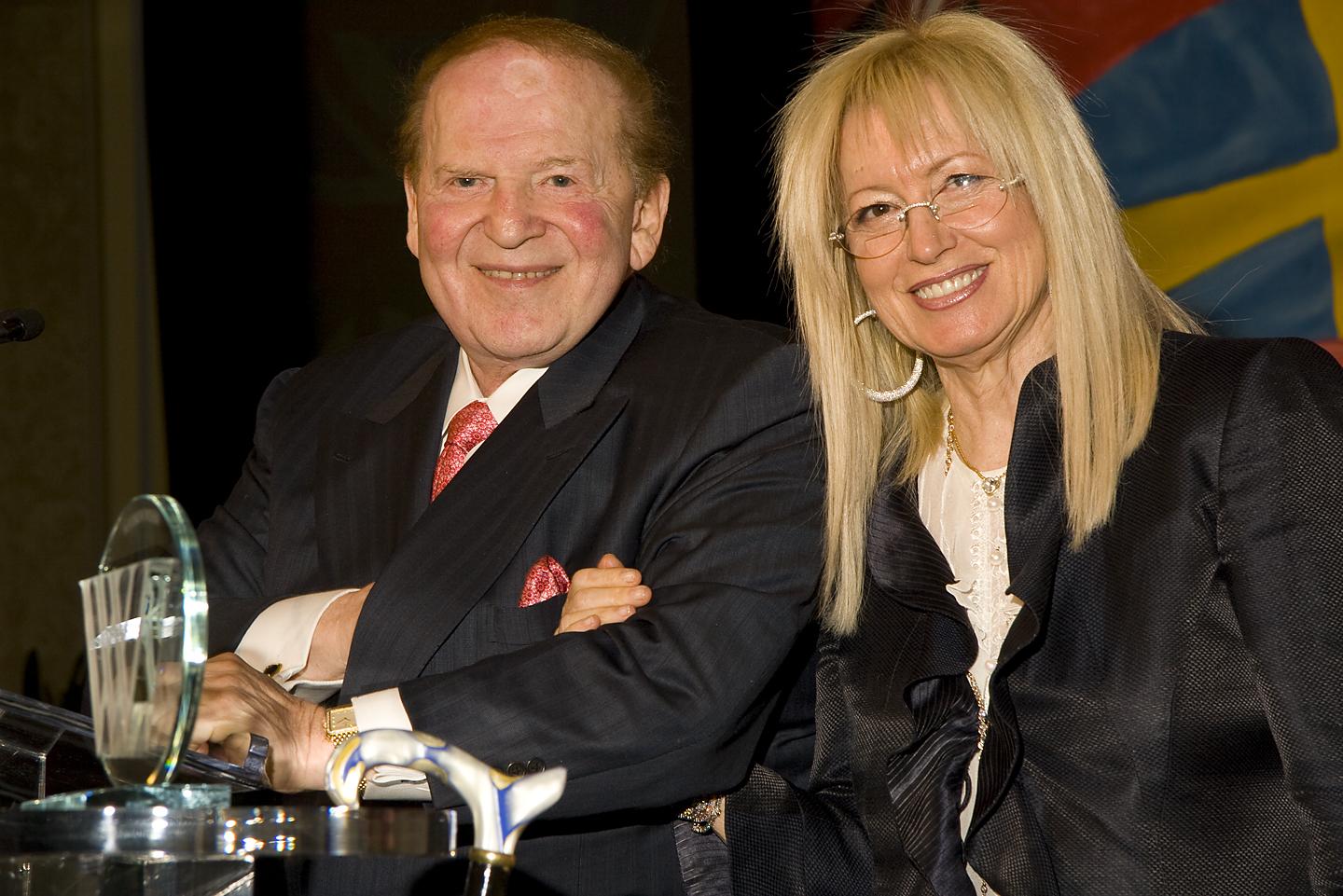

The company keeps moving
“Team Member Number One”
Sheldon G. Adelson’s description of himself
Adelson died on January 11, 2021, aged eighty-seven. He had liked to call himself “Team Member Number One.” The designation compressed a founder's attachment to his company into something that might fit on a badge. It also left a practical question for the employees and executives who remained: how much of a founder's way of working can survive the founder?
The company soon supplied one visible answer through change. In March 2021, Sands agreed to sell its Las Vegas properties and operations for approximately $6.25 billion, while emphasizing investment in Asia and opportunities in new markets. The resort in which Adelson's convention idea had taken shape could pass to other owners. The company could carry on pursuing that idea elsewhere.
In April 2026, chairman and chief executive Patrick Dumont described Adelson's wish to create an enterprise that would outlive its founding group. Another account of the founder is still ahead: the posthumous memoir The Bigger You Think, assembled from recorded interviews, is listed for June 15, 2027, with a foreword by Miriam. For now, his career can be followed through the places where people continue to assemble. It began with a small claim on a Boston corner and grew into a much larger claim on where the crowd would go next.
Interviews, institutions & the next chapter
Continue with the people, places and conversations behind this life.
- Watch: Adelson on entrepreneurship (2006)
- YouTube: Robert Goldstein remembers Adelson (2023)
- Read: the 2009 conversation
- Read: his 2012 political interview
- Visit: Adelson Family Foundation
- Explore: The Bigger You Think, forthcoming in 2027
- Read: Sands leadership on his legacy (2026)
- Visit: Las Vegas Sands