Shari Gold gave herself 90 days. The office was the second bedroom of her Orange County condo. There were no clients waiting to be impressed, and the resources were limited. In 2001, after working inside established companies, she was starting an agency of her own. A spare bedroom is an economical headquarters. It is also an unusually direct way to discover whether anyone wants what you are selling.
Twenty-five years later, GOLD PR & Social Media still carries her name. The business has acquired offices, clients and a much longer list of services. Gold remains its founder and CEO. Yet the interesting question in her career is what happens after a founder survives the first deadline. How do you build something substantial while keeping the close involvement that made going out on your own attractive?
Her answers are scattered across decisions about clients, employees and the kind of company she wants to run. There is a growth story here, certainly. There is also a story about staying close enough to the work to recognize when it needs changing.
Before the spare bedroom, a wall of water
Consider a different beginning: the Los Angeles Auto Show, January 2000. Mazda was preparing to introduce its 2001 Tribute sport utility vehicle. The announcement promised a reveal through a wall of water, with material for television crews and still photographers. Gold was listed as a Mazda North American Operations contact. This was a launch with an actual splash, conveniently supplied.
The details around that spectacle were thoroughly practical. There were media days, a scheduled reveal, named executives, footage available for broadcasters, and an offer to accommodate early morning or evening coverage. A striking picture needed a supporting apparatus. Someone had to make it possible for journalists to arrive, film, ask questions and leave with usable material.
That early episode gives her later career a useful context. Corporate communications places imagination beside logistics. A launch may have a theatrical entrance, but it still has a time slot. The product must be understood. The company must be ready to answer for it. Attention has a calendar, and the calendar is unforgiving.
Gold's corporate background also includes American Suzuki and Microsoft. Her career crossed automotive and technology before she founded the agency. Working inside a company meant seeing communications from the buyer's side: the priorities competing for a budget, the people who must agree, the difference between an appealing proposal and something a business can actually use.
- Before 2001Corporate communications roles across Suzuki, Mazda and Microsoft.
- 2001A new agency begins in an Orange County condo.
- 2018A New York office and an appearance on the Inc. 5000.
- 2023Gold points prospective clients toward employee retention.
Ninety days to earn the next ninety
The founding conditions were plain: no clients, limited resources, a deadline. The agency began in 2001, and Gold's account of those first months keeps the emphasis on finding business. There is something useful about that lack of ornament. Before an agency can offer a strategy for someone else's growth, it has to persuade someone to hire it.
Her previous employers supplied experience, but an employer's name and a founder's name do different jobs. One comes with an existing organization. The other goes on the door of a business that must establish its own record. Naming the firm GOLD PR made the connection between the person and the promise exceptionally easy to follow.
The 90-day deadline belongs at the beginning of the story, rather than in a collection of entrepreneurial slogans. It describes a concrete constraint. It also makes the subsequent years more interesting. Survival requires immediate work; an enduring agency needs reasons for clients to return after the urgent assignment has ended.
By 2018, the business had reached a very different scale. Its growth had become visible outside the client relationships that sustained it. The condo was now an origin story, one that could be told alongside office expansion and a national business ranking.
The numbers arrived with dates attached
In July 2018, GOLD PR entered an Orange County ranking of women-owned businesses at number 51. The company reported $14.2 million in revenue, an increase of 41 percent. Its client base had broadened beyond its earlier automotive emphasis, with consumer goods among the areas contributing to growth. Gold also reported that a New York office had opened the previous month.
Then came the Inc. 5000 announcement in August. GOLD PR ranked number 3,172, reporting three-year revenue growth of 124 percent. These are historical measures of a particular period, and they describe a business that had moved far beyond a founder's first experiment.
Gold attributed the progress to campaigns evaluated against results, additional work from existing relationships, and new business. Her response to the ranking also gave credit to employees and clients. That allocation matters in an agency: the founder's name may appear above the entrance, while much of the value is produced by people whose names never appear on the sign.
A revenue number can tell us that a company grew. It cannot, by itself, tell us how working there feels, how often an account changes hands, or whether a client can reach the person who made the original promise. Those questions become more pressing as a boutique expands. Gold would later offer a particularly practical way to investigate them.
Ask who is still there
In January 2023, her advice to anyone choosing an agency partner was brief: “Ask about employee retention rate.” She reported that 65 percent of her team had been with her for at least five years. She connected that continuity to the culture of the company and to the investment clients make in a working relationship.
“Ask about employee retention rate.”
Shari Gold, on choosing an agency partner, 2023
It is a revealing question to recommend. An agency pitch is designed to show a prospective client the attractive parts. Retention invites a look at what happens between pitches. Who stays? Who carries the history of an account? Who remembers why a decision was made when the conversation comes around again?
A percentage needs its date. Her 65 percent figure describes the team she was discussing in 2023. The more durable point is the criterion itself. Gold was directing buyers toward the people doing the work and the conditions that encourage them to keep doing it.
For a business selling expertise, familiarity can have practical value. A returning colleague already knows the background. A returning client can begin further into the conversation. Repetition is usually treated as a creative hazard; in a working relationship, some repetition is simply how trust becomes usable.
Making room without disappearing
Gold has spoken about women wanting greater control over their professional and personal futures. In 2018, she connected the growth of female entrepreneurship with having more examples of women building businesses successfully. Her explanation allowed ambition and personal choice to occupy the same sentence.
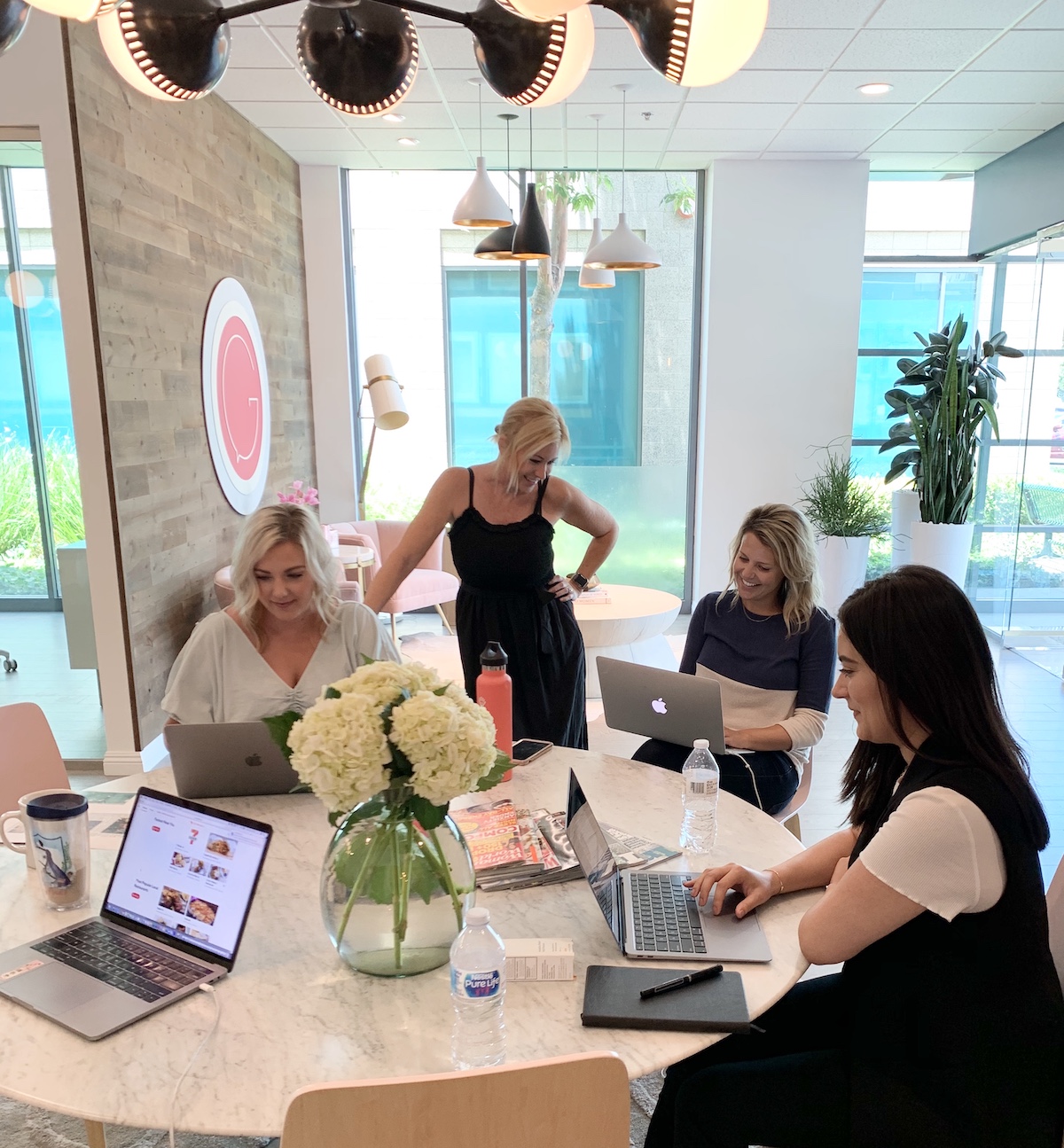
There is a practical consequence to that outlook. Her leadership work includes mentoring women whose careers have continued into senior positions and entrepreneurship. She describes building a workplace that accommodates professional ambition alongside life outside the agency. For a founder, those choices become part of the institution other people experience.
Gold is a mother of three and regards her children as her greatest achievement. Travel and time outdoors also figure in her life away from work. These details supply a different measure of a career from revenue and office addresses. A company can occupy decades without becoming the only thing those decades contain.
That distinction helps explain why the size of the agency remains a deliberate subject. Growth creates choices about how a founder spends her time, how much clients see of senior people, and what employees can expect. A business can become larger while its owner keeps asking what kind of daily life it should make possible.
A boutique with more tools
The contemporary firm covers media relations, corporate communications, social strategy, creator marketing, digital advertising and events. Its services also include AI search discoverability, reflecting another change in how people encounter companies. Gold's original profession has acquired plenty of new places to put a message.
The breadth raises a familiar management problem: a client may encounter a brand through several channels, while the people managing those channels work separately. GOLD PR's stated approach brings those activities into a coordinated program. Its current client directory spans businesses including Microsoft, Whole Foods Market, Lenzing and the automotive trade organization SEMA.
The agency lists a presence in Nashville, Los Angeles and Orange County, and New York. Geography has expanded, too. Yet its operating proposition remains a boutique with senior people involved in the work. The interesting tension in Gold's career lies there: adding capabilities and reach while trying to preserve the accessibility that makes a smaller firm attractive.
She has put her starting belief simply: “the strongest brands start with a clear reason to exist.” Apply that question to her own business and the answer takes a fairly human shape. A founder wanted to build an agency, found clients, grew a team, and kept making decisions about the relationships that would hold it together. The first deadline was 90 days. The decisions after it have filled 25 years.
Follow the work
More from Shari Gold and GOLD PR.