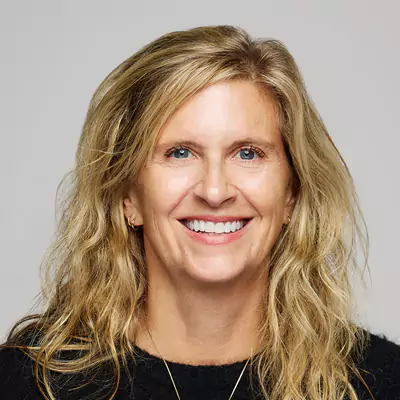
The Sidekick wasn't just a phone. It was a cultural object - the device that Paris Hilton carried, that Jay-Z endorsed, that every teenager wanted and nobody's parents understood. When Danger Inc. shipped it in 2002, someone had to explain to the world why this chunky keyboard-sliding gadget was actually the future. That was Shari Doherty's job - and she did it so well that "T-Mobile Sidekick launch team" became one of the quietest but most consequential line items in Silicon Valley marketing history.
She started, improbably, in politics. Clinton/Gore '96. Media consulting, producing ads, running the communications machinery of a presidential campaign before she was old enough to appreciate what a strange place that is to learn storytelling. Then Lucasfilm. Then Danger Inc. Each pivot looks obvious in retrospect. In the moment, each one was a bet on what was coming next - and she kept winning those bets.
"My new adventure: going all-in on web3 and crypto."
- Shari Doherty, announcing her move to a16z crypto, March 2022At Google, she ran global communications for Android and Google Play. Not from the start - but from early enough that she was there when Android crossed a billion active users, watching the ecosystem she'd helped narrate become the dominant mobile operating system on earth. There's a particular skill in communicating at that scale: making something vast still feel human. That skill, sharpened at Google, became the foundation for everything that followed.
Uber in the mid-2010s was one of the most chaotic communications environments in tech history. Shari built the product and consumer communications teams there - which means she was constructing infrastructure under pressure, in a company that moved fast, broke things, and occasionally broke headlines. She didn't just survive that environment; she built something lasting inside it.
Shari holds a BA in History and Latin American Studies from Colgate University - not computer science, not an MBA. Her superpower is reading culture, not code. That's exactly the lens the crypto industry needs to reach mainstream audiences.
YesPress Editorial AnalysisThe stint at Atomico - the London-based VC firm founded by Skype co-founder Niklas Zennstrom - was a pivot into venture, years before the a16z move. She was a Marketing Partner there, working directly with European founders who were building in a less attention-saturated ecosystem. It taught her how marketing at a fund level differs from marketing at a company level: you're building a brand that attracts the best builders before they have investors, not a brand that attracts the most customers after you've already won.
Essential, Andy Rubin's consumer electronics startup, gave her another data point on the high-stakes consumer hardware launch. Amazon Smart Home added the discipline of a large-company communications function. Then, in March 2022, she announced the move that - in retrospect - made complete sense for someone who'd spent two decades chasing platform shifts: she went all-in on crypto, joining a16z as its Marketing Partner for Crypto.
At a16z crypto, she leads brand and marketing for one of the most consequential investment vehicles in the web3 ecosystem - the firm that backed Coinbase, Uniswap, OpenSea, and dozens of other foundational crypto companies. Her job is to help a16z's portfolio founders tell their stories to a world that is still largely confused about what blockchain technology actually means for everyday life. It's the hardest version of the problem she's been solving since 2002.
The summer 2024 book picks are instructive. Two titles about athletic endurance psychology - "Endure" by Alex Hutchinson and "How Bad Do You Want It?" by Matt Fitzgerald. Not trend reports. Not marketing playbooks. Books about the mental architecture of people who keep going when the work is slow and the finish line is far away. That's the reading list of someone who understands that platform shifts take longer than the headlines suggest - and who plans to be around when this one arrives.