In 2002, the road to the future was moving at 256 kilobits per second. Charter Communications was selling an entry-level broadband plan for about $35 a month, and the business question was wonderfully unromantic: would a cheaper tier tempt dial-up customers to switch? Shahid Butt, then the cable company's vice president of marketing for new products and channels, said roughly half of its one million internet customers chose the lowest-priced package. His defense of the offer was clean and practical. Put broadband near the price of dial-up, he argued, and more people would trade up.
It is a small quote from an era of whining modems, but it contains the operating logic that has followed Butt through more than two decades in media technology. The machine may be impressive. The customer is still standing at the threshold. Lower the threshold, explain the reason to cross it, and an engineering achievement becomes a market.
Today Butt works from Dubai as Senior Vice President for Türkiye and MENA and Chief Marketing Officer at INVIDI Technologies. The geography is broader, the systems are stranger and the bandwidth is no longer counted in kilobits. Yet his work still lives at that threshold. INVIDI builds the machinery that lets television distributors and advertisers aim different commercials at different households, coordinate campaigns across screens and measure what happened. Butt's dual brief is to explain that machinery and develop the markets in which it must work.
“If you offer them a price point that's comparable to dial-up, you get more people to trade up.”Shahid Butt on Charter's entry broadband tier, 2002
The screen escapes the living room
Four years after the Charter pricing debate, Butt was vice president of broadband entertainment at AT&T. The company and MobiTV introduced AT&T Broadband TV, a $19.99 monthly service with 20 live and made-for-broadband channels and another 20 promised soon after. It worked over any broadband connection, not only AT&T's. In 2006, before a grid of streaming apps became the wallpaper of modern life, television on a personal computer still required explanation.
Butt called it AT&T's first television service offered on broadband. The larger strategy was to meet viewers on three screens: the mobile phone, the television at home and the PC. That list now sounds charmingly incomplete. It predates the tablet, the smart-TV home screen and the household debate over which remote controls which box. But the essential move was already visible. Television was loosening its attachment to a single piece of furniture.
The interesting part of Butt's résumé is not that he predicted every object in the contemporary living room. Nobody did. It is that his jobs repeatedly appeared where an established distribution system met a new consumer habit. At Charter, the hurdle was price. At AT&T, it was place. Later, at GCI in Alaska, it was reach and speed.
Alaska, at a gigabit
By 2014, Butt was a senior marketing director at GCI. The operator was extending TiVo service into communities including Sitka, Homer, Seward, Petersburg, Wrangell, Cordova and Valdez. Ninety percent of its video customers could get TiVo, and Butt said the plan was to reach everyone by the end of that year, if not sooner. The product joined traditional channels with recording, apps and viewing across devices. Once again, the television was becoming less like a box and more like a service.
At the same time, GCI was raising broadband speeds. Its re:D plan reached 250 megabits per second in several markets while the company prepared a one-gigabit service for Anchorage. The future offering was called fiber re:D. Butt's project description invited customers to “re:THINK, re:CREATE and re:INVENT” what they could do with the internet. The punctuation was slightly theatrical, as product names from that decade often were. The underlying bet was sober: demand could help determine where the network expanded.
INVIDI's executive biography credits Butt with creating the brand and launch strategy for the first citywide one-gigabit service in the United States. Marketing can sound decorative when engineers are bonding downstream channels and installing physical infrastructure. Here it was part of the deployment mechanism. A network needs demand; demand needs a promise people can repeat.
Broadband tiers, interactive television and video-on-demand meet mass-market adoption.
Live subscription television travels over broadband to the personal computer.
TiVo expands across Alaska while fiber re:D gives gigabit internet a consumer name.
Household-level advertising moves across broadcast, streaming and unconnected boxes.
Marketing the invisible
Butt's present category is harder to photograph than a fiber cable and less familiar than an app. Addressable television advertising is infrastructure beneath the program. Instead of every home watching the same channel receiving the same commercial, software can select an ad for a defined household segment. The difficult work includes decisioning, inventory management, campaign measurement, privacy controls and delivery across an untidy collection of satellite, terrestrial, cable, connected-TV and streaming systems.
The pitch to a viewer is fewer irrelevant interruptions. The pitch to an advertiser is precision and measurement. The pitch to a broadcaster or operator is more valuable inventory. Each audience needs a different sentence, while the underlying product must keep all three promises without turning the commercial break into a loading symbol.
This is why Butt's combination of product, sales and marketing experience matters. His public LinkedIn introduction places him at their intersection. A recommendation from a former colleague says that after he joined Grantham, organic online student enrollments tripled within six months. The same colleague described a boss who stood up for his team and allowed people to be empowered. Another recalled being pushed to reach a higher potential while still having fun. The comments supply a glimpse of management away from launch announcements: strategic, demanding, protective and apparently capable of enjoying the room.
The disconnected opportunity
The newest chapter contains a pleasing contradiction: programmatic advertising on set-top boxes that are not connected to the internet. INVIDI and Google announced a collaboration to bring Programmatic Guaranteed campaigns to those devices. India is the first large deployment market, with a broader rollout planned. Butt has put the potential audience at an estimated 400 million unconnected boxes across MENA, India and other global markets.
The phrase “unconnected set-top box” sounds like a relic waiting for replacement. In much of the world, it remains ordinary household infrastructure. Waiting for every box to come online would leave an enormous audience outside digital buying systems. INVIDI Bridge instead tries to make the installed base legible to Google Ad Manager and DV360 campaigns. It is the Charter lesson in a new costume: do not confuse the premium tier with the whole market.
“Broadcasters who understand the immense value of addressability can now finally reach viewers regardless of connectivity limitations.”Shahid Butt on the INVIDI and Google collaboration, 2026
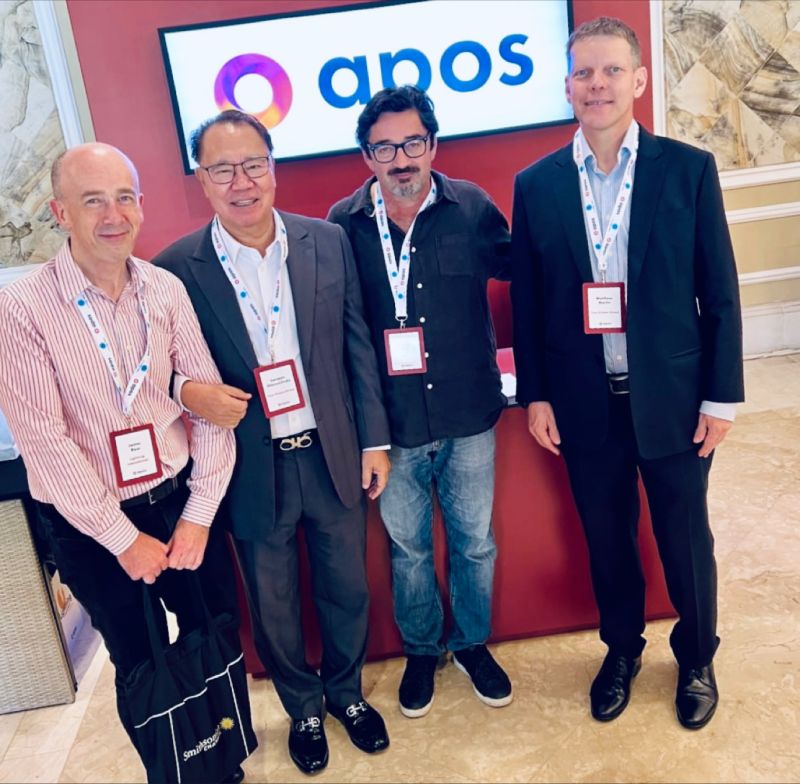
This work also puts Butt in an unusually wide conversation. He needs the attention of broadcasters, pay-TV operators, agencies, technology partners and advertisers across markets with different rules and infrastructure. His 2023 note from the APOS gathering in Bali was notably plain: it was good to connect with old friends and make new ones. Beneath an industry of elaborate acronyms, relationships remain stubbornly analog.
A career built on thresholds
There is a temptation to tell technology careers as a march of breakthroughs. Butt's is more useful as a sequence of thresholds. A customer deciding whether broadband is worth more than dial-up. A viewer wondering why television belongs on a laptop. An Alaskan household waiting for TiVo or faster internet. An advertiser trying to reach a home whose set-top box has never met the web.
At each threshold, adoption depends on more than technical possibility. It requires pricing, packaging, distribution, timing and a sentence clear enough to survive a sales meeting. Butt has moved among these jobs without pretending they are separate. His current two-part title makes the arrangement explicit: chief marketer for the company, business developer for a region.
The devices will keep changing. The PC that needed its television service explained in 2006 is now merely one screen among many. Gigabit internet, once dressed in futuristic typography, has become a checkbox on an apartment listing. Addressable TV may undergo the same conversion from specialist vocabulary to ordinary expectation. If it does, the clever machinery will vanish into the viewing experience. That disappearance is not a failure of marketing. It is often the proof that translation worked.
Shahid Butt's public career offers a compact playbook for operators working through a transition: find the people stranded by the current model; understand whether price, place, infrastructure or language is keeping them there; then build a bridge sturdy enough that nobody has to admire it. They can simply cross.