Company Dossier · Healthcare Marketplace
Sesame
The healthcare marketplace that puts the price tag where you can actually see it.
Healthcare, sold the way you'd buy anything else: price first, then checkout.
The healthcare marketplace that puts the price tag where you can actually see it.
Open Sesame's app and the first thing you see is a number. Not a network. Not a deductible. A price - $39 for a video visit, maybe $25 for a refill, a flat figure for a lab panel. You pick a provider the way you'd pick a hotel: by rating, availability and cost. You pay. You get care. Nobody mails you a surprise three weeks later. In a country where "How much will this cost?" is the one question the healthcare system refuses to answer, Sesame answers it on the home screen.
That is the whole company, really. Sesame is a direct-pay, cash-only marketplace for medical care - doctor visits, labs, imaging, prescriptions, dental, mental health and 40-some specialties - where roughly 2,500 providers list their own transparent prices and patients buy directly. No insurance card required. The press took to calling it "the Expedia for medical care," which is both flattering and slightly insulting to the doctors, but it sticks because it's accurate.
Sesame turned the most dreaded sentence in American medicine - "we'll bill you later" - into a checkout screen. - The premise, in one line
Healthcare in America is famously the only thing you buy without knowing the cost until after you've consumed it. Insurance was supposed to protect people from catastrophe. Somewhere along the way it became the layer that decides what you pay, where you go, and whether you can go at all - and then hides the math. For the roughly 30 million uninsured Americans, and the tens of millions more on high-deductible plans who are effectively paying cash anyway, the "system" is a maze with the prices torn off the shelves.
Sesame's founders looked at that and saw something almost embarrassingly simple: a missing marketplace. Every other industry figured out how to show a consumer a price, let them choose, and complete a transaction. Healthcare had simply declined to. The opportunity wasn't a new drug or a new device. It was a checkout button.
Health care is personal, and the best way to make it affordable is to strip away layers of bureaucracy and let patients and providers connect directly. - Sesame's founding thesis
The instigator was an unusual recruit to healthcare. David Goldhill spent a decade running the Game Show Network - not, on paper, the obvious résumé for medical reform. But in 2009 he wrote a cover story for The Atlantic, "How American Health Care Killed My Father," after losing his father to a hospital-acquired infection. The essay argued that a system insulated from consumers by insurance had lost the discipline that prices impose. He spent the next decade as a healthcare reform advocate and chair of The Leapfrog Group. Then, in 2018, he decided to stop writing about it and build the alternative.
He didn't do it alone. Michael Botta, a Harvard PhD in health economics and policy and a former McKinsey consultant, took on providers, partnerships and the clinical side. John Fontein, a Goldman Sachs alum who had built operations at GoEuro, ran the machine. An entertainment executive, an economist, and an operator - the kind of founding team a casting director would reject as too on-the-nose.
He watched the system bankrupt families with bills no one could see coming. So he built the company that prints the price first. - On David Goldhill's path from The Atlantic to Sesame
Former CEO of Game Show Network. Author of "How American Health Care Killed My Father." Chairs The Leapfrog Group.
Harvard PhD in health economics. Ex-McKinsey. Runs sales, partnerships and clinician relationships.
Ex-Goldman Sachs, former GM at GoEuro. The operational engine behind the marketplace.
Goldhill, Botta and Fontein launch a direct-pay marketplace to price care out in the open.
The first real-world test: can patients actually shop for a doctor by price?
Backed by GV and General Catalyst, Sesame scales its cash-pay model as telehealth demand surges.
Virgin Group, TeleSoft Partners and FMZ Ventures join. Total raised reaches ~$84.8M.
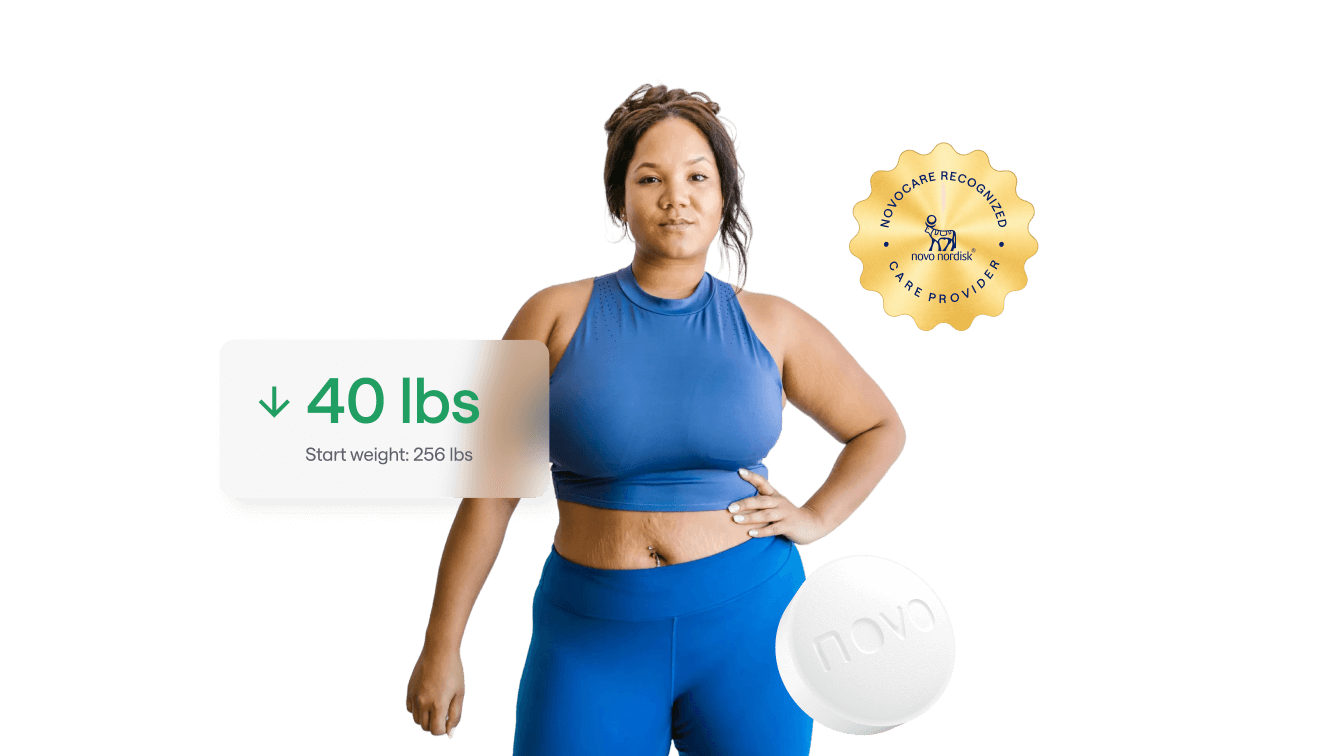
Sesame becomes Costco's telehealth partner, adding discounted care and GLP-1 access for members.
A $99/28-day subscription with Quest lab testing; Costco members get Wegovy/Ozempic at ~$349/month.
The mechanics are deliberately boring, which is the point. Providers set their own prices and list them. Patients browse, compare and book - a one-time visit starting around $39, or a Sesame Plus membership from about $19 that unlocks discounts on visits, labs, imaging and prescriptions. By cutting out the insurance billing apparatus, Sesame says it can deliver care at roughly half the typical cash price. The company markets it as "the first half-price, whole-you healthcare system."
Book a one-time telehealth or in-person appointment with the price shown upfront. No membership needed.
A membership that unlocks discounted visits, labs, imaging and prescription savings across the marketplace.
Cash-pay access to medications including GLP-1s, plus the "Success by Sesame" program with Quest lab testing.
Primary care, mental health, dental, dermatology and dozens of specialties - all at posted prices.
The radical feature isn't the technology. It's the decision to let providers compete on price - the one thing healthcare had quietly agreed never to do. - Why the marketplace works
Skeptics are right to ask whether "shop for healthcare" is a slogan or a business. A few data points argue for the latter. Sesame has grown from a single Kansas City pilot to a national marketplace with thousands of providers, attracted blue-chip investors, and signed the kind of partner - Costco - that doesn't lend its name to experiments. The company also reports being rated highly by both patients and providers, a rare double in an industry where one side usually resents the other.
Costco doesn't put its name on science projects. When it picked a telehealth partner, it picked the marketplace that shows the price. - On the Costco partnership
The Costco tie-up is the clearest signal. The warehouse club, whose entire brand is "we already checked, this is a fair price," made Sesame its official telehealth partner - extending discounted outpatient care and, for a stretch, GLP-1 weight-loss medications to members. Two companies obsessed with stripping out markup found each other, which is either a coincidence or exactly the point.
It would be easy to file Sesame under "coupons for doctors." That misreads it. The mission isn't to make care cheaper on the margin; it's to rebuild the transaction so that price exists at all. When a patient can see what something costs and choose accordingly, providers have a reason to compete - on quality, on access, and on the number nobody used to publish. The discount is a symptom. The market is the medicine.
There's a quiet political bet underneath, too. Sesame doesn't wait for insurers, employers or Congress to fix the system. It routes around them. For the uninsured and the under-insured, that's not a philosophical stance - it's the difference between booking the appointment and skipping it.
Sesame isn't trying to win an argument about healthcare. It's trying to make the argument unnecessary by showing the price. - The bigger idea
High-deductible plans keep spreading, which means more Americans are paying cash whether they call it that or not. GLP-1 drugs turned millions of people into first-time healthcare shoppers, comparing prices line by line. Both trends push in Sesame's direction: toward a world where patients expect to see a number before they say yes. If that becomes the norm, an insurance card stops being the entry ticket to care and becomes one payment option among several.
Now go back to that opening screen. A patient opens an app, sees $39, picks a doctor, pays, gets seen, and never receives a mystery bill. Ten years ago that sentence would have read like science fiction in American healthcare. Sesame's wager is that it should read like Tuesday. The company hasn't fixed the system. It has done something more subtle and possibly more durable: it built a place where the price comes first, and dared the rest of healthcare to explain why it can't.
A doctor's visit you can price before you book. Sesame's whole ambition is to make that sentence unremarkable. - Back where we started
Sources: sesamecare.com, The Atlantic, TechCrunch, Fierce Healthcare, MedCity News, PR Newswire, Virgin Group, Crunchbase, PitchBook. Figures are approximate and reflect publicly reported data; some are estimates.