Person • Founder • Author
David Goldhill
He spent fourteen years arguing about American health care. Then he stopped arguing and built the cash register.
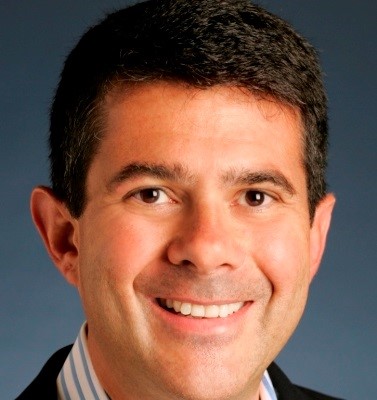
The reformed TV mogul, now selling doctor visits.
He spent fourteen years arguing about American health care. Then he stopped arguing and built the cash register.
On Sesame, you do not file a claim. You do not wait for an approval. You pick a doctor, see a fixed price next to their name, and check out the way you would buy a pair of shoes. That is the entire idea, and David Goldhill has staked his second career on it.
Sesame is a cash-pay marketplace. Doctors, clinics, labs, and pharmacies list their services, set a price in plain dollars, and consumers buy directly. No third-party payment. No benefits administrator standing between the patient and the appointment. Goldhill's bet is that the thing missing from American health care is not more coverage or cleverer subsidies, but a customer - an actual person whose dollar the system has to earn.
It is a strange thing to build if you came up through cable television and investment banking. Goldhill did. He ran networks, sold a broadcaster in Russia for half a billion dollars, and produced game shows for a living. Medicine was the one industry he had no professional reason to touch. He touched it anyway, and the reason is personal.
That single line is the thesis under everything he builds and writes. The people who pay the bills - Medicare, Medicaid, insurers, employers - are the ones the system actually serves. Patients are along for the ride.
In 2009, Goldhill wrote the cover story for The Atlantic. The title was blunt: "How American Health Care Killed My Father." His father had died of an infection picked up inside a hospital, and Goldhill - an executive with no clinical background - went looking for why a system that good at intentions could be that careless with outcomes. The piece read less like a grief memoir and more like an autopsy of an industry. David Brooks called it essential. Fareed Zakaria called it the best thing he had read on the subject.
Before Sesame, Goldhill's resume looked nothing like a health founder's. He was a Harvard history major with a master's in history from NYU who spent six years in banking, moved to Los Angeles, and reinvented himself as a television executive. He ran TV for Universal Studios up to its sale to GE, founded a Russian national network and sold it for $550 million, and then spent a decade as CEO of the Game Show Network.
President and CEO of Television at Universal Studios, through the GE acquisition in 2004.
Built TV3 Russia as a national broadcast network. Interros Group bought it in 2007.
A decade as CEO of GSN - the cable home of America's living-room games.
The throughline is not entertainment. It is consumers. Goldhill spent his whole first career figuring out what ordinary people will actually choose, pay for, and come back to. When he turned to health care, he brought that question with him - and found an industry that had spent decades arranging itself so the consumer never had to be asked.
Goldhill describes his job as making the final call but rarely the first one - and not because he is the smartest person in the room. He hires people to fill his own gaps and treats not-knowing as a feature of being in the room, not an embarrassment. He prefers a reasonable decision made quickly and corrected later to a perfect one made too late.
He also draws a line between startups and grown companies: young ones need flexibility to keep talent; mature ones need consistency and process. Sesame, still scaling, lives mostly on the first side of that line. The constant is a plain belief he repeats often - companies succeed because of the people inside them.
Two history degrees - Harvard BA, NYU MA - and a habit of reading health care like a historian reads an empire.
Chairs the Leapfrog Group, a hospital-safety nonprofit, while running a company that routes patients around the old system.
Senior fellow at the Manhattan Institute, occasional Medium essayist, and an op-ed regular in the major papers.
Sesame, he notes, earns world-class net-promoter scores from users across the political spectrum.